
Ayurvedic Herbs for Prostate Health: Gokshura Benefits & Uses
As men grow older, changes in urinary habits can become an uncomfortable part of everyday life. Waking several times during the night, waiting for the urine stream to start, having a weak stream, feeling that the bladder has not completely emptied, or needing to rush to the bathroom can all affect sleep, confidence and quality of life.
One of the common reasons for these symptoms is benign prostatic hyperplasia (BPH), a non-cancerous enlargement of the prostate. BPH becomes increasingly common with age, particularly after 50, although urinary symptoms can have several different causes and should not automatically be attributed to prostate enlargement.
Ayurveda has a long tradition of using herbs to support the Mutravaha Srotas, or urinary system. Among the herbs traditionally associated with urinary wellness, Gokshura (Tribulus terrestris) holds a special place. Classical Ayurvedic knowledge describes Gokshura as a herb associated with Mutravaha Srotas and urinary balance, and modern research has investigated its phytochemicals and possible urinary benefits.
But there is an important distinction between traditional Ayurvedic use and proven medical treatment. Gokshura or any other herb should not be presented as a guaranteed cure for an enlarged prostate, should not be used to promise normalization of PSA, and should not replace evaluation by a qualified healthcare professional.
At Vaarso Organic, we believe traditional wellness is most meaningful when it is approached with both respect for ancient knowledge and responsibility toward modern evidence.
What Is Prostate Enlargement?
The prostate is a small gland located below the bladder and surrounding part of the urethra. As the prostate grows, it can put pressure on the urethra and interfere with normal urine flow.
This condition is known as benign prostatic hyperplasia (BPH). The word “benign” is important: BPH is not prostate cancer. However, BPH can cause troublesome lower urinary tract symptoms and, in some people, complications such as urinary retention or recurrent urinary problems.
Common symptoms include: 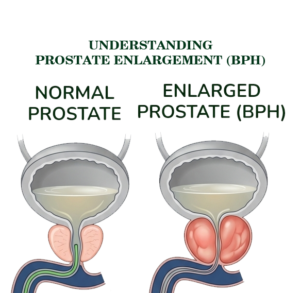
- Frequent urination
- Increased nighttime urination
- Difficulty starting urination
- Weak or interrupted urine stream
- Dribbling after urination
- Urgency to urinate
- Feeling that the bladder has not emptied completely
- Difficulty maintaining a normal urine flow
Not every urinary symptom means BPH. Infection, kidney or bladder stones, prostatitis, certain medications, neurological problems and other conditions can produce similar symptoms.
That is why persistent symptoms deserve proper assessment rather than self-treatment alone.
Gokshura: An Ayurvedic Herb for Urinary Wellness
Gokshura, commonly identified botanically as Tribulus terrestris, is also known as Gokharu or puncture vine. 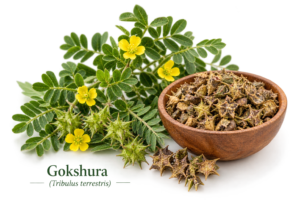
In Ayurveda, Gokshura has traditionally been valued for its relationship with urinary and reproductive health. Classical Ayurvedic concepts emphasize maintaining the proper movement and function of Apana Vayu, the physiological force associated with elimination and the lower pelvic region.
Traditional Ayurvedic literature and later reviews describe Gokshura among herbs used for urinary disorders.
Modern phytochemical research has identified several groups of compounds in Tribulus terrestris, including flavonoids, flavonol glycosides, steroidal saponins and alkaloids. Researchers have investigated several biological activities of the plant, although laboratory findings should not automatically be interpreted as proof of clinical effectiveness in humans.
This is where Ayurveda and modern science can meet sensibly: traditional knowledge can guide interest and research, while clinical evidence helps us understand what can actually be recommended.
Potential Benefits of Gokshura for Prostate & Urinary Health
1. Traditionally supports urinary function
Gokshura has a long history of Ayurvedic use for urinary-system wellness. Traditionally, it has been considered supportive of healthy urination and the proper functioning of the urinary tract.
For someone experiencing mild urinary discomfort, this traditional role makes Gokshura an interesting herb to discuss with an Ayurvedic practitioner.
However, it should not be assumed that Gokshura will shrink an enlarged prostate or eliminate BPH.
2. May support healthy urine flow
Some Ayurvedic formulations containing Gokshura have been investigated in small clinical studies involving men with BPH-related urinary symptoms.
For example, an older small clinical study investigated Gokshuradi Vati and Dhanyaka-Gokshura Ghrita-based therapy in men with symptoms corresponding to BPH and reported improvements in several measured outcomes. However, the study was small and short, so larger, better-designed trials are needed before drawing firm conclusions.
This is a good example of how traditional medicine can be promising without being proven.
3. Traditionally associated with Mutravaha Srotas
Ayurveda looks at urinary health as part of a larger physiological system rather than focusing only on the size of one gland.
Gokshura is traditionally described in connection with Mutravaha Srotas, the channels responsible for urine formation and elimination. This holistic perspective is one reason the herb has remained relevant in Ayurvedic practice for generations.
4. Contains naturally occurring phytochemicals
Gokshura contains various naturally occurring compounds, including steroidal saponins and flavonoids. These constituents are of scientific interest because laboratory research suggests several biological activities.
However, the presence of a particular compound does not mean that consuming the whole herb will produce the same effect observed in laboratory experiments.
5. May complement a broader healthy-aging routine
Healthy prostate care is not only about herbs.
A balanced diet, regular movement, healthy body weight, adequate hydration, good sleep and appropriate medical screening all contribute to healthy aging.
From an Ayurvedic perspective, this resembles the broader idea of Dinacharya—creating regular daily habits rather than searching for a single miraculous remedy.
Other Ayurvedic Herbs Traditionally Considered for Urinary Wellness
Gokshura is not the only herb discussed in traditional Ayurvedic approaches.
Punarnava
Punarnava (Boerhaavia diffusa) is traditionally associated with fluid balance and urinary wellness. It has been investigated for urinary symptoms, although the evidence remains limited.
Varuna
Varuna (Crataeva species) has a long history in traditional Ayurvedic approaches involving the urinary system. Reviews of Ayurvedic approaches to BPH mention Varuna alongside Gokshura.
Shatavari
Shatavari (Asparagus racemosus) is better known in Ayurveda for reproductive and nourishing applications. It is sometimes included in traditional formulations, but it should not be promoted as a proven treatment for prostate enlargement.
Amla
Amla (Phyllanthus emblica) provides vitamin C and polyphenolic compounds as a food. It can be part of a nutritious diet, but eating amla should not be confused with treating BPH.
The key lesson is simple: an Ayurvedic formulation should be selected according to the individual, constitution, symptoms and overall health—not simply because several herbs are traditionally associated with the prostate.
Nutrition for Better Prostate & Urinary Health
Herbs are only one small part of a healthy lifestyle.
A prostate-friendly eating pattern can be built around ordinary foods rather than expensive supplements.
1. Eat plenty of vegetables
Make colourful vegetables a regular part of meals.
Leafy greens, carrots, pumpkin, bell peppers, broccoli, cauliflower and other vegetables provide fibre, vitamins, minerals and plant compounds that support overall health.
2. Choose whole foods
Whole grains, beans, lentils, vegetables, fruits, nuts and seeds can form the foundation of a balanced diet.
Rather than searching for one “prostate superfood,” focus on dietary variety.
3. Include healthy sources of protein
Beans, lentils, eggs, fish, yoghurt and other appropriate protein sources can help maintain muscle mass as men age.
4. Enjoy nuts and seeds in sensible portions
Pumpkin seeds, sesame seeds, walnuts and other seeds provide minerals, healthy fats and protein.
They are nutritious foods, but they should not be marketed as medicines for BPH.
5. Limit highly processed foods
Frequent intake of highly processed foods, excessive added sugar, excessive salt and heavily refined foods can make it harder to maintain overall metabolic health.
A simple plate of vegetables, whole grains and quality protein is often more valuable than a complicated supplement routine.
Nutrition Profile of Gokshura
Unlike fruits, vegetables, nuts or grains, Gokshura is generally consumed as a herbal preparation rather than a conventional food.
Therefore, it is more useful to discuss its phytochemical profile than to present it as a meaningful source of calories, protein or everyday vitamins.
Research has identified:
- Steroidal saponins
- Flavonoids
- Flavonol glycosides
- Alkaloids
- Other plant constituents
These compounds are being studied for their biological properties.
Importantly, chemical composition can vary depending on the plant part, growing conditions, processing and extraction method. Therefore, the nutrition panel of a standardized herbal product should always be checked rather than assuming every Gokshura powder or extract has the same composition.
How to Use Gokshura Traditionally
Ayurvedic herbs can be prepared in several ways, including churna (powder), kwatha (decoction), vati (tablet) and other classical formulations.
Historically, Gokshura has been used in preparations intended to support urinary function. Some Ayurvedic research has also examined compound formulations containing Gokshura.
A practical approach
If you are considering Gokshura for urinary or prostate wellness:
- Choose a properly identified herb from a reputable source.
- Follow the manufacturer’s recommended serving rather than creating a high dose yourself.
- Prefer professional Ayurvedic guidance if you have persistent urinary symptoms.
- Tell your doctor or pharmacist about any herbal supplements you use.
- Do not discontinue prescribed prostate or urinary medicines without medical advice.
- Monitor symptoms rather than assuming the herb is working because it is natural.
There is no universally appropriate “3-gram” dose for every person. Herbal dose depends on the preparation, concentration, individual health, age and medications.
What About Gokshura, Shatavari and Milk?
Traditional Ayurveda uses various Ksheerapaka preparations, in which selected herbs are processed with milk.
Gokshura and Shatavari are sometimes discussed in this traditional context. Such preparations belong to a traditional Ayurvedic framework and should not be presented as a proven treatment for blood in the urine, kidney stones or prostate enlargement.
If someone has visible blood in the urine, medical assessment is particularly important because hematuria can have many causes, including stones, infection, BPH and, less commonly but importantly, cancers of the urinary tract.
Likewise, kidney stones vary in size and location. Some small stones pass naturally, while larger or obstructing stones may require procedures such as lithotripsy or surgical removal.
So, Ayurveda may be considered as a supportive wellness approach, but bleeding or suspected stones should never be managed solely with a home remedy.
Can Ayurveda Cure an Enlarged Prostate?
This is one of the most important questions.
The honest answer is: there is not enough high-quality evidence to say that Ayurvedic herbs can cure BPH or reliably shrink an enlarged prostate.
Some small Ayurvedic clinical studies have reported improvements in urinary symptoms using formulations containing Gokshura and other herbs.
At the same time, clinical guidelines have noted insufficient convincing evidence for phytotherapy and Ayurvedic medicines as established BPH treatments.
This does not mean traditional herbs have no value. It means their role needs to be described honestly.
Traditional use is not the same as clinical proof.
For Vaarso Organic, that distinction matters. Natural wellness should build trust—not make promises that science cannot support.
Ayurveda and the Modern Understanding of Prostate Health
One beautiful aspect of Ayurveda is its emphasis on balance, routine and prevention.
Instead of asking only, “Which herb will fix my prostate?”, Ayurveda encourages a wider question:
How am I living every day?
A supportive routine may include:
- Regular physical activity
- Balanced meals
- Adequate but appropriate hydration
- Good sleep
- Avoiding excessive alcohol
- Maintaining a healthy body weight
- Managing stress
- Not ignoring urinary symptoms
- Regular health check-ups
These habits may sound simple, but consistency is often more important than complexity.
Ancient Indian wellness traditions frequently emphasized Dinacharya, or daily routine. In a modern context, this idea can be beautifully adapted into a practical men’s-health routine.
When Should You See a Doctor?
Do not rely on herbs alone if urinary symptoms are persistent, worsening or interfering with everyday life.
Seek medical attention if you experience:
- Inability to urinate
- Blood in the urine
- Severe pelvic or abdominal pain
- Fever or chills with urinary symptoms
- Repeated urinary infections
- Significant difficulty starting urination
- Severe or rapidly worsening symptoms
- Unexplained weight loss or other concerning symptoms
NIDDK specifically advises urgent medical attention when someone cannot pass urine and recommends evaluation for blood in the urine.
A healthcare professional may use medical history, examination, urine tests, blood tests, ultrasound and other appropriate investigations to determine the cause of urinary symptoms.
Frequently Asked Questions
1. What is the best Ayurvedic herb for prostate health?
Gokshura (Tribulus terrestris) is one of the most traditionally recognized Ayurvedic herbs for urinary wellness. However, there is no scientifically established “best” Ayurvedic herb that can cure BPH.
2. Can Gokshura reduce an enlarged prostate?
Some small Ayurvedic studies of Gokshura-containing formulations have reported improvements in urinary symptoms and certain measurements, but evidence is not strong enough to guarantee that Gokshura reduces prostate size.
3. Can Gokshura normalize PSA?
It should not be promoted as a way to normalize PSA. PSA can be affected by several prostate conditions, and an abnormal result needs appropriate medical interpretation.
4. Can I take Gokshura every day?
Some Gokshura products are intended for regular use, but the appropriate amount depends on the form and individual circumstances. Follow the product directions and seek professional advice if you have medical conditions or take medicines.
5. Can Gokshura replace BPH medicine?
No. Do not replace prescribed BPH medicines with an herbal product without discussing it with your healthcare professional.
6. Is prostate enlargement the same as prostate cancer?
No. BPH is a non-cancerous enlargement of the prostate. However, urinary symptoms can overlap with other prostate and urinary conditions, so appropriate evaluation is important.
7. What foods are good for prostate wellness?
A varied diet containing vegetables, fruits, whole grains, legumes, nuts, seeds and appropriate protein sources is a sensible foundation. No single food has been proven to prevent or cure BPH.
8. Can Ayurvedic herbs break kidney stones?
You should not assume that an Ayurvedic herb will dissolve or remove a kidney stone. Treatment depends on the stone’s size, location and type, and larger or obstructing stones may require medical procedures.
9. Is blood in urine normal with prostate problems?
Blood in the urine can occur with BPH, but it can also have many other causes, including urinary stones, infections and urinary-tract cancers. Visible blood should therefore be medically evaluated rather than treated only with herbs.
10. Can Ayurveda and modern healthcare be used together?
Yes. A sensible integrative approach can respect Ayurvedic traditions while continuing appropriate medical evaluation and treatment. Always tell your healthcare professional about herbs and supplements you are taking.
Final Thoughts
Prostate health is not something men should feel embarrassed to discuss. Urinary changes are common with aging, but they are not something that should simply be ignored.
Gokshura is an important traditional Ayurvedic herb with a long history of use in urinary wellness, and it continues to attract scientific interest. Yet responsible natural health writing should distinguish traditional wisdom from proven clinical treatment.
The most meaningful approach is a combination of good nutrition, regular movement, healthy daily routines, appropriate Ayurvedic guidance and timely medical evaluation.
At Vaarso Organic, we believe the wisdom of nature is most powerful when it is used thoughtfully—without exaggerated promises and with genuine respect for both tradition and modern health knowledge.
Nature can be part of the journey to better living. It does not have to replace responsible healthcare.