
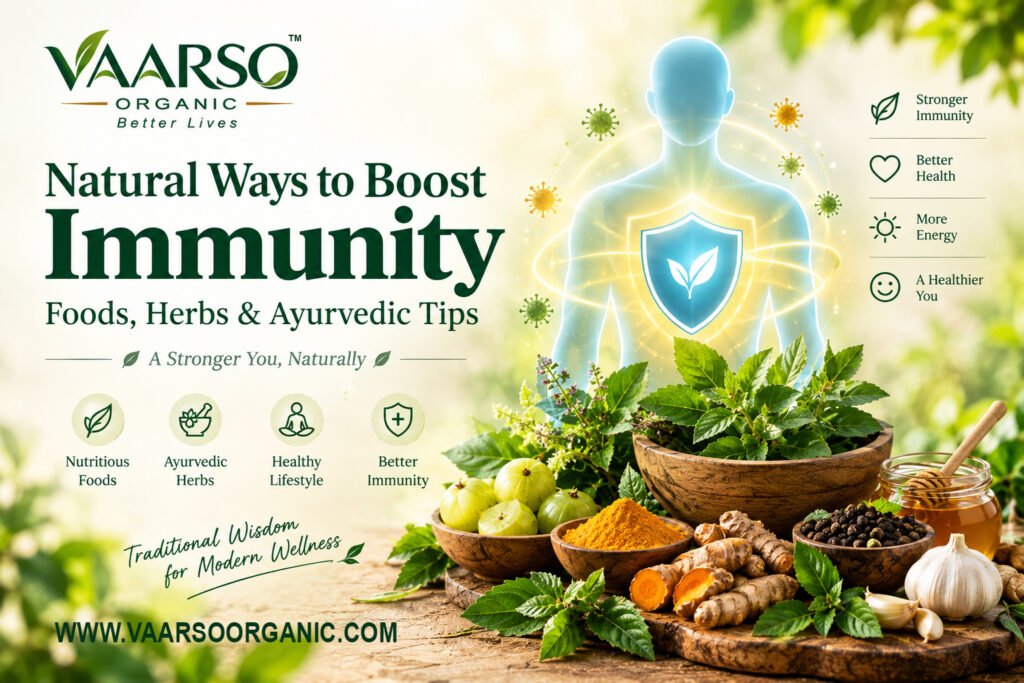
Natural Ways to Boost Immunity: Foods, Herbs & Ayurvedic Tips
We often remember our immune system only when we fall sick.
A seasonal cold, a lingering cough, an upset stomach or an infection can suddenly make us think about how well our body is protecting us. Yet immunity is not something that switches on only during illness. It is a complex, constantly active network working quietly in the background—day and night.
From the skin that forms the body’s outer boundary to immune cells that identify unfamiliar organisms, your body has several layers of protection. The immune system also learns from previous encounters, which is one reason vaccination can provide protection against specific infections.
In Ayurveda, this idea has a beautiful connection with Ojas—a traditional concept associated with vitality, resilience and overall strength. Ayurveda does not look at health as simply “not being sick.” It places importance on digestion, daily routine, sleep, nourishment, mental balance and the body’s ability to maintain equilibrium.
Modern science and Ayurveda use different frameworks, but they meet at an important point: long-term health is built through consistent habits, not one magical ingredient.
This guide from Vaarso Organic explores what immunity really means, how the immune system works, which nutrients support normal immune function, traditional Ayurvedic herbs and practices, and how to build an everyday lifestyle that supports your body’s natural defenses.
What Is the Immune System?
The immune system is the body’s biological defense network.
It includes immune cells, tissues, organs, proteins and physical barriers that work together to recognize and respond to potentially harmful organisms and abnormal cells.
These include: 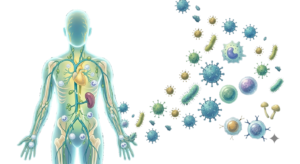
- Viruses
- Bacteria
- Fungi
- Parasites
- Other foreign substances
But immunity is much more complicated than simply “strong” or “weak.”
Your immune system needs to be balanced. It must respond strongly enough to deal with genuine threats while also avoiding unnecessary or excessive reactions against the body’s own tissues.
That is why the goal should not really be to “boost immunity” endlessly.
A better goal is:
Support normal immune function through nutrition, sleep, movement, vaccination, hygiene and healthy lifestyle choices.
The Centers for Disease Control and Prevention notes that healthy eating, physical activity, adequate sleep, maintaining a healthy weight, avoiding smoking and limiting excessive alcohol can all support immune health.
How Does Your Immune System Work?
Think of immunity as a security system with several layers rather than a single protective wall.
1. Your First Line of Defense: Physical Barriers
Before immune cells even become involved, the body has built-in barriers.
Skin
Healthy skin forms an important physical barrier between your internal tissues and the outside environment.
Nose and Airways
Tiny hairs and mucus help trap particles and microorganisms before they travel deeper into the respiratory system.
Stomach
The acidic environment of the stomach can destroy or inhibit many microorganisms that enter with food and drink.
These barriers are working every day, whether you notice them or not.
2. Innate Immunity: Your Rapid Response Team
Innate immunity is the body’s immediate, non-specific defense system.
Certain immune cells can recognize patterns associated with potentially harmful organisms and respond quickly.
Inflammation is one part of this response.
You may notice:
- Redness
- Swelling
- Heat
- Pain
- Fever
These reactions are not automatically signs that your immune system is “weak.”
In fact, inflammation can be part of the body’s normal response to infection or injury. The immune system’s response can help eliminate a threat and begin tissue repair.
However, excessive or uncontrolled inflammation can also cause harm. So again, balance matters.
3. Adaptive Immunity: The Body That Learns
Adaptive immunity is particularly fascinating.
After encountering a particular pathogen, the immune system can develop immunological memory. When the body encounters the same or a related threat again, the response can be faster and more effective.
This is also the principle behind vaccination.
Vaccines train the adaptive immune system to recognize specific diseases without requiring the person to experience the disease itself.
This is why vaccination remains one of the most effective tools for preventing many serious infectious diseases.
Does Frequent Illness Always Mean Low Immunity?
Not necessarily.
People sometimes assume that frequent tiredness, hair fall, constipation, gas or one or two colds automatically mean their immunity is weak.
That conclusion is too simple.
Symptoms can have many different causes.
For example:
- Fatigue may be related to poor sleep, stress, anemia, thyroid problems or many other conditions.
- Hair loss can have nutritional, hormonal or genetic causes.
- Digestive symptoms can result from diet, intolerance, infection, stress or gastrointestinal disorders.
- Repeated infections may sometimes indicate an immune problem, but they can also reflect exposure, allergies, environmental factors or other health conditions.
If infections are unusually frequent, severe, prolonged or difficult to treat, it is better to speak with a healthcare professional rather than simply taking an “immunity booster.”
Nutrition and Immunity: Food Is the Foundation
There is no single food that can make someone immune to every disease.
However, adequate nutrition is essential for normal immune function.
The immune system requires a wide variety of nutrients to develop, communicate and function properly.
Important nutrients include:
Vitamin C
Vitamin C contributes to normal immune function and also supports collagen formation and antioxidant activity.
Good food sources include:
- Citrus fruits
- Kiwi
- Strawberries
- Bell peppers
- Broccoli
- Tomatoes
- Potatoes
Vitamin C deficiency can impair immune function, but taking very high doses does not automatically create “super immunity.”
Vitamin D
Vitamin D participates in immune-system processes. Maintaining adequate vitamin D status is important, particularly for people who have limited sun exposure or are at risk of deficiency.
Zinc
Zinc is involved in numerous biological processes, including both innate and adaptive immune function. It also contributes to wound healing and cellular metabolism.
Food sources include:
- Seafood
- Meat
- Dairy
- Beans
- Lentils
- Nuts
- Seeds
- Whole grains
Vitamin A
Vitamin A helps maintain healthy epithelial tissues, including barriers that form part of the body’s defense system. Plant sources of provitamin A carotenoids include colorful vegetables such as carrots, pumpkin and leafy greens.
Protein
Immune cells and antibodies are made from proteins and depend on adequate amino acids for their production and function.
Good sources include:
- Eggs
- Fish
- Poultry
- Dairy
- Beans
- Lentils
- Soy
- Nuts and seeds
A varied diet is generally a better strategy than relying on a long list of supplements. The CDC similarly recommends a pattern centered around vegetables, fruits, protein foods, healthy fats and whole grains while limiting highly processed foods, excess added sugar, salt and unhealthy fats.
Ayurvedic Herbs Traditionally Associated With Immunity
Ayurveda has a long tradition of using herbs as part of broader approaches to health.
However, an herb should not automatically be called an “immune booster” or a cure.
Here are some traditionally valued herbs and foods worth understanding.
Amla: The Traditional Vitamin C-Rich Fruit
Amla, or Indian gooseberry, has an important place in Ayurveda.
It is naturally rich in vitamin C and other plant compounds and is traditionally valued as a rasayana—a rejuvenative category in Ayurvedic tradition.
Fresh amla, dried amla and culinary preparations can be incorporated into a balanced diet.
Its nutritional value makes it an interesting addition to a varied diet, but it should not be presented as a cure for infections.
Turmeric: An Everyday Golden Spice
Turmeric has been part of Indian kitchens and Ayurvedic traditions for centuries.
Its major studied compound, curcumin, has been investigated for antioxidant and anti-inflammatory properties.
From a practical perspective, turmeric works beautifully as a culinary spice.
Adding turmeric to vegetables, lentils, soups or other meals can be an easy way to include it in your diet.
But concentrated turmeric or curcumin supplements are different from culinary quantities and can have safety considerations.
Food first is often the simplest approach.
Tulsi: A Traditional Aromatic Herb
Tulsi, also known as holy basil, has a respected place in Ayurveda and Indian household traditions.
Tulsi tea or other traditional preparations are commonly used as part of seasonal wellness routines.
Its cultural significance is just as interesting as its herbal history.
However, drinking tulsi tea should not be presented as a way to prevent every infection or replace medical treatment.
What About Ashwagandha?
Ashwagandha is another important Ayurvedic herb traditionally associated with strength, vitality and resilience.
Modern research has explored its potential effects on stress, sleep and other areas of health.
This is important because stress and sleep are connected to overall immune health.
But it is more accurate to describe ashwagandha as a traditional wellness herb than to promise that it will “supercharge” immunity.
People taking medicines, pregnant individuals and those with certain health conditions should seek professional advice before using concentrated herbal supplements.
What About Giloy or Guduchi?
Giloy, traditionally known as Guduchi (Tinospora cordifolia), has a long history in Ayurveda and is often promoted today for immunity.
But this is one herb where caution is particularly important.
Although traditional and scientific literature has investigated its immunomodulatory properties, reports and a multicenter study have associated Tinospora cordifolia use with herb-induced liver injury, including autoimmune-like hepatitis in some people.
Therefore, it would be irresponsible to tell everyone to drink Giloy juice or take Giloy supplements every day simply to “boost immunity.”
If someone is considering Giloy—particularly in concentrated or long-term forms—it is sensible to discuss it with a qualified healthcare professional.
Natural does not automatically mean risk-free.
Chyawanprash and Ayurvedic Rasayana Tradition
Chyawanprash is one of the best-known Ayurvedic formulations associated with rejuvenation and vitality.
Traditionally, it contains amla along with a blend of herbs, spices and other ingredients. Different formulations can vary considerably.
Rather than thinking of Chyawanprash as a medicine that prevents all illness, it is more appropriate to understand it as a traditional nutritional and rasayana preparation.
Also check the ingredient list and sugar content, particularly if you are managing diabetes, limiting added sugar or monitoring calories.
8 Everyday Habits That Support Healthy Immunity
The most powerful “immunity routine” is usually surprisingly ordinary.
1. Eat a Diverse Diet
Try to include different colors and food groups throughout the week.
Think:
Vegetables + fruits + whole grains + legumes + protein + healthy fats
A colorful plate is often a practical way to increase nutritional variety.
2. Prioritize Sleep
Sleep is not wasted time.
It is an active period during which the body performs numerous restorative functions. Evidence continues to show that inadequate sleep can negatively affect aspects of immune function.
For many adults, aiming for at least seven hours of sleep is a useful general target, although individual needs vary.
3. Keep Moving
You do not need an expensive gym membership to support your health.
Walking, cycling, swimming, gardening, yoga, dancing and strength training can all contribute to an active lifestyle.
Current public-health guidance recommends that adults generally aim for at least 150 minutes of moderate-intensity aerobic activity each week plus muscle-strengthening activity on two days, when appropriate for them.
4. Manage Chronic Stress
A busy life can keep the mind permanently switched on.
Simple practices such as:
- Meditation
- Slow breathing
- Yoga
- Time outdoors
- Prayer or reflection
- Meaningful social connection
- Regular sleep
can help create a healthier daily rhythm.
In the Ayurvedic tradition, dinacharya, or daily routine, reflects the idea that regularity itself can be nourishing.
5. Stay Hydrated
Water does not “flush every toxin from the body,” but adequate hydration is essential for normal physiological function.
Choose water as your main beverage and adjust intake according to climate, activity, age and individual needs.
6. Don’t Smoke
Smoking harms multiple body systems and can interfere with the body’s ability to fight disease. Avoiding tobacco is one of the most meaningful things you can do for long-term health.
7. Keep Alcohol Moderate or Avoid It
Excessive alcohol consumption can weaken immune defenses over time.
8. Stay Up to Date With Recommended Vaccinations
Healthy food and herbs have their place, but they cannot replace vaccines.
Vaccines provide targeted protection against specific infectious diseases by training adaptive immunity. Recommended vaccines vary by age, country, medical conditions, occupation and travel.
A Simple Ayurvedic-Inspired Daily Immunity Routine
Instead of searching for one miracle drink, try building a routine.
Morning
Start the day with water and a nourishing breakfast.
Daytime
Eat a varied diet containing vegetables, fruits, protein and whole grains.
Afternoon
Stay physically active and avoid sitting continuously for long periods.
Evening
Choose a lighter, balanced meal and reduce unnecessary screen stimulation before bed.
Night
Create a regular sleep schedule.
Throughout the week
Include traditional foods and spices such as turmeric, ginger, garlic, amla or tulsi according to your dietary preferences.
This is much closer to the spirit of Ayurveda than taking several herbal products at once.
Can One Herb Protect You From Every Disease?
No.
This is perhaps the most important message of this article.
No single herb, fruit, supplement, drink or “immunity booster” can guarantee protection from every disease.
Your immune health depends on many factors, including:
- Genetics
- Age
- Nutrition
- Sleep
- Physical activity
- Stress
- Existing health conditions
- Medications
- Environmental exposure
- Vaccination
- Smoking and alcohol
- Overall lifestyle
The immune system is an interconnected network—not a single switch.
When Should You Seek Medical Advice?
Don’t automatically blame “weak immunity” when you feel unwell.
Speak with a healthcare professional if you experience:
- Repeated or unusually severe infections
- Infections that take unusually long to resolve
- Persistent unexplained fever
- Unexplained weight loss
- Persistent fatigue
- Shortness of breath
- Recurrent fungal infections
- Non-healing wounds
- Symptoms that repeatedly return
People with known immune disorders, cancer, HIV, organ transplants or medicines that suppress immunity may require individualized advice and vaccination planning.
Frequently Asked Questions
1. What is immunity?
Immunity is the body’s ability to recognize and respond to potentially harmful organisms and other foreign substances. It involves physical barriers, innate immune responses and adaptive immune responses.
2. How can I naturally support my immune system?
Focus on the basics: eat a varied nutrient-dense diet, sleep adequately, exercise regularly, maintain a healthy weight, avoid smoking, limit excessive alcohol and stay current with recommended vaccinations.
3. Which foods are best for immunity?
There is no single “best” immune food. A varied diet containing fruits, vegetables, whole grains, legumes, nuts, seeds, dairy or alternatives and quality protein provides many nutrients needed for normal immune function.
4. Does vitamin C prevent every infection?
No. Vitamin C is important for normal immune function, and deficiency can impair immunity, but taking large amounts does not make a person immune to infections.
5. Does vitamin D support immunity?
Yes. Vitamin D participates in immune function, and maintaining adequate vitamin D status is important. However, high-dose supplementation should not be taken unnecessarily.
6. Is turmeric good for immunity?
Turmeric is a traditional culinary and Ayurvedic ingredient containing compounds that have been studied for antioxidant and inflammatory pathways. It can be part of a healthy diet, but it should not be considered a cure or guaranteed immunity booster.
7. Is Giloy safe for everyone?
No. Although Giloy has a long Ayurvedic history, reports and clinical research have linked Tinospora cordifolia to liver injury in some individuals. Anyone considering concentrated or prolonged use should seek professional guidance.
8. Can Chyawanprash increase immunity?
Chyawanprash is traditionally used as a rasayana preparation, but it should not be presented as a guaranteed way to prevent infections. Formulations differ, so check the ingredients and sugar content.
9. Does exercise improve immunity?
Regular physical activity supports overall health and emerging evidence suggests benefits for immune function. It also supports healthy weight, sleep and stress management.
10. How much sleep is important for immune health?
Sleep needs vary with age, but most adults need at least seven hours per night. Consistent, good-quality sleep is an important part of overall health and immune function.
11. Can herbs replace vaccines?
No. Herbs and nutritious foods cannot replace vaccines. Vaccination provides targeted adaptive immune protection against specific diseases.
12. What is the Ayurvedic concept of Ojas?
Ojas is a traditional Ayurvedic concept associated with vitality, strength and resilience. It is best understood within the broader Ayurvedic framework of digestion, nourishment, rest, routine and balance rather than as a directly measurable equivalent of modern immunity.
Final Thoughts: Build Your Inner Shield Every Day
Your immune system is remarkable precisely because you rarely notice it.
While you sleep, eat, work, exercise and live your everyday life, an enormous biological network continues to protect and repair you.
That is why immune health should not begin with a bottle of supplements after you catch a cold.
It should begin with the basics.
Eat well. Sleep well. Move regularly. Manage stress. Stay hydrated. Avoid tobacco. Use herbs thoughtfully. Keep vaccinations up to date. And listen to your body.
Ayurveda has a valuable lesson here: health is not merely the absence of disease. It is the cultivation of balance and vitality through everyday living.
At Vaarso Organic, we believe that traditional wisdom becomes more meaningful when it is approached with both respect and responsibility.
Nature offers us wonderful foods and herbs.
Our responsibility is to use them wisely.
Strong health is not built in one day. It is built through the small choices we repeat every day.