
What Is Uric Acid? Causes, Foods, Gout & Ayurvedic Tips
There is a health term that many people hear only after a routine blood test: uric acid.
A report may show a number slightly above the laboratory range, and suddenly questions begin: 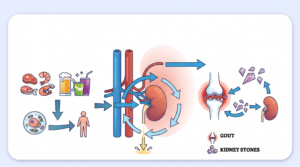
“Is this gout?”
“Should I stop eating pulses?”
“Can uric acid damage my kidneys?”
“Do I need to stop eating protein?”
“Can Ayurveda or home remedies bring it down?”
The truth is more interesting than the usual list of “good foods” and “bad foods.”
Uric acid is not a useless substance or a poison. It is a normal waste product produced when the body breaks down compounds called purines. Most uric acid travels through the blood to the kidneys and leaves the body in urine. The problem occurs when the body produces more uric acid than it can remove, or when the kidneys do not remove enough.
A high blood uric acid level is called hyperuricemia. It can occur without symptoms, and not everyone with high uric acid develops gout. But in some people, uric acid crystals can accumulate in joints and cause the intense inflammation known as gout. Uric acid can also contribute to certain types of kidney stones.
So, understanding uric acid is not about becoming afraid of every protein-rich food.
It is about understanding metabolism, hydration, food choices, body weight, kidney health and long-term lifestyle.
At Vaarso Organic, we believe that traditional wisdom and modern health knowledge can sit at the same table—provided we remain practical, responsible and honest about what is known and what is still being studied.
What Is Uric Acid?
Uric acid is a substance produced naturally by the body.
It is formed when purines are broken down. Purines occur naturally in our cells and are also present in various foods.
The body continuously breaks down old cells and processes substances from food. As part of this process, purines are converted into uric acid.
The kidneys then filter uric acid from the blood and excrete it through urine.
In a healthy system, production and elimination remain reasonably balanced.
Problems can arise when:
- The body produces too much uric acid.
- The kidneys excrete too little.
- Both processes occur together.
- Genetics increase a person’s tendency toward hyperuricemia.
- Certain medicines or health conditions affect uric acid handling.
Importantly, having high uric acid does not automatically mean you have gout. Many people with hyperuricemia have no symptoms.
What Is a Normal Uric Acid Level?
You may see reference ranges such as:
- Men: approximately 3.4–7.0 mg/dL
- Women: approximately 2.4–6.0 mg/dL
However, there is no single universal “normal” range for every person or every laboratory. Reference intervals vary according to the laboratory, testing method and population.
More importantly, a blood uric acid result should not be interpreted by itself.
For people with established gout who are receiving urate-lowering treatment, clinical guidelines commonly use a serum urate target of less than 6 mg/dL. That is a treatment target for gout—not a universal definition of health for every person.
This distinction is important because a laboratory number is only one piece of the health picture.
Why Does Uric Acid Increase?
There isn’t always one simple reason.
Some people naturally produce more uric acid or eliminate less because of genetic factors. Other factors can also contribute.
Common associations include:
1. Genetics
Family history can influence how efficiently your body handles uric acid.
This means that two people eating very similar diets can have very different uric acid levels.
2. Kidney Function
Because the kidneys remove most uric acid from the blood, reduced kidney function can affect uric acid elimination.
3. Alcohol
Alcohol—particularly beer—is associated with higher uric acid and a greater risk of gout attacks. The American College of Rheumatology recommends limiting alcohol in people with gout.
4. Sugary Drinks
Sugar-sweetened beverages, particularly those containing high amounts of fructose, can raise serum urate and are associated with gout risk.
5. Excess Body Weight
Being overweight or obese is associated with a higher risk of gout. For people with gout who are overweight or obese, gradual weight loss may help.
6. Certain Medical Conditions and Medicines
High blood pressure, metabolic conditions and certain medicines—including some diuretics—can be associated with elevated uric acid.
This is why simply blaming one food is rarely the complete answer.
What Happens When Uric Acid Becomes Too High?
High uric acid itself may produce no symptoms.
But when uric acid forms crystals, problems can develop.
1. Gout
Gout is a form of inflammatory arthritis caused by deposition of monosodium urate crystals in and around joints.
A gout attack can appear suddenly.
Typical symptoms include:
- Intense joint pain
- Swelling
- Redness
- Warmth
- Tenderness
- Difficulty moving the affected joint
The big toe is a classic location, but gout can also affect the ankle, knee, fingers and other joints.
The pain can be surprisingly severe—even the pressure of a bedsheet may feel uncomfortable during an acute attack.
2. Uric Acid Kidney Stones
Uric acid can also contribute to certain kidney stones.
Kidney stones can cause:
- Sharp pain in the back or side
- Pain radiating toward the lower abdomen or groin
- Blood in the urine
- Pain during urination
- Frequent urination
- Nausea or vomiting
Not every kidney stone is caused by uric acid. In fact, calcium-based stones are the most common type. Uric acid stones are a separate category.
If you experience severe or persistent symptoms suggestive of a kidney stone, medical assessment is important.
Does Everyone With High Uric Acid Get Gout?
No.
This is one of the most important things to understand.
A person can have elevated blood uric acid without ever developing gout. Conversely, some people experiencing gout can have a normal uric acid measurement at the particular time it is tested.
Therefore:
High uric acid ≠ automatic gout.
The diagnosis of gout involves the overall clinical picture and, when needed, examination of joint fluid or imaging to identify urate crystals.
Uric Acid and Protein: Should You Stop Eating Protein?
This is where many people become unnecessarily restrictive.
Protein is an essential nutrient. Your body needs it for muscles, enzymes, hormones, immune function and tissue repair.
The goal is generally not to eliminate protein.
Instead, the type and overall quality of your diet matter.
High-purine animal foods—including organ meats and certain seafood—are more strongly associated with gout risk than many plant protein sources. Beans, lentils and peas can contain purines, but evidence-based gout dietary advice does not generally require people to eliminate these nutritious foods completely.
A practical approach is:
Choose better protein sources rather than fearing protein itself.
What Should You Eat If You Have High Uric Acid?
There is no single “uric acid diet.”
A balanced eating pattern is more useful than an extreme list of forbidden foods.
Choose More Often
Vegetables
Include a variety of vegetables such as:
- Bottle gourd
- Ridge gourd
- Bitter gourd
- Carrots
- Leafy greens
- Cucumber
- Pumpkin
- Other seasonal vegetables
Vegetables provide fibre, vitamins, minerals and beneficial plant compounds.
Whole Fruits
Whole fruits can be part of a balanced diet. Whole fruit is generally preferable to large quantities of fruit juice because juice can deliver a concentrated amount of sugar without the same fibre structure.
Whole Grains
Depending on individual needs:
- Oats
- Brown rice
- Whole-grain bread
- Millet
- Barley
- Other minimally processed grains
Low-Fat Dairy
Low-fat dairy products can fit into a gout-friendly eating pattern and may be associated with lower gout risk.
Plant Proteins
Beans, lentils, peas and tofu can provide valuable nutrition. They do contain purines, but plant-based protein foods should not automatically be treated like organ meats or certain seafood.
What Should You Limit?
1. Organ Meats
Liver, kidney and other organ meats are particularly high in purines.
For people with gout, these are among the foods most commonly recommended for limitation.
2. Certain Seafood
Some seafood, including anchovies, sardines and shellfish, can be high in purines. Individual dietary recommendations should also consider overall nutritional value and personal tolerance.
3. Alcohol
Beer and spirits can increase gout risk. Limiting alcohol is recommended for people with gout.
4. Sugary Drinks
Soft drinks, sweetened beverages and products high in added fructose deserve particular attention.
Replacing sugary drinks with water is a simple everyday improvement.
5. Highly Processed Foods
Fast foods and heavily processed meals may contribute to excess calories, sodium, unhealthy fats and added sugars.
The broader goal should be better dietary quality, not simply counting purines.
Is More Water Better for Uric Acid?
Hydration is important, particularly because the kidneys eliminate uric acid through urine.
But the popular advice to drink exactly 3–4 litres every day is not appropriate for everyone.
Fluid needs vary with:
- Body size
- Climate
- Physical activity
- Food intake
- Sweating
- Pregnancy
- Kidney function
- Heart health
- Medications
For some people with kidney or heart conditions, excessive fluid intake can actually be unsafe.
So rather than forcing a fixed number, maintain appropriate hydration according to your body’s needs and your healthcare professional’s advice.
Water is generally the simplest choice.
Adequate fluid intake is also important for kidney-stone prevention, although the exact amount should be individualized.
What About Lemon Water?
Lemon water is refreshing and can help some people drink more fluids.
Citrus beverages also provide citrate, which can be relevant to kidney-stone prevention.
But lemon water should not be promoted as a medicine that “melts uric acid crystals” or cures gout.
Think of it as a hydration habit, not a treatment.
That distinction makes natural wellness advice more useful—and more honest.
Coriander Water, Fenugreek and Amla: Do They Help?
Traditional wellness practices often include ingredients such as:
- Coriander seeds
- Fenugreek seeds
- Amla
- Lemon
- Various herbal preparations
These ingredients have a long history in traditional food and Ayurvedic practice.
However, evidence that a particular homemade drink or herb can reliably lower blood uric acid enough to treat gout is limited.
This is especially important when someone is already experiencing repeated gout attacks.
A natural preparation may be used as part of a broader wellness routine, but it should not automatically replace evidence-based medical treatment.
NCCIH also advises consumers to consider evidence, possible side effects and herb–medicine interactions before using complementary health products.
Amla and Uric Acid: A Traditional Perspective
Amla, or Indian gooseberry, has an important place in Indian food and Ayurvedic traditions.
It is naturally rich in vitamin C and is commonly used in foods and traditional preparations.
However, taking a spoonful of amla powder should not be presented as a guaranteed method of lowering uric acid.
In fact, the American College of Rheumatology guideline conditionally recommends against adding vitamin C supplementation specifically for gout, reflecting the limited clinical benefit of supplementation as a gout strategy.
The lesson is valuable:
A nutritious food can be part of a healthy diet without being a treatment for a disease.
Uric Acid Through the Lens of Ayurveda
Ayurveda has its own traditional framework for conditions involving painful, inflamed joints.
A condition called Vatarakta is described in Ayurvedic literature and is often discussed in relation to gout-like presentations. Classical Ayurvedic thinking considers the interaction of Vata and Rakta, along with diet, lifestyle, digestion and other individual factors.
The concept of Ama is also important in Ayurvedic thought.
Ama is traditionally described as a product of impaired digestion or incomplete metabolic processing. It should not be casually translated as “toxins” in the modern biomedical sense.
This distinction matters.
Modern medicine explains gout through urate metabolism and crystal deposition. Ayurveda describes disease through concepts such as Dosha, Dhatu, Agni and Srotas.
These are different explanatory frameworks.
Rather than forcing one system to prove the other, Vaarso Organic’s approach is to appreciate the traditional philosophy while respecting modern clinical evidence.
Ayurveda’s Bigger Lesson: Food, Routine and Individuality
One of the most valuable ideas in Ayurveda is that one recommendation does not necessarily suit everyone.
The traditional approach pays attention to:
- What you eat
- How much you eat
- When you eat
- Digestion
- Activity
- Sleep
- Stress
- Season
- Individual constitution
This way of thinking has relevance even today.
A person who eats processed food every day, drinks sugary beverages, rarely moves and sleeps poorly cannot expect one herbal drink to solve everything.
Wellness is built from patterns.
Movement and Uric Acid
Regular physical activity is an important part of a healthy lifestyle.
Walking, cycling, swimming, yoga, strength training or another suitable activity can help support:
- Healthy body weight
- Cardiovascular health
- Metabolic health
- Joint mobility
- Overall fitness
For people with gout, exercise is generally encouraged between attacks, but a severely inflamed joint should not be forced through strenuous activity.
A simple daily walk can be a practical starting point.
Weight Management Matters
If someone is overweight or obese and has gout, gradual weight reduction may help lower uric acid and reduce gout-related risk.
The key word is gradual.
Extreme fasting or crash dieting is not a sensible long-term strategy.
A better approach combines:
- Balanced meals
- Appropriate portions
- Regular movement
- Adequate sleep
- Reduced sugary drinks
- Limited alcohol
- Sustainable calorie control
The ACR guideline conditionally recommends weight-loss programs for people with gout who are overweight or obese.
Stress and Uric Acid
Stress is not a simple direct cause of high uric acid, but chronic stress can make healthy routines harder to maintain.
Stress may affect:
- Sleep
- Food choices
- Physical activity
- Alcohol consumption
- Recovery
- Overall wellbeing
Ayurvedic philosophy has long emphasized Manas, or the mental dimension of wellbeing.
Modern wellness reaches a similar practical conclusion:
A healthy body routine is easier to maintain when the mind also receives attention.
Meditation, breathing exercises, yoga, walking in nature or simply creating quiet time can become part of a balanced routine.
A Simple Daily Routine for Uric Acid Wellness
Here is a practical Vaarso Organic-inspired routine:
Morning
Start the day with water according to your thirst and routine.
Have a balanced breakfast rather than relying on sugary drinks or heavily processed foods.
Mid-Morning
Choose whole fruit, nuts or another suitable nutritious snack if hungry.
Lunch
Build a balanced plate:
Vegetables + whole grains + suitable protein + healthy fats
Avoid making every meal excessively heavy.
Afternoon
Stay hydrated and take a short walk rather than remaining seated continuously.
Evening
Choose a lighter, balanced meal and limit sugary beverages and alcohol.
Night
Prioritize regular, adequate sleep.
The objective is not perfection.
It is consistency.
When Should You See a Doctor?
Do not rely solely on home remedies if you have symptoms that could represent gout or kidney stones.
Seek medical evaluation if you experience:
- Sudden severe joint pain
- A hot, swollen, red joint
- Repeated gout-like attacks
- Persistent joint swelling
- Severe pain in the back or side
- Blood in urine
- Painful urination
- Difficulty passing urine
- Fever with urinary symptoms
- Recurrent kidney stones
Kidney-stone symptoms can sometimes require prompt medical assessment, particularly when pain is severe or accompanied by vomiting, fever, chills or urinary problems.
Can Diet Alone Control Uric Acid?
Sometimes lifestyle changes can make a meaningful difference.
But diet should not be presented as a universal replacement for medication.
The ACR guideline notes that dietary changes generally produce modest changes in serum urate, although dietary triggers can influence gout attacks. For people with established gout who meet criteria for urate-lowering treatment, medicines may be necessary to prevent future attacks and joint damage.
This is an important message for anyone promoting natural wellness:
Food supports health. Medicine treats disease when medicine is needed.
The two do not have to be enemies.
Uric Acid: The Bigger Picture
Uric acid is often discussed as if it were something that must be eliminated completely.
But that is not how the body works.
Your body naturally produces uric acid.
The goal is not zero uric acid.
The goal is a healthy balance between production and elimination—and, for people with gout, keeping urate low enough to prevent crystal formation and future attacks.
That requires looking beyond one ingredient.
Look at the entire lifestyle:
Food + hydration + movement + body weight + sleep + stress + kidney health + appropriate medical care.
Final Thoughts: Ayurveda Is Also About How We Live
There is a beautiful idea behind the traditional phrase:
“Ayurveda = life art.”
It reminds us that health is not created in one morning.
It is created through hundreds of ordinary decisions.
Choosing water instead of another sugary drink.
Walking instead of sitting for another hour.
Eating vegetables instead of another heavily processed meal.
Keeping alcohol occasional—or avoiding it.
Maintaining a healthy body weight.
Sleeping well.
And seeking medical advice when the body sends a clear warning.
For someone with elevated uric acid, the answer is not fear.
It is awareness.
Don’t fear every pulse.
Don’t believe every “detox” claim.
Don’t stop essential medication without medical advice.
Don’t assume one herbal powder can dissolve every crystal.
Instead, understand your body and build habits that can last.
At Vaarso Organic — Better Lives, we believe natural wellness works best when tradition, nutrition and responsible modern health knowledge come together.
Small daily choices can become a healthier life.
Frequently Asked Questions About Uric Acid
1. What is uric acid?
Uric acid is a waste product formed when the body breaks down purines. It travels through the blood to the kidneys and is mainly eliminated in urine.
2. Is high uric acid the same as gout?
No. High uric acid, or hyperuricemia, does not mean that a person automatically has gout. Some people have elevated uric acid without symptoms, while gout occurs when urate crystals trigger inflammation in joints.
3. What are the symptoms of gout?
A gout attack commonly causes sudden, severe pain, swelling, redness, warmth and tenderness in a joint. The big toe is a classic location, but other joints can be affected.
4. Can high uric acid cause kidney stones?
High uric acid can contribute to the formation of uric acid kidney stones, although many kidney stones are made of other substances, especially calcium compounds.
5. Should I completely stop eating beans and lentils?
Usually, there is no need to automatically eliminate nutritious plant proteins such as beans and lentils simply because they contain purines. Dietary recommendations for gout place greater emphasis on limiting high-purine animal foods, alcohol and high-fructose drinks.
6. Is drinking 3–4 litres of water necessary?
Not for everyone. Fluid requirements vary considerably. Adequate hydration is important, but people with kidney, heart or other medical conditions may have specific fluid recommendations. Ask your healthcare professional about your individual needs.
7. Is lemon water good for uric acid?
Lemon water can be a useful way to increase fluid intake, and citrus drinks contain citrate, which may help reduce the risk of some kidney stones. It should not, however, be considered a proven treatment for gout or high uric acid.
8. Can amla powder cure high uric acid?
There is not enough evidence to say that amla powder cures hyperuricemia or gout. Amla can be included as a nutritious traditional food, but it should not replace appropriate medical treatment.
9. Can coriander water reduce uric acid?
Coriander water is a traditional home practice, but evidence is insufficient to establish it as a reliable treatment for high uric acid or gout. It can be considered a beverage rather than a substitute for medical treatment.
10. Can walking help with gout management?
Regular physical activity can support healthy body weight and general health. During an acute gout attack, however, a severely painful joint should not be forced through exercise.
11. Should people with gout stop eating all meat?
People with gout are generally advised to limit high-purine meats, particularly organ meats, and certain seafood. A completely meat-free diet is not necessarily required for everyone; dietary planning should consider overall health and individual needs.
12. Can Ayurveda treat high uric acid?
Ayurvedic traditions describe gout-like conditions under concepts such as Vatarakta and use dietary, lifestyle and herbal approaches. However, evidence for specific Ayurvedic treatments varies, and herbal products can interact with medicines or have safety concerns. They should be discussed with a qualified healthcare professional, especially when gout or kidney disease is present.
13. Does high uric acid always require medicine?
No. Treatment depends on the person’s clinical situation. The ACR guideline recommends against routine urate-lowering medication for asymptomatic hyperuricemia without gout or tophi, while urate-lowering therapy is strongly recommended in several established-gout situations, including tophi, gout-related radiographic damage and frequent flares.
14. What uric acid level is targeted in gout treatment?
For people receiving urate-lowering therapy for gout, the ACR guideline recommends a treat-to-target approach aiming for serum urate below 6 mg/dL. This is a treatment target for gout, not a universal target for every person who happens to have a high laboratory value.