
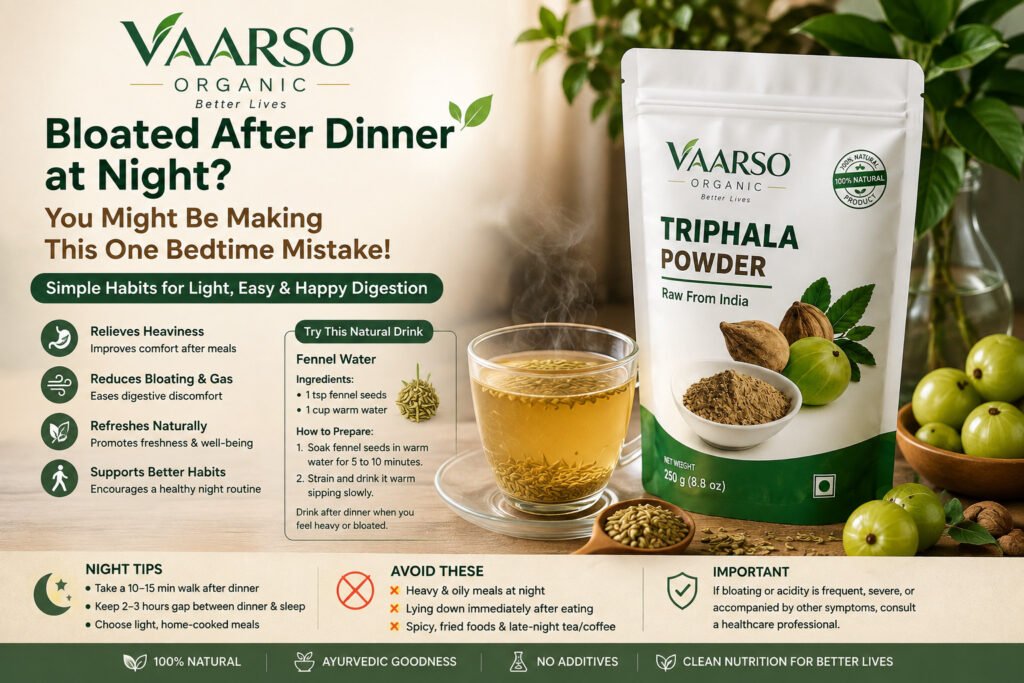
Stomach Bloating After Dinner: Causes, Remedies & Tips
Have you ever finished dinner, sat down for a while, and suddenly felt like your stomach had become unusually full or tight? Maybe there is some gas, frequent burping, heaviness, or that uncomfortable feeling that makes you want to loosen your clothes.
You are not alone.
Bloating after dinner is a common digestive complaint, and it can happen for many ordinary reasons. Eating a large meal, eating too quickly, drinking fizzy beverages, consuming foods that your body does not digest comfortably, or simply lying down soon after eating can all contribute to digestive discomfort. Gas itself is also normal: everyone produces and passes gas, and bloating can occur when gas or digestive contents make the abdomen feel full or swollen.
But there is one evening habit worth changing if you regularly feel uncomfortable after dinner:
Going straight to bed after a heavy meal.
If you often experience nighttime acidity, heartburn or reflux, leaving around three hours between your meal and lying down may help reduce symptoms.
In this guide from Vaarso Organic, we will look at why your stomach may feel bloated after dinner, common mistakes that make it worse, simple nighttime habits, the traditional use of fennel, its nutritional value, and practical ways to support comfortable digestion.
Why Does Your Stomach Feel Bloated After Dinner?
Bloating is usually described as a feeling of fullness, pressure or swelling in the abdomen. Sometimes the stomach may actually look larger, while in other cases the sensation is mainly internal.
There isn’t always one single reason.
Your digestive system is working after every meal. Food moves through the stomach and intestines while digestive juices and gut bacteria help break down what you have eaten. During this process, gas can naturally be produced.
Some people simply notice these sensations more strongly than others.
For example, you may feel particularly bloated after:
- Eating a very large dinner
- Eating too quickly
- Drinking carbonated beverages
- Eating foods that trigger gas for you
- Having a meal high in fat
- Suddenly increasing your fiber intake
- Eating foods containing lactose or certain poorly digested carbohydrates
- Swallowing extra air while eating or drinking
Eating quickly can also cause you to swallow more air, which may contribute to belching and other gas symptoms.
So, the answer isn’t necessarily to stop eating certain foods forever. The better approach is to understand your own triggers.
The Bedtime Mistake: Lying Down Too Soon After Dinner
This is particularly important for people who experience acid reflux or heartburn at night.
When you lie down soon after eating, you remove the benefit of staying upright while your digestive system is working. For people with nighttime GERD symptoms, the NIDDK recommends eating meals at least three hours before lying down or going to bed.
That doesn’t mean everyone must follow exactly the same schedule.
If you normally eat dinner at 7 p.m. and go to bed at 10 p.m., you already have a three-hour gap.
But if dinner happens at 10 p.m. and bedtime is 10:30 p.m., your body has very little time before you lie down.
A simple rule to remember
Dinner → stay upright → gentle movement → relax → sleep.
Not:
Dinner → sofa/bed → sleep.
This small change may be particularly useful if nighttime heartburn or reflux is one of your regular problems.
Don’t Confuse Bloating With Acid Reflux
Bloating and acid reflux can occur together, but they are not exactly the same thing.
Bloating usually feels like fullness, pressure or swelling around the abdomen.
Acid reflux occurs when stomach contents flow back toward the esophagus and may cause burning or an unpleasant taste.
Indigestion can also cause uncomfortable fullness, belching, nausea and bloating.
Understanding the difference matters because the solution may be different.
If your main problem is occasional fullness after a heavy meal, changing your eating habits may help.
If you repeatedly experience heartburn, regurgitation or symptoms when lying down, it is worth discussing them with a healthcare professional.
10 Common Reasons You May Feel Bloated at Night
1. Your Dinner Is Too Large
A large meal naturally gives your digestive system more work to do.
Instead of making dinner the biggest meal of your day, try eating a comfortable portion and paying attention to when you feel satisfied.
You don’t have to leave the table completely full.
2. You Eat Too Quickly
This is an extremely common habit.
When you’re hungry, it is easy to finish dinner in a few minutes while watching television, working or scrolling through your phone.
Eating slowly gives you more time to notice fullness and may also reduce the amount of air you swallow.
Try putting your spoon or fork down occasionally and actually tasting your food.
3. You Drink Fizzy Drinks With Dinner
Carbonated beverages can increase swallowed gas and may make bloating or belching more noticeable.
If you regularly feel bloated at night, try replacing fizzy drinks with plain water and see whether you notice a difference.
4. Your Body Doesn’t Handle Certain Foods Well
Different people react differently to food.
Some people experience more gas after certain legumes, cruciferous vegetables, dairy products, whole grains, high-fructose foods or sugar alcohols.
This does not mean these foods are unhealthy.
It simply means that your personal tolerance matters.
A simple food-and-symptom diary can help identify patterns.
5. Your Meal Is Very High in Fat
Fatty or greasy meals can feel heavy for some people and may worsen digestive symptoms.
Instead of completely avoiding fats, focus on balanced meals and reasonable portions.
6. You Suddenly Added Too Much Fiber
Fiber is an important part of a healthy diet, but increasing it very quickly can cause gas and bloating in some people.
If you are increasing fiber, do it gradually and give your digestive system time to adjust.
7. You Eat Very Close to Bedtime
This is especially relevant if you have nighttime reflux.
A meal followed almost immediately by lying down can make symptoms more noticeable in some people.
Giving yourself a few hours between dinner and bedtime is a simple habit worth trying.
8. Stress Is Part of Your Evening Routine
Have you noticed that your stomach feels different when you’re stressed?
The gut and brain communicate constantly, and functional digestive disorders can involve this gut-brain interaction.
A rushed dinner while worrying about tomorrow’s work may feel very different from a relaxed meal eaten slowly.
9. You Are Not Moving After Dinner
You don’t need a hard workout after eating.
A gentle walk can simply help you avoid immediately sitting or lying down after your meal.
Even a short walk around the house or neighborhood can become a useful nighttime routine.
10. There May Be an Underlying Digestive Problem
If bloating happens occasionally, it may simply be related to food or eating habits.
But frequent or persistent symptoms can sometimes be associated with conditions such as IBS, lactose intolerance, functional dyspepsia or other digestive disorders.
That is why repeatedly treating the symptom without understanding the cause isn’t always the best approach.
A Simple Nighttime Routine for Better Digestive Comfort
You don’t need a complicated routine.
Try this instead:
Step 1: Keep dinner comfortable
Don’t eat until you feel uncomfortably full.
Step 2: Slow down
Give yourself enough time to chew and enjoy your food.
Step 3: Choose water
If fizzy drinks make you bloated, keep them away from your evening meal.
Step 4: Take a gentle walk
A relaxed 10–15 minute walk can be an easy way to stay upright after dinner.
Step 5: Don’t go straight to bed
If you experience reflux at night, aim to leave about three hours between your meal and bedtime.
Step 6: Notice your personal triggers
If the same food repeatedly causes problems, write it down instead of guessing.
Fennel Water: A Traditional After-Dinner Option
Now let’s come to the simple kitchen remedy mentioned in the original idea: fennel seeds.
Fennel (Foeniculum vulgare) has a long history of culinary and traditional use in different parts of the world. Fennel seeds are commonly used after meals and have traditionally been associated with digestive comfort, including gas and bloating.
Research into fennel’s digestive effects is still developing, so it would be misleading to call fennel water a guaranteed treatment for bloating.
Think of it as a simple traditional beverage that some people may find soothing, rather than a cure.
How to Make Fennel Water
Ingredients
- 1 teaspoon fennel seeds
- 1 cup warm water
Method
- Add the fennel seeds to warm water.
- Let them steep for around 5–10 minutes.
- Strain the water.
- Allow it to become comfortably warm.
- Sip slowly after your meal if it suits you.
You can also use fennel as a normal culinary spice in meals.
Important point
You don’t need to make the drink extremely strong.
More is not automatically better, particularly when it comes to herbs and concentrated preparations.
What Are the Benefits of Fennel?
Fennel is best known as a flavorful culinary herb and spice, but its traditional uses extend to digestive comfort.
1. May support digestive comfort
Fennel has traditionally been used for mild digestive complaints such as bloating and flatulence.
2. Refreshing after meals
Its naturally sweet, aromatic flavor makes fennel popular as an after-meal mouth freshener.
3. Contains plant compounds
Fennel contains aromatic compounds and other phytochemicals that have been studied for their biological activity.
4. Easy to include in everyday food
You can use fennel seeds in cooking, teas and simple infusions without turning your diet into a complicated wellness routine.
But remember: traditional use is not the same as proven treatment.
Fennel should not be used as a substitute for medical care when digestive symptoms are persistent or severe.
Fennel Nutrition: What Does It Provide?
Fennel seeds contain several nutrients, including dietary fiber, protein, minerals and plant compounds. Nutrition databases based on USDA food-composition data list fennel seeds as particularly rich in fiber and also containing minerals such as calcium, iron, magnesium and potassium.
However, there is an important practical point.
You are not eating 100 grams of fennel seeds when you make a cup of fennel water.
A teaspoon is a small quantity.
So don’t look at the nutrient numbers for 100 grams and assume that a small cup of fennel water provides the same amount.
The real value of this simple drink is that it can be an easy, pleasant addition to a balanced routine.
Fennel Water: How to Use It
There is no universally established dose of fennel water that guarantees relief from bloating.
For a simple household preparation, using a small amount of fennel seeds to make a mild infusion is a reasonable culinary-style approach.
You can have it:
- After a meal when you enjoy it
- As a warm evening beverage
- Occasionally as part of your normal routine
You don’t have to drink it every night.
And if it doesn’t agree with you, there is no reason to force yourself to use it.
What About Vaarso Organic and Digestive Wellness?
At Vaarso Organic, our approach is simple: natural products should complement a healthy lifestyle, not replace sensible food choices, movement or medical care.
For people interested in everyday digestive wellness, products such as Vaarso Organic Triphala Powder may be considered as part of a broader wellness routine, depending on individual needs and product directions.
Triphala is a traditional Ayurvedic herbal preparation, but it should not be presented as a guaranteed cure for gas, bloating, constipation, acidity or digestive disease.
If you take medicines, are pregnant or breastfeeding, have a medical condition, or experience persistent digestive symptoms, speak with a qualified healthcare professional before regularly using herbal products.
What Should You Avoid Before Bed?
If your stomach regularly feels uncomfortable at night, try reducing these habits:
❌ Very large dinners
❌ Eating extremely quickly
❌ Lying down immediately after eating
❌ Fizzy drinks with dinner
❌ Very greasy meals if they trigger symptoms
❌ Foods you already know cause you problems
❌ Too much caffeine late in the evening
❌ Heavy late-night snacking
People with GERD may also have individual trigger foods. Commonly reported triggers include high-fat foods, spicy foods, chocolate, caffeine, alcohol, acidic foods and mint, although triggers vary from person to person.
What If You Feel Bloated Every Night?
This is where you should stop thinking only about home remedies.
If your stomach becomes bloated after dinner almost every day, keep a simple diary for a week or two.
Write down:
- What you ate
- How much you ate
- What time you ate
- How quickly you ate
- Drinks you had
- When bloating started
- Whether you had heartburn, constipation or diarrhea
- Whether the symptoms improved the next morning
A food and symptom diary can help identify patterns and can also give your doctor useful information if an evaluation is needed.
When Should You See a Doctor?
Occasional bloating is common.
But don’t ignore symptoms that are persistent, severe or changing.
Seek medical advice if bloating or indigestion occurs with symptoms such as:
- Unexplained weight loss
- Persistent or severe abdominal pain
- Frequent vomiting
- Difficulty or pain when swallowing
- Blood in vomit
- Black, tar-like stools
- Long-lasting abdominal swelling
- Loss of appetite
- Shortness of breath or chest pain
These symptoms can have causes that require proper medical evaluation.
And if your gas symptoms suddenly change or are accompanied by constipation, diarrhea, abdominal pain or weight loss, speak with a healthcare professional.
Frequently Asked Questions
1. Why does my stomach feel bloated after dinner?
It may be related to eating too much, eating quickly, swallowing air, certain foods, carbonated drinks, high-fat meals or digestive conditions. Your personal food triggers can also play a role.
2. Is lying down after dinner bad for digestion?
Lying down soon after eating can make nighttime reflux symptoms worse for some people. If you experience GERD symptoms at night, leaving around three hours between eating and lying down may help.
3. Can fennel water help with bloating?
Fennel has a long history of traditional use for digestive discomfort, including bloating and flatulence. However, scientific evidence is not strong enough to say that fennel water will work for everyone.
4. When should I drink fennel water?
A mild fennel infusion can be enjoyed after a meal if it suits you. There is no need to consume large amounts.
5. Can I drink fennel water every night?
Some people use fennel regularly as a food or beverage, but daily use is not necessary for everyone. If you have a medical condition, take medicines or plan to use concentrated herbal preparations regularly, ask a healthcare professional first.
6. Is bloating always caused by gas?
No. Bloating can have several causes, and people can feel bloated even when the amount of gas in their digestive tract is not unusually high.
7. Should I stop eating fiber if I get gas?
Not necessarily. Fiber is important, but increasing it too quickly can cause gas and bloating. Increasing fiber gradually may be easier for your digestive system.
8. Can I walk after dinner?
A gentle walk can be a practical way to remain upright and active after eating. You don’t need intense exercise immediately after dinner.
9. Can Triphala cure nighttime bloating?
It should not be described as a cure. Triphala is traditionally used in Ayurveda, but persistent bloating should be evaluated rather than managed only with herbal products.
10. What is the most important nighttime habit?
For people who experience nighttime reflux, one of the most useful habits is not going to bed immediately after dinner. Try leaving about three hours between eating and lying down.
Final Thoughts
A bloated stomach after dinner doesn’t always mean something is seriously wrong.
Sometimes the explanation is surprisingly simple: a large meal, fast eating, fizzy drinks, a personal food trigger or going to bed too soon.
Start with the basics.
Eat slowly. Keep portions comfortable. Drink water. Take a gentle walk. Notice which foods trigger your symptoms. And if you regularly experience nighttime reflux, give yourself enough time between dinner and bedtime.
If you enjoy traditional remedies, a mild cup of fennel water can be a simple addition to your evening routine. Just remember that natural does not automatically mean suitable for everyone, and no herbal drink should replace medical evaluation when symptoms persist.
At Vaarso Organic, we believe wellness is less about finding one magical ingredient and more about building better everyday habits.
Your last meal doesn’t have to be the beginning of nighttime discomfort. Sometimes, the better change starts with what you do after the meal. 🌙🌿
Ayurveda is not simply about remedies; it is also about learning to live in a way that supports everyday balance.