
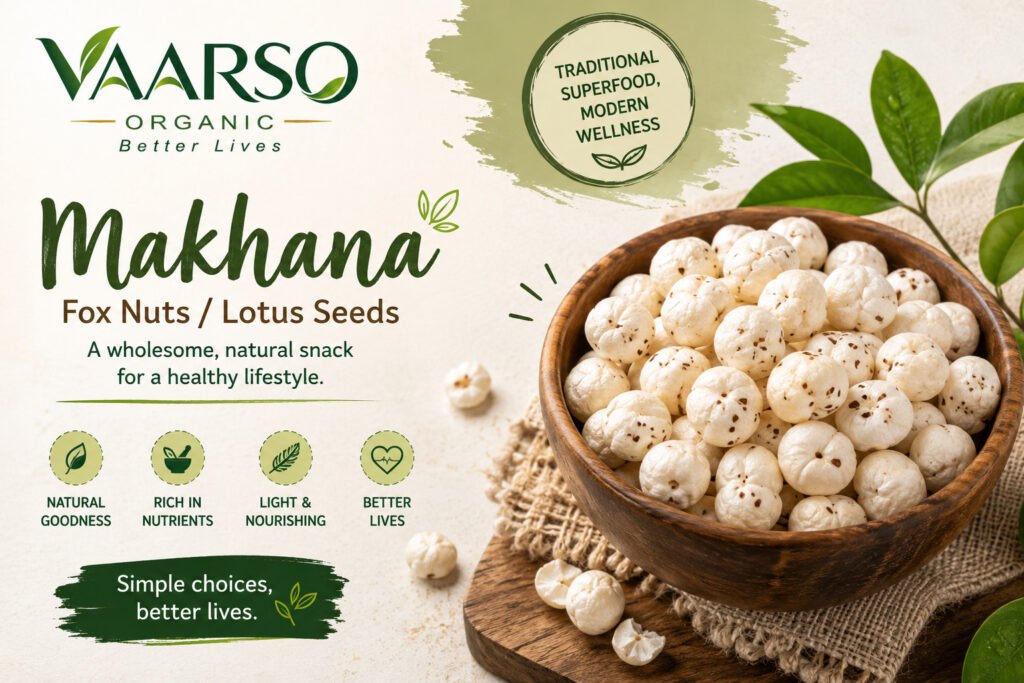
Makhana benefits have become a popular topic among people looking for simple, wholesome snack options. Also known as fox nuts, foxnut, gorgon nuts or phool makhana, these light and crunchy seeds come from Euryale ferox, an aquatic plant traditionally cultivated in parts of Asia.
For many people, makhana is simply a tasty roasted snack. But there is more to these little white, crunchy pieces than meets the eye. Makhana contains carbohydrates, plant protein, minerals, fibre and naturally occurring bioactive compounds such as polyphenols and flavonoids.
At Vaarso Organic, we believe healthy eating does not have to be complicated. Sometimes, choosing a simple whole-food snack instead of heavily processed alternatives can be a practical step towards a better everyday diet.
So, what are the real benefits of makhana, how nutritious is it, and what is the best way to include it in your daily meals?
Let’s take a closer look.
What Is Makhana?
Makhana is the edible seed of the aquatic plant Euryale ferox. It grows in freshwater environments such as ponds and lakes and is mainly associated with countries across Asia.
The seeds are processed and heated to produce the familiar puffed or popped makhana that people commonly eat as a snack.
You may hear makhana called lotus seeds, but there is an important botanical difference. Makhana comes from Euryale ferox, while true lotus seeds come from the lotus plant Nelumbo nucifera. In everyday food conversations, however, the names are sometimes used interchangeably.
Makhana has been part of traditional food cultures for generations. Today, it is becoming popular internationally because it is versatile, easy to prepare and can be used in both sweet and savoury recipes.
Makhana Nutrition: What Does It Contain?
One reason makhana has attracted attention is its nutritional profile.
The exact nutritional values can vary depending on whether the seeds are raw or popped, how they are processed and how they are prepared. Research reviews report that Euryale ferox seeds contain carbohydrates, protein, fibre, minerals and various bioactive compounds.
A review of raw fox nuts reported approximately 61% carbohydrates, 15.6% protein, 1.35% fat and 7.6% fibre, although these figures should not be treated as universal values for every commercially available product.
Key nutrients found in makhana include:
- Carbohydrates
- Plant-based protein
- Dietary fibre
- Magnesium
- Phosphorus
- Calcium
- Iron
- Other minerals
- Naturally occurring polyphenols
- Flavonoids and other plant compounds
This combination makes makhana an interesting addition to a varied diet.
However, nutrition is only one part of the picture. How you prepare it also matters. A bowl of lightly roasted makhana is quite different from makhana covered in large amounts of butter, sugar, salt or rich sauces.
10 Makhana Benefits You Should Know
1. Makhana Can Be a Better Snack Choice
Let’s start with one of the simplest benefits.
Makhana can make a convenient alternative to many highly processed snack foods. Instead of reaching for chips, biscuits or heavily fried snacks every afternoon, you can roast makhana and season it lightly.
Its crunchy texture can make healthy snacking feel more enjoyable.
This does not mean makhana is automatically “healthy” in every preparation. The ingredients added during cooking matter too.
For an everyday snack, try keeping the preparation simple with a small amount of oil or ghee and mild seasoning.
2. Provides Plant-Based Protein
Protein is important for maintaining muscles, supporting normal body functions and helping you feel satisfied after eating.
Makhana contains plant-based protein, although it should not be considered a complete replacement for protein-rich foods such as beans, lentils, dairy, eggs, fish, meat or other protein sources.
For people following vegetarian or plant-focused eating patterns, makhana can contribute to overall protein intake when combined with a varied diet.
3. Contains Dietary Fibre
Fibre plays an important role in a healthy diet.
It supports normal digestive function and can help make meals more satisfying. Makhana contains dietary fibre, although the amount depends on the form and processing of the product.
A simple way to increase the overall fibre quality of your diet is to combine foods such as makhana with vegetables, fruits, legumes, whole grains, nuts and seeds.
Remember that one food alone cannot provide all the fibre your body needs.
4. Contains Important Minerals
Makhana contains minerals including magnesium, phosphorus, calcium and iron, although the amounts can vary.
Magnesium
Magnesium contributes to normal muscle and nerve function and is involved in many processes throughout the body.
Phosphorus
Phosphorus is involved in maintaining normal bones and teeth and plays a role in energy metabolism.
Calcium
Calcium is important for bones and teeth as well as normal muscle function.
Iron
Iron contributes to normal oxygen transport in the body.
The important point is that makhana can contribute to your overall nutrient intake, but it should be viewed as one food within a balanced diet rather than a replacement for a varied nutritional pattern.
5. Makhana Contains Antioxidant Compounds
Another interesting area of research is the naturally occurring plant compounds in Euryale ferox.
Studies and reviews have identified compounds such as polyphenols, flavonoids and other phytochemicals in fox nuts. These compounds have antioxidant activity in laboratory and experimental research.
Antioxidants are commonly discussed because oxidative stress is involved in many normal biological processes.
However, it is important not to turn this into exaggerated health claims.
Eating makhana does not mean that it will “detox your body,” prevent ageing or cure disease. Instead, it is more sensible to think of makhana as one plant food that can contribute beneficial compounds to an overall balanced diet.
6. May Support a Balanced Eating Pattern
Makhana can fit into different eating styles.
You can enjoy it as:
- A mid-morning snack
- An afternoon snack
- A roasted evening snack
- A topping for soups
- An ingredient in homemade trail mixes
- A breakfast addition
- A dessert ingredient
- A crunchy salad topping
Its versatility makes it easier to include wholesome ingredients in everyday meals.
The biggest benefit may therefore be practical: it gives people another simple food option to build healthier snack habits around.
7. A Convenient Food for Busy Days
Modern lifestyles can make healthy eating difficult.
When you are working, studying or travelling, it is easy to grab whatever snack is available.
Keeping a suitable quantity of roasted makhana available at home or work can make choosing a simple snack easier.
You can prepare it in advance and store it in an airtight container.
For better overall nutrition, combine it with other foods rather than relying on makhana alone.
For example:
Makhana + fruit + yoghurt
or
Makhana + nuts + seeds
can make a more balanced snack than eating a large bowl of plain makhana by itself.
8. Can Be Used in Both Sweet and Savoury Foods
One of the most enjoyable things about makhana is its flexibility.
You don’t have to eat it the same way every day.
For savoury recipes
Try roasting makhana with:
- Black pepper
- Turmeric
- Cumin
- Paprika
- Garlic powder
- A small amount of salt
- Herbs and spices
For sweet recipes
You can add makhana to:
- Milk-based desserts
- Homemade cereal mixes
- Yogurt bowls
- Fruit bowls
- Porridge
- Smoothie bowls
If you are watching your sugar intake, keep added sugar to a minimum.
9. Makhana Can Add Variety to a Vegetarian Diet
For vegetarians and people who enjoy plant-based foods, variety is important.
Makhana provides another plant-derived food that can be combined with nuts, seeds, pulses, whole grains, vegetables and fruits.
Rather than looking for one “superfood” to solve every nutritional need, a better approach is to build meals around a variety of foods.
Think of your diet as a team.
Makhana can be one player—but it doesn’t have to be the entire team.
10. It Can Be Part of a Mindful Snacking Routine
Snacking is not necessarily unhealthy.
The problem is often what we snack on, how much we eat and why we are eating it.
If you are genuinely hungry between meals, a measured portion of roasted makhana can be a practical choice.
Try putting your portion into a small bowl instead of eating directly from a large packet or container.
This simple habit can make it easier to pay attention to how much you are eating.
Makhana and Brain Health: What Does the Evidence Say?
The supplied information describes makhana as a natural “brain booster” and suggests that it can improve concentration, memory and sleep.
It is better to take a more balanced view.
Makhana contains nutrients and plant compounds that are relevant to overall nutrition, including magnesium, phosphorus, protein and antioxidant compounds.
These nutrients contribute to normal body functions, but there is not enough high-quality human evidence to claim that eating makhana directly increases memory, prevents memory loss or guarantees better concentration.
The same applies to sleep.
A nutritious diet can support overall wellbeing, but makhana should not be presented as a treatment for insomnia, anxiety, depression or cognitive decline.
A better way to think about it:
Makhana can be part of a healthy eating pattern that supports overall nutrition.
For better brain health, focus on the bigger picture:
- Eat a varied diet
- Get enough sleep
- Stay physically active
- Drink enough fluids
- Manage stress
- Eat plenty of vegetables and fruit
- Include appropriate sources of protein and healthy fats
- Stay socially and mentally active
How to Eat Makhana
There are many easy ways to enjoy fox nuts.
1. Dry Roast Makhana
Place makhana in a pan and roast it over low to medium heat.
Stir regularly until it becomes crisp.
Add a small amount of seasoning according to your preference.
This is probably the easiest everyday method.
2. Makhana With Nuts and Seeds
Create a homemade snack mix using:
- Roasted makhana
- Almonds
- Walnuts
- Pumpkin seeds
- Sunflower seeds
- A few dried fruits
Keep the portion sensible because nuts and dried fruits can be calorie-dense.
3. Makhana With Milk
Makhana can also be cooked with milk.
Lightly roast the makhana first, then add it to warm milk and cook until soft.
You can add cardamom or cinnamon for flavour.
If using sugar, keep the quantity moderate.
4. Add Makhana to Yogurt
Crush roasted makhana into small pieces and add it to plain yogurt along with fresh fruit.
This creates a simple combination of crunch, protein and fruit.
5. Use Makhana in Homemade Recipes
Makhana can be incorporated into:
- Soups
- Curries
- Porridge
- Puddings
- Homemade snack mixes
- Breakfast bowls
- Desserts
Its mild taste allows it to work with many different ingredients.
Best Time to Eat Makhana
There is no scientifically established “perfect” time to eat makhana.
You can enjoy it whenever it fits comfortably into your eating routine.
Morning
Add it to breakfast or a yogurt bowl.
Afternoon
Use roasted makhana as a snack between meals.
Evening
It can be a useful alternative to heavily fried evening snacks.
Night
Some people enjoy makhana with warm milk as part of their evening routine. However, there is no need to eat it specifically before bed for “brain benefits.”
The most important factors are your overall diet, portion size and individual tolerance.
How Much Makhana Should You Eat?
There is no universal serving size that is perfect for everyone.
Your appropriate portion depends on your overall calorie needs, activity level, age and what else you are eating.
A small handful can be a reasonable starting point for a snack.
If you are adding nuts, seeds, dried fruit, milk or sweeteners, remember that the total calories can increase quickly.
People with specific dietary requirements, diabetes, kidney disease or other medical conditions should discuss suitable portions with a qualified healthcare professional or dietitian.
Is Makhana Good for Weight Management?
Makhana is sometimes promoted as a “weight-loss food.”
That description needs some context.
Makhana can be useful as a snack because it can replace less nutritious snack choices. But eating unlimited quantities will not automatically lead to weight loss.
Weight management depends on the overall balance between food intake, activity, sleep, lifestyle and individual factors.
If you are trying to manage your weight, choose lightly roasted makhana rather than versions heavily coated with:
- Butter
- Ghee
- Sugar
- Caramel
- Chocolate
- Excess salt
The preparation can make a big difference.
What to Look for When Buying Makhana
When choosing packaged makhana, look for:
- Clean, whole-looking pieces
- Fresh aroma
- Minimal unnecessary ingredients
- Reasonable salt levels
- No excessive added sugar
- Hygienic packaging
- Clear ingredient information
- Appropriate storage instructions
If you are buying plain makhana, you can roast and season it yourself at home.
This gives you much greater control over the ingredients.
Simple Makhana Snack Recipe
Ingredients
- 1 small bowl of makhana
- A small amount of cooking oil or ghee
- A pinch of turmeric
- Black pepper
- Cumin powder
- Salt according to preference
Method
- Heat a pan on low to medium heat.
- Add the makhana.
- Roast slowly while stirring.
- Continue until the pieces become crisp.
- Add your preferred seasoning.
- Mix well.
- Allow it to cool before storing.
That’s it.
No complicated recipe is required.
Who Can Enjoy Makhana?
For most healthy adults, makhana can be included as part of a varied diet.
It may be particularly convenient for:
- People looking for simple snack options
- Vegetarians
- People who enjoy traditional foods
- Families looking for homemade snack ideas
- Students and office workers
- People who want to reduce heavily processed snacking
Children can also eat suitable foods containing makhana, but portions and preparation should be age-appropriate, and whole or hard pieces may present a choking risk for very young children.
A Few Things to Keep in Mind
Makhana is nutritious, but more is not always better.
Some people may experience digestive discomfort if they suddenly consume large amounts of a high-fibre or unfamiliar food.
Also remember that flavoured commercial products may contain significant amounts of salt, sugar or added fats.
If you have a food allergy, digestive condition or medically restricted diet, check the ingredients and seek professional advice when necessary.
Frequently Asked Questions About Makhana
Is makhana the same as lotus seeds?
Makhana is commonly called lotus seeds or fox nuts, but botanically it comes from Euryale ferox, which is different from the true lotus plant.
What are the main makhana benefits?
Makhana provides carbohydrates, plant protein, fibre, minerals and naturally occurring plant compounds. It can be a convenient alternative to heavily processed snacks when prepared simply.
Is makhana good for the brain?
Makhana contains nutrients involved in normal body functions, but there is not enough human evidence to say that it directly improves memory or prevents cognitive decline. It is better considered part of a balanced diet rather than a brain treatment.
Can I eat makhana every day?
For most healthy people, makhana can be included regularly as part of a varied diet. Keep portions sensible and pay attention to added salt, sugar and fats.
Is roasted makhana healthy?
Lightly roasted makhana can be a nutritious snack option. The healthfulness depends partly on what you add during preparation.
Can children eat makhana?
Older children can generally enjoy appropriately prepared makhana, but very young children should not be given hard or whole pieces because of choking concerns. Preparation and portion size should be age-appropriate.
Can makhana help with weight loss?
Makhana itself does not cause weight loss. However, lightly prepared makhana may help replace some highly processed snack foods. Weight management depends on the overall diet and lifestyle.
Can I eat makhana at night?
Yes, if it suits your eating routine. There is no requirement to eat makhana at a particular time of day.
Is makhana high in protein?
Makhana contains plant protein, but it should not be considered an exceptionally high-protein food. It can contribute to your daily protein intake when combined with other protein-rich foods.
Is makhana suitable for a vegetarian diet?
Yes. Makhana is plant-derived and can be included in vegetarian and plant-focused eating patterns.
Final Thoughts
Makhana is a good example of how simple foods can find a place in a modern diet.
It is crunchy, versatile and naturally contains carbohydrates, plant protein, fibre, minerals and a range of plant compounds. Research into Euryale ferox continues, particularly around its nutritional and functional properties.
But there is no need to call it a miracle food.
You don’t need a miracle food to eat better.
A better approach is to build everyday habits around a variety of minimally processed foods, regular physical activity, adequate sleep and balanced meals.
So the next time you want something crunchy between meals, consider a simple bowl of lightly roasted makhana.
Small food choices, when repeated consistently, can become meaningful lifestyle habits.
Vaarso Organic — Better Lives.
Disclaimer: This article is for general educational purposes only. Makhana is a food, not a medicine or treatment for any disease. If you have a medical condition, food allergy, special dietary requirement or are taking medication, consult an appropriate healthcare professional before making significant dietary changes.