
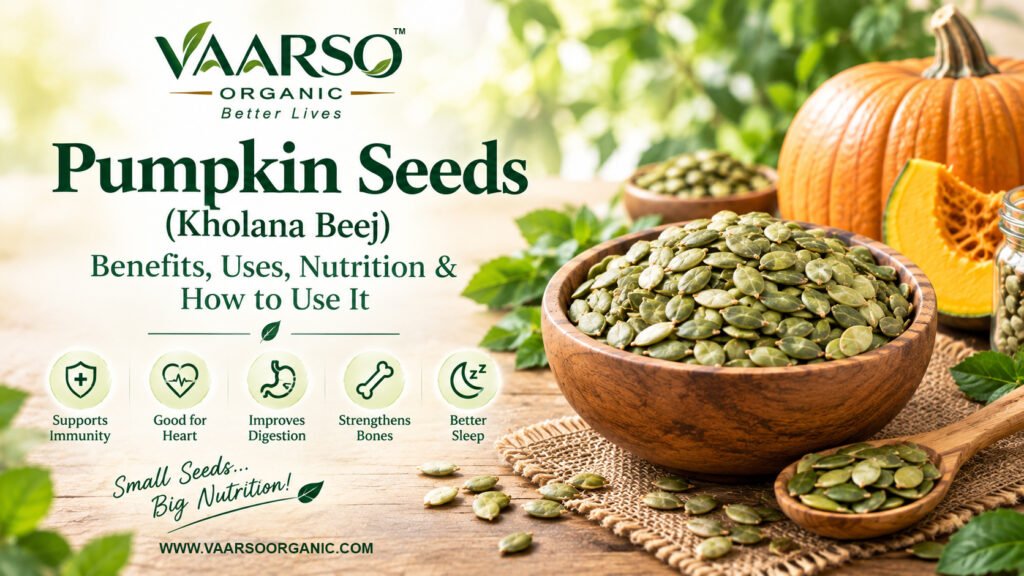
Pumpkin Seeds Benefits: Nutrition, Uses & How to Eat Them
They are small, crunchy, easy to store and surprisingly rich in nutrients. You can sprinkle them over breakfast, blend them into a smoothie, add them to salads or simply enjoy a small handful as a snack.
Known as pumpkin seeds, these edible seeds come from pumpkins and other squash varieties. In many parts of the world, they have traditionally been eaten roasted, added to breads and cereals, incorporated into regional dishes or pressed for their oil.
Today, pumpkin seeds are attracting attention for another reason: their impressive nutritional profile.
They provide protein, dietary fibre, magnesium, zinc, phosphorus, iron and predominantly unsaturated fats. They also contain plant compounds such as phytosterols, tocopherols and other antioxidants.
But are pumpkin seeds really as beneficial as social media sometimes suggests?
Can they improve digestion? Do they support heart health? Can they help with sleep? And what about the frequently discussed connection between pumpkin seeds and prostate health?
The answer is more interesting than a simple “yes” or “no.”
Pumpkin seeds can certainly be part of a nutritious diet, but they are not a medicine or a cure for disease.
In this guide, Vaarso Organic looks at pumpkin seed benefits from a practical perspective—combining modern nutrition with traditional food wisdom and an Ayurvedic-inspired approach to everyday wellness.
What Are Pumpkin Seeds?
Pumpkin seeds are the edible seeds found inside pumpkins and certain other squash varieties, particularly those belonging to the Cucurbita genus.
They may be eaten: 
- Raw
- Dry roasted
- Lightly toasted
- Added to breakfast foods
- Ground into a powder
- Mixed into smoothies
- Sprinkled over salads
- Added to soups
- Used in baking
- Pressed to make pumpkin seed oil
You may also come across pepitas, which generally refers to the hulled pumpkin seed kernel.
One of the most appealing things about pumpkin seeds is that they provide a combination of plant protein, healthy fats, fibre and minerals in a relatively small serving.
That makes them useful for people following many different eating patterns, including vegetarian and plant-forward diets.
Pumpkin Seeds Nutrition: What Makes Them Special?
Pumpkin seeds are nutrient-dense rather than simply calorie-free “health food.”
For example, USDA-derived nutrition data for roasted, unsalted pumpkin/squash seed kernels lists approximately 574 kcal, 29.8 g protein, 6.5 g fibre, 49.1 g fat, 550 mg magnesium, 1,174 mg phosphorus and 7.6 mg zinc per 100 g.
Of course, most people don’t eat 100 grams at once.
A more realistic everyday portion is around 20–30 g, depending on your overall diet and energy needs.
This means a small serving can contribute meaningful amounts of:
Protein
Protein helps maintain muscles, tissues, enzymes and many essential body functions.
Magnesium
Pumpkin seeds are particularly rich in magnesium. Magnesium participates in hundreds of biochemical reactions involved in energy production, muscle and nerve function, protein synthesis and bone health.
Zinc
Zinc is important for normal immune function, wound healing, DNA synthesis and many other biological processes.
Phosphorus
Phosphorus works with calcium and other nutrients in maintaining bones and teeth and is involved in energy metabolism.
Iron
Iron is needed for haemoglobin formation and oxygen transport.
Healthy fats
Most of the fat in pumpkin seeds is unsaturated fat, making them a useful alternative to many highly processed snack foods.
Fibre
Fibre supports digestive health and can contribute to fullness after eating.
So rather than thinking of pumpkin seeds as a miracle food, it is more useful to think of them as a compact package of useful nutrients.
1. Pumpkin Seeds May Support Digestive Health
One of the simplest benefits of pumpkin seeds comes from their fibre content.
Dietary fibre contributes to normal bowel function and can help make a healthy diet more satisfying.
If your usual diet is low in fibre, adding nutrient-rich foods such as seeds, vegetables, fruits, legumes and whole grains can help increase overall fibre intake.
However, there is an important practical rule:
Increase fibre gradually and drink enough fluids.
Suddenly eating large quantities of seeds can cause:
- Gas
- Bloating
- Abdominal discomfort
So if pumpkin seeds are new to your diet, start with a small portion rather than eating a large handful immediately.
2. Pumpkin Seeds and Heart Health
Pumpkin seeds contain predominantly unsaturated fats, magnesium and other plant compounds.
These nutrients fit naturally into a heart-conscious eating pattern.
More broadly, research on nuts and seeds has found associations between higher consumption and lower cardiovascular disease risk. A large systematic review found probable associations between nuts/seeds consumption and lower cardiovascular disease and coronary heart disease risk, although evidence varies by food type and outcome.
This does not mean that pumpkin seeds alone prevent heart disease.
Instead, think about what they can replace.
For example:
Pumpkin seeds instead of a highly processed, salty snack can be a meaningful dietary improvement.
That is where nutrition often works best—not through one “superfood,” but through better choices repeated consistently.
3. Pumpkin Seeds Provide Immune-Supporting Nutrients
Zinc is one of the nutrients involved in normal immune function.
Pumpkin seeds can contribute zinc to the diet, along with protein, magnesium and other micronutrients.
But there is an important distinction:
Eating pumpkin seeds supports nutrient intake; it does not make someone immune to infections.
Your immune system depends on many factors, including overall nutrition, sleep, physical activity, age, health conditions, medications and vaccination status.
So instead of calling pumpkin seeds an “immunity booster,” it is more accurate to say:
Pumpkin seeds can contribute nutrients needed for normal immune function.
That wording may sound less dramatic, but it is much closer to what nutrition science actually tells us.
4. May Support Bone Health
Magnesium and phosphorus are both present in pumpkin seeds.
These minerals participate in the structure and metabolism of bone tissue.
Bone health, however, is never about one mineral alone.
Calcium, vitamin D, protein, physical activity, age, hormones and overall nutritional status all matter.
Adding pumpkin seeds to a varied diet can therefore be one small part of a broader bone-health strategy.
Think:
Seeds + dairy or fortified alternatives + vegetables + protein + movement + adequate vitamin D
rather than relying on one food.
5. Pumpkin Seeds and Better Sleep: What Does Science Say?
This is one of the more interesting claims surrounding pumpkin seeds.
Pumpkin seeds contain magnesium and tryptophan, an amino acid involved in the biochemical pathway that produces serotonin and melatonin.
Because of this, pumpkin seeds are sometimes described as a “natural sleep food.”
But we should be careful with that phrase.
Research investigating magnesium and sleep has produced interesting but not definitive results. A systematic review found associations between magnesium status and some measures of sleep, while randomized trials produced contradictory findings.
A later randomized trial of magnesium bisglycinate found a modest improvement in insomnia severity in adults reporting poor sleep, but this was a study of a magnesium supplement—not pumpkin seeds specifically.
So the sensible conclusion is:
Pumpkin seeds provide nutrients involved in normal physiological processes related to sleep, but eating them should not be presented as a treatment for insomnia.
A small serving as part of an evening snack may be perfectly reasonable if it suits your diet.
6. Pumpkin Seeds for Weight Management
Pumpkin seeds are calorie-dense because they contain a significant amount of fat.
That sounds like a disadvantage until you consider portion size and food quality.
Their combination of:
- Protein
- Fibre
- Fat
can make them satisfying.
A small amount added to oatmeal, yoghurt, a salad or a smoothie can make a meal more filling.
But eating large quantities simply because pumpkin seeds are “healthy” can add substantial calories.
So for weight management:
Better approach
Use pumpkin seeds as a measured ingredient rather than an unlimited snack.
A tablespoon or small handful may be enough to add crunch and nutrition without turning a light meal into a calorie-heavy one.
7. Pumpkin Seeds and Men’s Prostate Health
This is one of the most frequently discussed benefits of pumpkin seeds, particularly as men get older.
Pumpkin seeds and pumpkin seed preparations have been investigated in relation to lower urinary tract symptoms associated with benign prostatic hyperplasia (BPH).
There is some interesting clinical research.
A large one-year randomized study involving 1,431 men aged 50–80 with BPH-related urinary symptoms found that men receiving pumpkin seeds experienced a clinically relevant improvement in symptom scores compared with placebo, although the researchers noted that additional evidence was needed before making firm recommendations.
Another randomized clinical trial investigated pumpkin seed oil versus tamsulosin in men with BPH. Both groups showed improvement in symptoms and quality of life, but tamsulosin produced a greater reduction in symptom scores at one and three months.
This is promising—but it doesn’t mean:
“Pumpkin seeds cure prostate enlargement.”
They don’t.
A more accurate statement is:
Pumpkin seeds and pumpkin seed preparations have been studied as potential supportive options for urinary symptoms associated with BPH, but they should not replace medical evaluation or prescribed treatment.
If you experience frequent nighttime urination, weak urine flow, difficulty starting urination, urgency or incomplete bladder emptying, talk to a healthcare professional.
These symptoms can have several causes and deserve proper assessment.
Pumpkin Seeds in Ayurveda and Traditional Food Wisdom
Pumpkin seeds are not one of the most prominent herbs in classical Ayurveda in the same way as amla, turmeric, ginger or ashwagandha.
That distinction is important.
It would be misleading to take a modern nutrition claim and label it automatically as an ancient Ayurvedic teaching.
However, the broader Ayurvedic philosophy of food gives us an interesting way to appreciate seeds.
Ayurveda traditionally emphasizes: 
- Digestive capacity
- Individual constitution
- Food quality
- Season
- Portion
- Daily routine
- Balance
Seeds are naturally dense foods, and their oils and nutrients make them suitable as part of a nourishing diet when used appropriately.
The lesson is simple:
Even a nutritious food should be consumed according to one’s appetite, digestion and overall dietary needs.
This idea fits beautifully with modern nutrition too.
How to Eat Pumpkin Seeds
There is no complicated recipe required.
1. Eat Them Raw
Unsalted raw pumpkin seeds can be added to:
- Breakfast bowls
- Salads
- Oatmeal
- Yoghurt
- Smoothies
- Homemade trail mixes
Choose food-grade seeds and store them properly.
2. Lightly Roast Them
Dry roasting can make pumpkin seeds crunchy and bring out their natural flavour.
Try:
Pumpkin seeds + a little turmeric + black pepper + herbs
instead of coating them in excessive salt or oil.
3. Add Them to Breakfast
Sprinkle 1–2 tablespoons over:
- Oatmeal
- Overnight oats
- Yoghurt
- Fruit bowls
- Chia pudding
This is perhaps one of the easiest ways to make them part of a daily routine.
4. Add Them to Salads
Pumpkin seeds provide a pleasant crunch to salads.
Combine them with:
- Leafy greens
- Cucumber
- Tomato
- Carrot
- Avocado
- Beans or lentils
and a simple olive-oil-based dressing.
5. Blend Into Smoothies
A tablespoon of pumpkin seeds can be blended into a smoothie containing:
- Banana
- Berries
- Unsweetened yoghurt
- Milk or plant-based milk
- Cinnamon
This increases the nutrient density and makes the smoothie more satisfying.
6. Make Pumpkin Seed Powder
Lightly roasted pumpkin seeds can be ground into a coarse powder.
You can add a small amount to:
- Porridge
- Soups
- Smoothies
- Homemade energy bites
- Whole-grain recipes
Keep the powder refrigerated if you make a larger quantity, because the natural oils can eventually become rancid.
How Much Pumpkin Seed Should You Eat?
There is no universal medical dose.
For everyday nutrition, around 20–30 g (roughly 1–2 tablespoons, depending on seed size and whether they are whole or chopped) is a practical serving for many adults.
You don’t need to eat them every day to benefit from them.
A varied diet is more important than rigidly following a specific daily quantity.
If you are increasing fibre intake, start smaller and increase gradually.
Raw or Roasted: Which Is Better?
Both can fit into a healthy diet.
Raw pumpkin seeds
- No roasting required
- Naturally crunchy
- Convenient for smoothies and breakfast bowls
Lightly roasted pumpkin seeds
- More intense flavour
- Crunchier texture
- Excellent as a snack or topping
The bigger concern is what is added during roasting.
Try to avoid varieties that are:
- Heavily salted
- Deep-fried
- Coated with excess sugar
- Covered in highly processed flavourings
A simple unsalted or lightly seasoned version is usually the easier everyday choice.
Pumpkin Seed Oil vs Pumpkin Seeds
These two products are related but not nutritionally identical.
Whole pumpkin seeds contain:
- Protein
- Fibre
- Minerals
- Fat
- Other plant compounds
Pumpkin seed oil is primarily a source of fat and does not provide the same fibre and protein content as the whole seed.
Interestingly, pumpkin seed oil has also been studied in BPH research, but research on a specific oil preparation should not be automatically applied to every bottle of pumpkin seed oil sold commercially.
Always consider the actual product, dose and evidence.
Who Should Be Careful With Pumpkin Seeds?
For most people, pumpkin seeds can be included as part of a balanced diet.
However, a few considerations are important.
Food allergy
Anyone with a known seed allergy should avoid pumpkin seeds and seek professional guidance.
Digestive sensitivity
Large quantities can cause:
- Gas
- Bloating
- Abdominal discomfort
Calories
Seeds are nutrient-dense but also energy-dense. Large portions can add significant calories.
Salt
If you have been advised to limit sodium, choose unsalted pumpkin seeds.
Kidney disease
People with kidney disease may need individualized guidance regarding minerals such as phosphorus and potassium. Do not make major dietary changes without discussing them with your healthcare professional.
A Simple Pumpkin Seed Routine
If you want to make pumpkin seeds part of your lifestyle, keep it uncomplicated.
Morning
Add 1 tablespoon to oatmeal, yoghurt or a smoothie.
Lunch
Sprinkle a small amount over your salad.
Evening
Use a small portion as part of a balanced snack instead of highly processed foods.
You don’t need all three.
Choose one that naturally fits your routine.
That is more sustainable than creating a complicated “superfood” schedule.
Frequently Asked Questions
1. What are the main pumpkin seed benefits?
Pumpkin seeds provide protein, fibre, magnesium, zinc, phosphorus, iron and predominantly unsaturated fats. They can contribute to digestive, nutritional, bone, immune and cardiovascular wellness when included as part of a balanced diet.
2. How many pumpkin seeds should I eat per day?
There is no fixed medical requirement. Around 20–30 g per day is a practical serving for many adults, but individual needs vary.
3. Are pumpkin seeds good for digestion?
They can contribute dietary fibre, which supports normal digestive function. However, eating too many at once may cause gas or bloating.
4. Can pumpkin seeds help with sleep?
They provide magnesium and tryptophan, nutrients involved in physiological processes related to sleep. However, evidence does not establish pumpkin seeds as a treatment for insomnia. Research on magnesium and sleep remains mixed.
5. Are pumpkin seeds good for men?
Pumpkin seeds are nutrient-rich and have been studied in relation to prostate and urinary symptoms associated with BPH. Some clinical studies are encouraging, but pumpkin seeds should not replace professional evaluation or prescribed BPH treatment.
6. Can pumpkin seeds reduce prostate enlargement?
There is not enough evidence to claim that ordinary pumpkin seeds shrink an enlarged prostate. Some research suggests potential improvement in urinary symptoms, but further research is needed.
7. Are pumpkin seeds good for the heart?
They contain unsaturated fats, magnesium, fibre and other plant compounds. More broadly, research on nuts and seeds supports an association between their consumption and cardiovascular health, although evidence for individual seed types varies.
8. Are pumpkin seeds good for immunity?
Pumpkin seeds provide zinc and other nutrients involved in normal immune function. They should be considered part of a nutritious diet rather than a medicine or guaranteed immunity booster.
9. Should pumpkin seeds be eaten raw or roasted?
Both can be suitable. Choose raw or lightly roasted, preferably unsalted seeds. Avoid heavily salted or oil-fried versions for everyday eating.
10. Can pumpkin seeds help with weight loss?
They may help with satiety because they provide protein, fat and fibre. But they are calorie-dense, so portion control matters.
11. Are pumpkin seeds suitable for vegetarians and vegans?
Yes. Pumpkin seeds are plant-based and can provide protein, minerals and healthy fats in vegetarian and vegan diets.
12. Can I eat pumpkin seeds at night?
Yes, if they suit your digestion and overall diet. A small portion can be used as part of an evening snack. However, they should not be considered a guaranteed sleep remedy.
Final Thoughts
Sometimes the healthiest foods are the least complicated.
Pumpkin seeds don’t need a dramatic health claim to be valuable.
They are naturally rich in protein, fibre, magnesium, zinc, phosphorus, iron and unsaturated fats, making them a useful addition to a balanced diet.
They can add crunch to a salad, nutrition to breakfast, texture to a smoothie or simply become a better alternative to highly processed snacks.
And perhaps the most interesting part is that modern research is beginning to explore some of the traditional interest in pumpkin seeds—particularly around cardiovascular nutrition and men’s urinary/prostate health. But good science also tells us where the evidence ends.
At Vaarso Organic, we believe natural wellness should not be about chasing the next miracle ingredient.
It should be about understanding food, respecting tradition and making small, sensible choices that can be sustained for years.
A spoonful of pumpkin seeds won’t transform your health overnight. But as part of a thoughtful diet, it can be one small—and delicious—step toward better living.