
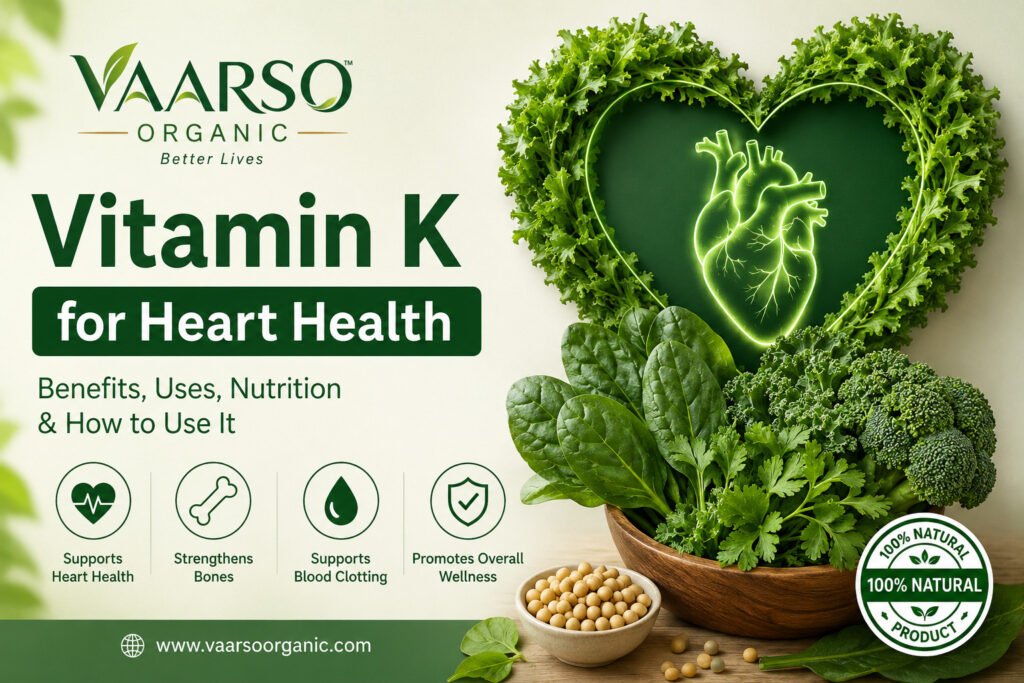
Vitamin K for Heart Health is an important topic for anyone interested in maintaining a balanced diet and supporting overall wellness. Vitamin K is a fat-soluble vitamin that plays an important role in normal blood clotting and bone health. It is naturally found in a variety of green leafy vegetables and other foods that can easily be included in everyday meals. When people talk about vitamins and heart health, the conversation usually turns to vitamin D, vitamin B12, vitamin C or omega-3 fatty acids. Vitamin K, however, often gets overlooked.
That is a little surprising because vitamin K has several important roles in the body. It is essential for normal blood clotting and contributes to healthy bones. Researchers are also studying vitamin K-dependent proteins involved in bone metabolism and the health of blood vessels.
This doesn’t mean that vitamin K is a magic “heart-protection vitamin,” or that taking a vitamin K supplement can prevent heart disease. The science around vitamin K and cardiovascular health is still developing. In fact, the NIH notes that more research is needed to determine whether vitamin K supplementation can help prevent heart disease.
What we do know is much more practical: vitamin K is an important nutrient, and green vegetables are among its best natural food sources.
At Vaarso Organic, we believe that good health starts with simple everyday choices—more vegetables, a varied diet, regular movement and less dependence on highly processed foods.
So, let’s take a closer look at vitamin K, its nutritional role, potential benefits, food sources and easy ways to include more vitamin-K-rich foods in your daily routine.
What Is Vitamin K?
Vitamin K is a fat-soluble vitamin, meaning it is absorbed along with dietary fat. It is actually a family of related compounds rather than just one single substance.
The two main dietary forms people commonly hear about are:
- Vitamin K1 (phylloquinone) – found mainly in green leafy vegetables and some plant foods.
- Vitamin K2 (menaquinones) – includes several forms such as MK-4 and MK-7 and occurs in certain animal and fermented foods.
Vitamin K has a particularly well-established role in normal blood clotting. It is also involved in proteins associated with bone metabolism.
Another interesting area of research concerns matrix Gla-protein (MGP), a vitamin-K-dependent protein found in blood vessels and other tissues. Researchers are investigating its possible relationship with abnormal vascular calcification.
This is where the connection between vitamin K and heart health becomes interesting—but it is important not to jump from biological research to claims that vitamin K supplements can prevent or reverse heart disease.
Why Is Vitamin K Important for the Body?
Vitamin K performs several jobs that we may not notice day to day.
1. It supports normal blood clotting
One of vitamin K’s best-established functions is helping the body produce proteins involved in blood clotting. Without adequate vitamin K, the blood can take longer to clot. Severe vitamin K deficiency can therefore lead to bruising and bleeding problems.
2. It contributes to healthy bones
Vitamin K-dependent proteins are involved in bone metabolism. Research has explored the relationship between vitamin K intake, bone strength and osteoporosis, although evidence on whether vitamin K supplements prevent fractures remains mixed.
3. It may have a role in vascular health
This is one of the areas receiving scientific attention.
Certain proteins in blood vessels require vitamin K to function properly. One of them, matrix Gla-protein, has been studied because of its potential role in limiting abnormal calcification of blood vessels.
A systematic review published in Heart found that vitamin K supplementation was associated with a reduction in measures of vascular calcification, but the researchers also highlighted limitations such as small numbers of studies and substantial differences between studies. Larger clinical trials are still needed.
So, the sensible takeaway is simple:
Vitamin K is important for normal body functions, and its relationship with cardiovascular health is promising but not yet fully established.
Vitamin K and Heart Health: What Do We Actually Know?
This is probably the question most readers want answered.
Does vitamin K protect the heart?
The honest answer is: vitamin K is important for normal health, and researchers are investigating its role in cardiovascular health, but vitamin K should not be described as a proven treatment or cure for heart disease.
Scientists are particularly interested in whether vitamin K-dependent proteins influence vascular calcification and stiffness.
The NIH explains that researchers are studying whether low vitamin K status may be associated with coronary heart disease, potentially through effects on the stiffness and narrowing of blood vessels. However, more research is needed to understand whether vitamin K supplements can actually help prevent heart disease.
That distinction matters.
A healthy diet containing plenty of vegetables is a sensible habit. Taking high-dose vitamin K supplements because you believe they will “clean your arteries” is a very different claim—and one that current evidence does not justify.
What Happens When Vitamin K Intake Is Too Low?
Severe vitamin K deficiency is uncommon in healthy adults.
According to the NIH, most people get enough vitamin K from their diets, and some vitamin K is also produced by bacteria in the large intestine. Certain conditions can interfere with absorption, however. These include some intestinal disorders and situations following bariatric surgery.
A significant deficiency can affect normal blood clotting and may lead to:
- Easy bruising
- Excessive bleeding
- Longer blood-clotting time
Low vitamin K status may also have implications for bone health.
Rather than worrying about deficiency without reason, the more useful approach is to regularly include nutritious sources of vitamin K in a balanced diet.
Best Foods Rich in Vitamin K
You don’t need an expensive supplement to include vitamin K in your diet.
In fact, some of the best sources are everyday foods that are readily available in Indian kitchens.
Green Leafy Vegetables
This is where vitamin K really shines.
Good choices include:
- Spinach
- Fenugreek leaves (methi)
- Mustard greens
- Kale
- Lettuce
- Coriander
- Other leafy greens
The NIH identifies green leafy vegetables as major sources of vitamin K.
A simple bowl of leafy vegetables with lunch or dinner can be an easy addition to your regular diet.
Broccoli and Other Green Vegetables
Broccoli is another useful source of vitamin K.
You can steam it, stir-fry it or add it to mixed vegetable dishes.
Other green vegetables can contribute to your overall intake as well.
The idea isn’t to focus on one “superfood.” A variety of vegetables gives your diet a broader nutritional profile.
Soybeans
Soybeans also contain vitamin K and can be included in a varied diet.
For vegetarians and people looking for plant-based sources of nutrients, soy foods can be a useful part of meals.
Vegetable Oils
Some vegetable oils contain vitamin K.
However, oils are calorie-dense, so the goal isn’t to consume large quantities simply to increase vitamin K. Use them sensibly as part of balanced cooking.
Vitamin K Nutrition: How Much Do You Need?
The recommended amount of vitamin K depends on age and sex.
For adults, the NIH lists an adequate intake of approximately:
- Adult men: 120 mcg per day
- Adult women: 90 mcg per day
These figures are for vitamin K intake from food and other sources combined.
For most healthy adults, getting vitamin K from a varied diet is a practical approach.
If you are considering supplements, however, your personal situation matters—especially if you take medication that interacts with vitamin K.
Simple Ways to Add More Vitamin K to Your Diet
You don’t need to completely change your eating habits.
Small changes can make a difference.
Start your lunch with greens
Add spinach, methi or another leafy vegetable to your lunch.
Add vegetables to dal
Mix spinach, methi or other greens into dal for an easy nutritional upgrade.
Keep broccoli on the menu
Steam or lightly sauté broccoli and serve it alongside your usual meal.
Make green chutney
Fresh coriander, herbs and vegetables can make a simple chutney that adds flavour and variety to meals.
Choose homemade meals more often
Home-cooked meals make it easier to control how much salt, oil and highly processed ingredients you consume.
Can Vitamin K Help Strengthen Bones?
The connection between vitamin K and bone health is another reason this nutrient is important.
Vitamin K is involved in the function of osteocalcin, a vitamin-K-dependent protein found in bone. Research has looked at whether vitamin K intake or supplementation can improve bone strength or reduce fracture risk. The results, however, are not consistent enough to say that vitamin K supplements prevent osteoporosis or fractures.
For strong bones, think beyond one nutrient.
A healthy bone-supporting lifestyle also includes:
- Adequate calcium
- Sufficient vitamin D
- Protein
- Regular weight-bearing activity
- A balanced diet
- Healthy lifestyle habits
Vitamin K is one piece of the larger picture.
Vitamin K and Calcium: Why the Relationship Matters
Calcium gets a lot of attention when we talk about bones.
But calcium doesn’t work in isolation.
Vitamin K-dependent proteins are involved in bone metabolism, which is why researchers are interested in the relationship between vitamin K and calcium handling in the body. Matrix Gla-protein is also being studied for its role in vascular tissues.
This is sometimes simplified online into the phrase “vitamin K sends calcium to your bones and keeps it out of your arteries.”
That wording is catchy, but the actual biology is more complicated.
It’s better to say that vitamin K is required for the activation of certain proteins involved in bone and vascular biology, while the long-term effects of supplementation on cardiovascular outcomes remain an active area of research.
Who Should Pay Attention to Vitamin K Intake?
Everyone needs vitamin K, but some people may need to pay particular attention to their intake or discuss it with a healthcare professional.
This includes people who:
- Have conditions affecting nutrient absorption
- Have certain gastrointestinal disorders
- Have undergone bariatric surgery
- Take medications that interact with vitamin K
- Are considering vitamin K supplements
The most important group to mention is people taking warfarin, a commonly prescribed anticoagulant.
Vitamin K can interact significantly with warfarin. The NIH recommends that people taking warfarin keep their vitamin K intake relatively consistent rather than suddenly making large changes.
If you take warfarin, do not start or stop vitamin K supplements or dramatically change your intake of vitamin-K-rich foods without speaking with your doctor or anticoagulation team.
Vitamin K Supplements: Are They Necessary?
For most people, the first step should be food.
Green vegetables, broccoli, soybeans and other vitamin-K-containing foods can be part of a healthy eating pattern.
Supplements may be appropriate in specific circumstances, but they aren’t automatically better than food.
And more isn’t necessarily better.
If you are thinking about taking vitamin K supplements for heart health, bone health or another specific reason, discuss it with a qualified healthcare professional first.
The evidence around vitamin K supplementation and cardiovascular disease is still developing. The available research does not justify presenting vitamin K supplements as a proven way to prevent heart disease.
Easy Daily Habits for Better Heart Health
Vitamin K is only one part of a heart-friendly lifestyle.
If your goal is to support cardiovascular health, focus on the bigger picture.
Eat more vegetables
Try to include different colours and types of vegetables throughout the week.
Reduce highly processed foods
Packaged snacks, heavily fried foods and excess added sugars are better kept occasional rather than becoming everyday staples.
Watch your salt intake
Excess sodium can be a concern, particularly for people managing blood pressure.
Stay physically active
Regular walking, cycling, swimming or other suitable exercise can be part of a healthy lifestyle.
Maintain a healthy weight
A balanced diet and regular physical activity can support healthy weight management.
Don’t ignore blood pressure and cholesterol
Regular health checks can help identify risk factors early.
Sleep well
Good-quality sleep is another important part of overall health.
These habits matter far more than finding one “miracle” vitamin.
Vitamin K in an Indian Diet
The good news is that Indian cooking already provides plenty of opportunities to include vitamin-K-rich foods.
Think about a normal home-cooked meal:
Dal + leafy vegetable + roti + salad + curd
or
Rice + vegetable curry + green sabzi + dal
You can easily include leafy greens without changing the basic character of the meal.
Try adding spinach to dal, methi to roti, broccoli to mixed vegetables or other green vegetables to your regular meals.
This is one reason traditional home cooking can be such a useful foundation for healthy eating.
How Vaarso Organic Fits Into a Natural Wellness Lifestyle
At Vaarso Organic, our philosophy is simple: natural ingredients should fit into real life.
We believe wellness doesn’t have to mean following complicated routines or chasing every new health trend.
A better approach is to build everyday habits around nutritious foods, plant-based ingredients, regular movement and balanced living.
Our range of natural and herbal products is created with that everyday approach in mind.
If you’re looking at nutrition for heart health, however, remember that no single powder, herb or vitamin should replace a balanced diet or medical advice.
Think of natural wellness as a long-term lifestyle rather than a quick fix.
Frequently Asked Questions About Vitamin K
1. Which vitamin is important for heart health?
Vitamin K is an important nutrient that researchers are studying in relation to cardiovascular health, particularly vascular calcification and blood-vessel function. However, it is not accurate to call vitamin K a proven cure or protection against heart disease. More research is needed to establish whether vitamin K supplementation prevents cardiovascular disease.
2. What is Vitamin K good for?
Vitamin K is best known for its role in normal blood clotting. It also contributes to healthy bones and is involved in vitamin-K-dependent proteins found in tissues including blood vessels and bone.
3. Which foods are high in Vitamin K?
Green leafy vegetables such as spinach and kale are among the best-known sources. Broccoli, some vegetable oils, soybeans and certain other foods also provide vitamin K.
4. Can Vitamin K prevent heart disease?
There is currently not enough evidence to say that vitamin K supplements prevent heart disease. Researchers are studying the relationship between vitamin K status, vascular calcification and cardiovascular risk, but more clinical research is needed.
5. Does Vitamin K help bones?
Vitamin K is involved in proteins associated with bone metabolism. Some studies suggest a relationship between vitamin K intake and bone health, but evidence on whether supplementation prevents osteoporosis or fractures is mixed.
6. How much Vitamin K do adults need?
The NIH lists an adequate intake of 120 mcg per day for adult men and 90 mcg per day for adult women.
7. Can I get enough Vitamin K from food?
For most healthy people, a varied diet can provide vitamin K. Green leafy vegetables are particularly useful sources.
8. Is Vitamin K deficiency common?
Severe vitamin K deficiency is rare in healthy adults. People with certain conditions affecting nutrient absorption may be at greater risk.
9. Can people taking blood thinners consume Vitamin K?
People taking warfarin need to be particularly careful because vitamin K can affect how the medicine works. They should generally keep their vitamin K intake consistent and speak with their healthcare professional before making major dietary changes or taking supplements.
10. Is Vitamin K1 different from Vitamin K2?
Yes. Vitamin K1, or phylloquinone, is found mainly in green leafy vegetables. Vitamin K2 refers to menaquinones, a group of vitamin K forms that occur in certain foods and can also be produced by bacteria.
11. Should I take Vitamin K supplements for heart health?
Not automatically. Current evidence does not establish vitamin K supplements as a proven method for preventing heart disease. If you are considering a supplement, especially because of a health condition or medication, discuss it with your healthcare professional.
12. What is the easiest way to increase Vitamin K intake?
Start with food. Add more leafy greens, broccoli and other vegetables to your regular meals. You don’t need to completely change your diet—small, consistent improvements are usually easier to maintain.
Final Thoughts
Vitamin K may not get as much attention as vitamin D or vitamin B12, but it deserves a place in the conversation about nutrition.
It plays a clear role in normal blood clotting and is involved in healthy bone metabolism. Researchers are also investigating its relationship with blood-vessel calcification and cardiovascular health.
But there is an important lesson here: healthy living isn’t about finding one vitamin that does everything.
A heart-friendly lifestyle is built from many small habits—eating more vegetables, choosing nutritious foods, staying active, maintaining a healthy weight, getting enough sleep and keeping an eye on blood pressure and cholesterol.
And sometimes, the simplest place to start is right on your plate.
Add some leafy greens to your dal.
Have broccoli with dinner.
Choose a homemade meal instead of another packaged snack.
These aren’t dramatic changes, but they’re realistic ones.
At Vaarso Organic, we believe that natural wellness is less about quick fixes and more about making better everyday choices.
Eat naturally. Stay active. Listen to your body. And make wellness a part of everyday life.