
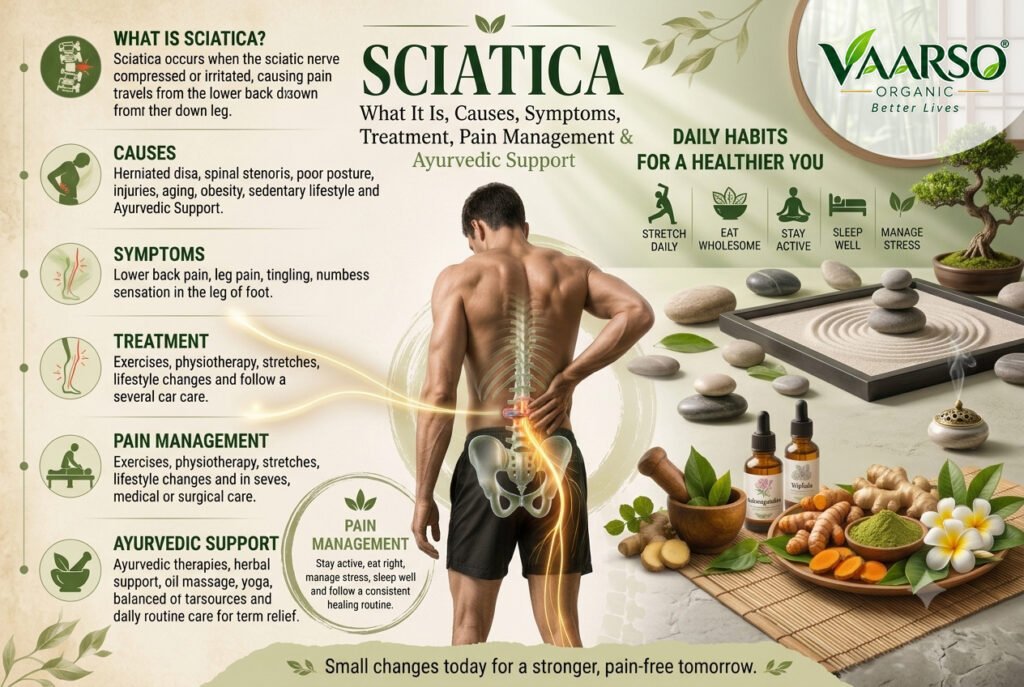
Sciatica: Causes, Symptoms, Treatment, Pain Relief & Ayurveda
That sharp pain travelling from the lower back into the buttock or down the leg can be more than an ordinary backache. It may be sciatica—a nerve-related problem that can make sitting, walking, bending and even sleeping uncomfortable.
The good news is that many cases improve with time, appropriate movement and conservative care. Sciatica often gets better over several weeks to a few months, although symptoms can sometimes last longer or return.
At Vaarso Organic, we believe that caring for the body starts with understanding it. Along with appropriate professional care, healthy food, sensible movement, adequate rest and traditional Ayurvedic practices may support overall musculoskeletal and nerve health.
In this guide, we’ll look at what sciatica is, its causes, symptoms, risk factors, diagnosis, treatment options, Ayurvedic approaches, nutrition, useful stretches, prevention and frequently asked questions.
Important: This article is for Ayurveda and natural approache. Ayurveda and natural approaches should not be used as a substitute for medical assessment when symptoms are severe, persistent or associated with weakness, numbness around the groin, or bladder/bowel changes.
What Is Sciatica?
Sciatica refers to pain that follows the pathway of the sciatic nerve, which runs from the lower back through the buttocks and down the back of the leg.
The sciatic nerve is formed by nerve roots in the lower spine. When one of these nerve roots becomes irritated or compressed, pain and other sensations can travel along the nerve pathway.
Unlike ordinary lower-back pain, sciatica commonly affects one side of the body and may extend from the lower back or buttock into the thigh, calf, foot or toes.
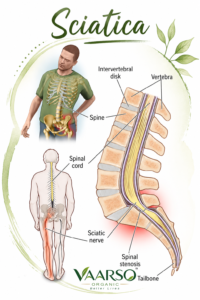
People describe the sensation differently. It might feel like:
- A sharp or shooting pain
- Burning
- An electric-shock sensation
- Tingling or pins and needles
- Numbness
- Weakness in the leg or foot
Sometimes the back itself doesn’t hurt very much, while the pain in the leg is much more noticeable.
What Causes Sciatica?
Sciatica isn’t one single disease. It is a group of symptoms caused by irritation or compression of nerves that contribute to the sciatic nerve.
1. Herniated or slipped disc
A herniated disc is one of the most common causes. The soft inner portion of a spinal disc can push through a weakened area and irritate a nearby nerve root.
2. Spinal stenosis
Spinal stenosis occurs when spaces within the spine become narrower. This narrowing can put pressure on nerves.
3. Bone spurs and age-related changes
As the spine changes with age, bone spurs and other structural changes may reduce the space available for nerves.
4. Spondylolisthesis
In this condition, one vertebra shifts forward relative to another. Depending on the location and severity, this can contribute to nerve compression.
5. Back injuries
Certain injuries involving the lower back can irritate spinal nerves.
6. Prolonged sitting and inactivity
Sitting for long periods doesn’t automatically cause sciatica, but a sedentary lifestyle may contribute to poor conditioning and other factors associated with back problems.
Other contributing factors
Age, excess body weight, physically demanding work, repetitive lifting, twisting and poor lifting technique may increase the likelihood of lower-back and nerve problems.
Sciatica Symptoms You Should Know
Sciatica symptoms can range from mild to severe.
The most recognisable symptom is pain travelling from the lower back or buttock down one leg.
You may experience:
Shooting leg pain
Instead of staying in one place, the pain follows the path of the nerve. It may travel into the thigh, calf or foot.
Tingling
Some people experience a pins-and-needles sensation.
Numbness
A section of the leg or foot may feel less sensitive than normal.
Muscle weakness
A compressed nerve can sometimes affect muscle function, making certain movements more difficult.
Pain when coughing or sneezing
Some people notice that coughing, sneezing or prolonged sitting makes their symptoms worse.
Not every person experiences all of these symptoms.
When Is Sciatica an Emergency?
Most cases aren’t emergencies, but certain symptoms should never be ignored.
Seek urgent medical attention if sciatica is accompanied by:
- New or worsening weakness in the legs
- Severe numbness in both legs
- Numbness around the genitals, buttocks or inner thighs
- Difficulty starting urination
- Loss of bladder control
- Loss of bowel control
- Severe symptoms affecting both legs
These can indicate serious nerve compression that requires prompt assessment.
Also seek professional evaluation if pain is severe, getting progressively worse, follows a significant injury, or doesn’t improve with sensible self-care.
How Is Sciatica Diagnosed?
A diagnosis usually begins with your symptoms and medical history.
A healthcare professional may check:
- How you walk
- Muscle strength
- Reflexes
- Sensation
- Flexibility
- Movement of your lower back and legs
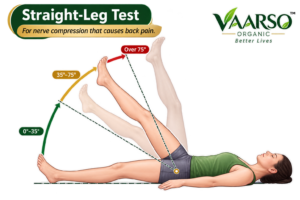
A straight-leg raise test may also be performed.
Imaging isn’t necessarily required for every person with sciatica. Depending on symptoms and clinical findings, a professional may consider an MRI, X-ray, CT scan or nerve studies.
The purpose of testing isn’t simply to “see sciatica” but to understand whether there is an underlying structural problem that needs specific treatment.
Sciatica Treatment: What Can Help?
Treatment depends on the cause and severity of the symptoms.
For many people, conservative management is enough.
Keep moving gently
One of the most common mistakes people make is staying in bed for too long because movement hurts.
Gentle movement is generally preferable to prolonged inactivity. The NHS advises people with sciatica to remain as active as they reasonably can and avoid sitting or lying down for extended periods.
Walking, gentle mobility exercises and professionally recommended stretches may be useful.
Heat or cold
Heat packs may provide comfort for some people. Cold packs can also be useful during painful periods. Protect the skin with a cloth and avoid excessive temperatures.
Physical therapy
A physiotherapist can create an exercise programme based on your symptoms and physical condition. It may include mobility work, strengthening, posture advice and exercises for the muscles supporting the spine.
Medication
Pain-relieving medicines may be appropriate for some people, but they aren’t suitable for everyone. A doctor or pharmacist can help determine what is safe based on your health and other medicines.
More advanced treatment
Persistent or severe cases may sometimes require injections or surgery, particularly when significant nerve weakness or serious neurological symptoms are present.
Ayurvedic Approach to Sciatica
Ayurveda has traditionally approached pain and stiffness through a combination of diet, lifestyle, massage, movement and herbal practices.
In Ayurvedic terminology, conditions involving pain and restricted movement are often discussed in relation to Vata, but this is a traditional framework rather than a modern anatomical diagnosis.
Ayurvedic care may therefore be considered as supportive wellness care, particularly alongside appropriate evaluation and rehabilitation.
It should not be presented as a replacement for diagnosis when a nerve is significantly compressed.
1. Abhyanga – Traditional Oil Massage
Warm oil massage, traditionally known as Abhyanga, is commonly used in Ayurveda for relaxation, stiffness and general body comfort.
A gentle massage using an appropriate body oil may help some people feel more relaxed and comfortable.
However, avoid forceful massage over an acutely painful area or when there is significant numbness or weakness. If you’re experiencing neurological symptoms, discuss massage with a qualified professional first.
2. Gentle Ayurvedic Movement
Ayurveda traditionally places importance on maintaining appropriate movement rather than remaining completely inactive.
Gentle yoga or mobility exercises may complement a broader recovery programme.
The key word is gentle.
A stretch should not cause sharp, shooting nerve pain. If an exercise makes symptoms travel farther down the leg or significantly increases numbness or weakness, stop and seek professional guidance.
3. Warmth and Comfort
Traditional Ayurvedic routines often use warmth to promote relaxation of stiff muscles.
A comfortably warm bath or warm compress may feel soothing for muscular tension. It should never be hot enough to burn the skin.
4. Herbal Support
Traditional Ayurvedic herbs such as ginger, turmeric, boswellia and other botanicals are commonly discussed in wellness practices related to inflammation and joint comfort.
However, evidence varies considerably between herbs and preparations, and “natural” doesn’t automatically mean risk-free.
Anyone taking prescription medication, preparing for surgery, pregnant or breastfeeding, or living with a chronic condition should discuss herbal supplements with a qualified healthcare professional.
Nutrition for Sciatica and Back Health
Food cannot physically remove a herniated disc or release a compressed nerve.
However, good nutrition matters because your muscles, bones, connective tissues and nervous system all depend on adequate nutrients.
A balanced diet can support overall health while you work on movement, strength and recovery.
Protein
Protein provides amino acids needed for maintaining and repairing body tissues.
Good choices include:
- Eggs
- Fish
- Dairy or fortified alternatives
- Beans and lentils
- Tofu and tempeh
- Nuts and seeds
- Lean poultry
Omega-3 fats
Fatty fish such as salmon, sardines and mackerel provide omega-3 fatty acids. Plant sources include flaxseeds, chia seeds and walnuts.
Magnesium-rich foods
Magnesium is involved in normal muscle and nerve function.
Useful food sources include:
- Pumpkin seeds
- Almonds
- Cashews
- Beans
- Whole grains
- Leafy green vegetables
Fruits and vegetables
A colourful variety of fruits and vegetables provides vitamins, minerals and plant compounds that contribute to an overall healthy diet.
Whole grains
Oats, brown rice, quinoa and other whole grains can provide fibre and important nutrients.
Benefits of a Healthy Diet During Sciatica Recovery
A nutritious diet won’t “cure” sciatica, but it can support the foundation on which recovery depends.
Potential benefits include:
- Supporting normal muscle function
- Helping maintain a healthy body weight
- Providing nutrients for bone health
- Supporting normal energy levels
- Supporting overall metabolic health
- Helping maintain healthy bowel function when activity is reduced
Think of nutrition as part of the bigger picture rather than a standalone treatment.
Foods and Habits to Limit
There is no universal “sciatica diet.”
Still, a pattern based heavily on ultra-processed foods, excess added sugar and excessive alcohol may make it harder to maintain a healthy weight and balanced nutrition.
If your diet is high in processed foods, gradually replacing some of them with whole foods can be a practical starting point.
Also remember that weight management should be approached sensibly. Crash diets are rarely a good long-term strategy.
How to Use Food and Traditional Herbs in Daily Life
Instead of searching for one “miracle” ingredient, build simple habits.
Morning
Start the day with adequate hydration and a balanced breakfast containing protein, whole grains or other nutrient-rich foods.
During the day
Eat a varied diet containing vegetables, fruits, protein sources, whole grains, nuts and seeds.
With meals
Traditional digestive spices such as ginger, cumin and turmeric can be incorporated into normal cooking.
Herbal preparations
If you choose an Ayurvedic herbal product, use it according to the manufacturer’s directions and preferably discuss regular use with a qualified practitioner—especially if you’re taking medicines.
Do not use concentrated herbs as a replacement for professional assessment of nerve pain.
Simple Exercises and Stretches for Sciatica
There isn’t one exercise that works for everyone with sciatica. The right movement depends on the underlying cause and how your symptoms respond.
Some commonly used movements include:
Gentle walking
A short, comfortable walk can help prevent prolonged inactivity.
Pelvic bridge
Lie on your back with knees bent and feet supported. Gently engage your abdominal and gluteal muscles and lift your hips only as far as comfortable.
Cat-Cow
From a hands-and-knees position, slowly move between a gently rounded and gently extended spine.
Knee-to-chest
While lying on your back, gently bring one knee toward your chest if this movement feels comfortable.
Gentle back extension
Some people benefit from gentle extension movements, while others don’t. This is particularly important with sciatica: an exercise that helps one person may aggravate another.
If you are unsure which exercises are appropriate, a physiotherapist or qualified healthcare professional can guide you.
How to Prevent Sciatica From Coming Back
Unfortunately, sciatica can return.
There is no guaranteed way to prevent every episode, but several habits can support long-term back health.
Stay active
Regular movement helps maintain strength and mobility.
Strengthen your core
The abdominal, back and hip muscles play an important role in supporting movement and posture.
Improve your sitting position
If you work at a desk, keep your back supported and avoid staying in one position for hours.
Lift properly
When lifting something heavy, keep it close to your body, use your legs and avoid twisting while carrying the load.
Maintain a healthy body weight
A healthy weight may reduce mechanical stress on the lower back.
Don’t smoke
Smoking is associated with poorer spinal health and increased risk of back problems.
Can Ayurveda and Lifestyle Support Work Together?
Yes, they can complement one another when used appropriately.
A practical whole-person approach may look like:
Professional assessment → appropriate movement → strengthening → nutritious food → adequate sleep → stress management → optional traditional Ayurvedic wellness practices.
This approach is much more realistic than looking for one herb, oil or supplement that promises to eliminate sciatica.
At Vaarso Organic, our philosophy is rooted in bringing traditional wellness practices and natural ingredients into modern everyday life. But when a symptom involves a nerve—particularly when there is weakness or loss of sensation—responsible wellness also means knowing when professional care is necessary.
Frequently Asked Questions About Sciatica
1. What is the fastest way to relieve sciatica pain?
There is no single fastest method for everyone. Gentle movement, avoiding prolonged sitting, appropriate heat or cold and a professionally guided exercise programme may help. Severe or persistent pain should be assessed by a healthcare professional.
2. Can sciatica go away on its own?
Yes. Many cases improve within several weeks to a few months. However, symptoms can persist or return, so ongoing or worsening symptoms should be evaluated.
3. Is walking good for sciatica?
For many people, gentle walking is a useful way to remain active. Start with a comfortable duration and avoid pushing through severe or worsening symptoms.
4. Is bed rest good for sciatica?
Prolonged bed rest is generally not recommended. Staying gently active, as tolerated, is usually preferable.
5. Can Ayurvedic oil massage help sciatica?
Traditional oil massage may provide relaxation and comfort for some people, particularly when muscular stiffness is involved. However, it should not be considered a cure for nerve compression. Avoid aggressive massage when there is severe pain, numbness or weakness.
6. Which Ayurvedic herbs are traditionally used for pain and stiffness?
Ayurvedic traditions commonly use herbs such as turmeric, ginger and boswellia in various preparations. Their suitability depends on the individual and the preparation. Anyone taking medication should seek professional advice before starting concentrated herbal supplements.
7. Can food cure sciatica?
No specific food has been proven to cure sciatica. A balanced diet can support overall health, healthy body weight, muscle function and recovery.
8. Does sitting make sciatica worse?
Long periods of sitting can aggravate symptoms in some people. Changing position regularly and incorporating gentle movement may help.
9. When should I see a doctor for sciatica?
Seek professional advice if symptoms are severe, worsening, affecting normal activities or not improving after a few weeks. Urgent assessment is required for significant weakness, numbness around the groin or problems controlling urination or bowel movements.
10. Does sciatica always require surgery?
No. Most people do not need surgery. Surgery is generally reserved for selected cases, particularly when there is significant neurological weakness or symptoms that remain severe despite appropriate conservative care.
Final Thoughts
Sciatica can be frustrating because the pain doesn’t always stay where it starts. A problem around the lower spine can send discomfort down the buttock, thigh, calf or foot.
But a diagnosis of sciatica doesn’t automatically mean you will live with the pain permanently.
For many people, recovery involves patience and a combination of appropriate movement, strengthening, healthy nutrition, good posture, sensible daily habits and professional guidance when needed.
Ayurvedic practices such as traditional oil massage, mindful movement and the use of culinary herbs can be part of a broader wellness routine. They should, however, complement—not replace—appropriate evaluation and treatment when nerve symptoms are significant.
Listen to your body, keep moving within your comfort level, nourish yourself well and don’t ignore warning signs.
Natural wellness works best when it is approached with knowledge, consistency and care.