
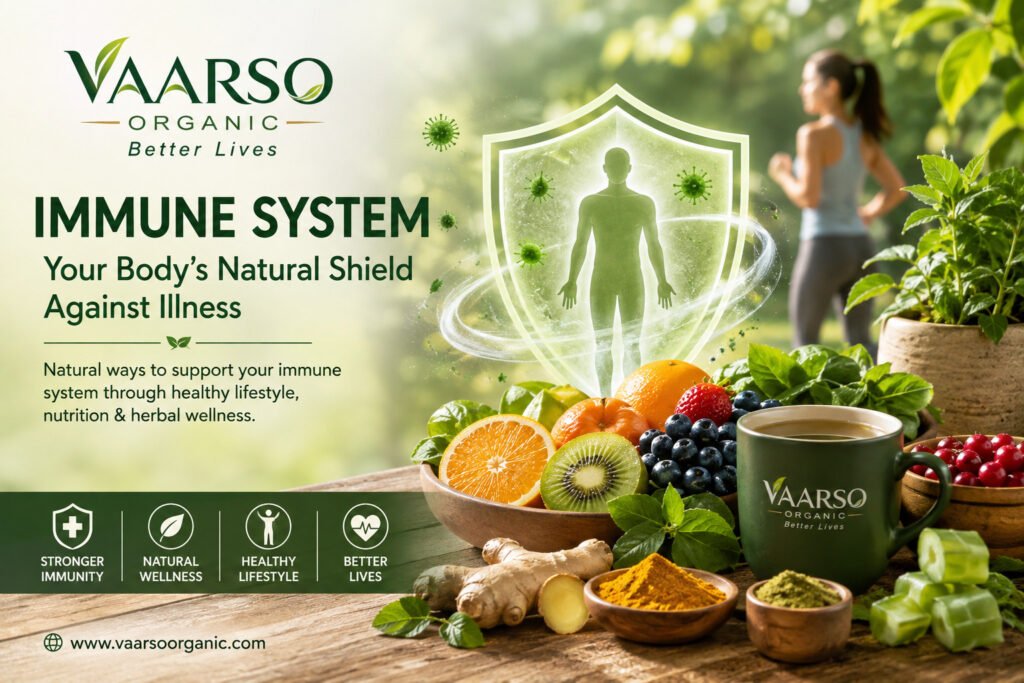
The immune system is the body’s natural defense network, working every day to recognize and respond to viruses, bacteria, fungi and other potentially harmful substances.
We usually start thinking about immunity when someone around us catches a cold, when seasonal illnesses begin spreading, or when we find ourselves feeling tired and run down. But the truth is that the body’s defense system is working quietly every day, whether we notice it or not.
The immune system is a complex network of cells, tissues, organs and biological processes. It doesn’t depend on one particular food, drink or supplement. Instead, it works as part of the entire body, with nutrition, sleep, physical activity, stress, age and general health all playing a role in overall well-being.
This is why supporting your immune system is less about finding a miracle solution and more about building healthy habits that you can maintain over time.
At Vaarso Organic, we believe that natural wellness starts with simple choices — nourishing your body, staying active, getting enough rest and making thoughtful decisions about what becomes part of your daily routine.
What Is the Immune System?
The immune system is one of the body’s most important defense mechanisms.
It consists of a variety of cells, tissues, organs and chemical signals that work together to identify and respond to potentially harmful organisms and substances.
Some of the body’s defenses are located exactly where you would expect them — in the bloodstream and immune organs. Others are much closer to the outside world.
Your skin, respiratory tract and digestive system all form important protective barriers.
The immune system also includes specialized white blood cells that can recognize and respond to threats.
It is helpful to think of immunity as a team rather than a single organ.
Different parts of the team have different jobs, but they communicate with one another to protect the body.
And just like any complex system, it needs the right conditions to function normally.
How Does the Immune System Work?
The immune system has several layers of defense.
1. The Body’s First Protective Barrier
Before immune cells need to respond to an invading organism, the body already has physical and chemical defenses.
Skin
Your skin creates a physical barrier between your internal body and the outside environment.
Healthy skin can make it more difficult for many microorganisms to enter the body.
Respiratory Tract
Your nose and airways help filter and trap particles that enter when you breathe.
Mucus and tiny hair-like structures called cilia help move unwanted particles out of the respiratory tract.
Digestive System
The digestive tract is also an important part of the body’s defense system.
The lining of the digestive tract and other protective mechanisms help prevent harmful organisms from causing problems.
So, the immune system isn’t something that suddenly switches on when you become sick.
It is active every day.
Innate and Adaptive Immunity
The immune system can broadly be divided into two interconnected parts: innate and adaptive immunity.
Innate Immunity
Innate immunity is the defense system you are born with.
It responds quickly when the body detects something potentially harmful.
Various white blood cells and other biological mechanisms participate in this first response.
Inflammation can also be part of the body’s response to injury or infection.
However, inflammation isn’t automatically something that needs to be eliminated. It is a normal biological process that can help the body respond to problems.
At the same time, excessive or uncontrolled inflammation can contribute to health problems.
This is one reason why claims such as “more inflammation-fighting equals better immunity” are too simplistic.
The body needs balance.
Adaptive Immunity: A Learning Defense System
Adaptive immunity is different.
It develops more specific responses after encountering particular foreign substances or microorganisms.
One fascinating feature of adaptive immunity is immune memory.
After exposure to certain pathogens, the immune system can remember them and respond more efficiently if encountered again.
Vaccination uses this principle.
Vaccines help train the immune system to recognize specific infections and prepare an appropriate response.
This is why vaccination remains an important part of public health and disease prevention.
What Supports a Healthy Immune System?
There isn’t one magic ingredient that can make your immune system invincible.
Instead, several everyday habits can support normal immune function and overall health.
Let’s look at the habits that matter most.
1. Eat a Balanced and Varied Diet
Food is one of the foundations of good health.
The immune system needs a range of nutrients to function properly.
Instead of focusing on one “superfood,” try to create variety on your plate.
A balanced diet can include:
- Fresh fruits
- Vegetables
- Whole grains
- Beans and lentils
- Nuts and seeds
- Quality protein sources
- Healthy fats
- Dairy or suitable alternatives
Different foods provide different nutrients.
For example, fruits and vegetables can provide vitamin C, folate, carotenoids, fibre and many other beneficial plant compounds.
Nuts and seeds provide healthy fats and minerals.
Legumes can provide protein, fibre and several micronutrients.
The goal isn’t perfection.
The goal is variety.
2. Eat More Fruits and Vegetables
Colour is a useful way to think about nutrition.
Try including different colours of fruits and vegetables throughout the week.
For example:
🍊 Oranges and other citrus fruits
🥝 Kiwi
🍓 Berries
🥭 Mango
🥬 Leafy greens
🥕 Carrots
🥦 Broccoli
🫑 Peppers
🍅 Tomatoes
You don’t need to buy expensive imported “superfoods.”
Choose nutritious foods that are available locally and fit your culture, budget and lifestyle.
Healthy eating can look different in different parts of the world.
The principle is the same: eat a wide variety of nutritious foods.
3. Get Enough Quality Sleep
Sleep is often overlooked.
People may spend money on supplements while sacrificing several hours of sleep every night.
That approach doesn’t make much sense.
Sleep is an essential part of physical and mental well-being.
A consistent sleep routine can help your body recover from the demands of the day.
Try going to bed and waking up around the same time each day.
Keep your bedroom comfortable and reduce unnecessary distractions before bedtime.
If you regularly struggle with sleep, speak with a healthcare professional rather than simply relying on supplements.
4. Stay Physically Active
Your body was designed to move.
Regular physical activity supports cardiovascular health, metabolic health, muscle strength, mental well-being and general fitness.
Walking is a great starting point.
You can also choose:
- Cycling
- Swimming
- Dancing
- Running
- Yoga
- Hiking
- Strength training
- Recreational sports
You don’t have to become an athlete.
Even simple movement throughout the day can make a difference.
If you have a desk job, stand up periodically, walk around and avoid sitting continuously for hours whenever possible.
For adults, international health guidelines generally recommend regular moderate or vigorous physical activity each week.
Choose an activity you actually enjoy.
You’re much more likely to continue it.
5. Manage Stress
Stress is unavoidable.
Deadlines, family responsibilities, financial concerns, work pressure and unexpected events are all part of modern life.
The goal isn’t to create a completely stress-free life.
Instead, learn how to manage stress in healthier ways.
You might try:
- Walking outdoors
- Meditation
- Deep breathing
- Reading
- Listening to music
- Spending time with friends
- Gardening
- Creative hobbies
- Limiting unnecessary screen time
Sometimes the most effective wellness habit is simply giving your mind permission to slow down.
6. Stay Hydrated
Water is essential for normal body function.
Your hydration needs depend on your activity level, environment, diet and individual circumstances.
Instead of obsessing over a specific number of glasses, make water your regular beverage and pay attention to your body’s needs.
If you exercise heavily or spend time in a hot environment, your fluid needs may increase.
People with certain medical conditions may also need specific fluid recommendations from their healthcare professional.
7. Avoid Tobacco
If you smoke or use tobacco, quitting is one of the most valuable decisions you can make for your health.
Tobacco affects multiple systems throughout the body.
Rather than looking for a supplement that claims to “repair” the effects of smoking, addressing tobacco use itself is far more meaningful.
If quitting is difficult, don’t consider that a failure.
Support is available, and healthcare professionals can help you find an appropriate quitting strategy.
8. Be Careful With Alcohol
Alcohol can affect health in several ways.
If you drink alcohol, consider your overall consumption and follow appropriate health guidance.
For many people, drinking less is a positive health choice.
If you don’t drink, there is no health reason to start drinking.
9. Maintain Good Hygiene
Good hygiene remains one of the simplest ways to reduce exposure to infectious organisms.
Simple habits include:
- Washing your hands regularly
- Keeping food preparation areas clean
- Handling food safely
- Covering coughs and sneezes
- Avoiding unnecessary close contact when you’re sick
- Keeping frequently touched surfaces reasonably clean
These habits aren’t glamorous, but they are practical.
10. Keep Recommended Vaccinations Up to Date
Supporting the immune system doesn’t mean avoiding modern medicine.
Vaccination is one of the most effective tools available for preventing specific infectious diseases.
Vaccines work by helping the adaptive immune system recognize particular pathogens.
The vaccines recommended for you can depend on your age, health, location, travel plans and other factors.
Speak with your healthcare professional or local vaccination service about the recommendations appropriate for you.
Vitamins and Minerals for the Immune System
Several vitamins and minerals are important for normal immune function.
These include:
- Vitamin A
- Vitamin C
- Vitamin D
- Vitamin E
- Zinc
- Selenium
- Iron
- Folate
- Other B vitamins
The important point is that adequate nutrition matters more than taking excessive amounts.
If you have a confirmed nutritional deficiency, correcting it can be important.
But taking very high doses of vitamins and minerals without a medical reason isn’t automatically beneficial.
Some nutrients can even cause harm when consumed in excessive amounts.
Food should generally be the first place to look for nutrition.
Supplements may have a role when dietary intake is insufficient or when a healthcare professional recommends them.
Vitamin C and the Immune System
Vitamin C is often associated with immunity.
It is an essential nutrient involved in normal immune function and can be obtained from foods such as citrus fruits, kiwi, peppers, strawberries and other fruits and vegetables.
However, vitamin C is not a magic shield against every infection.
Eating a varied diet that provides adequate vitamin C is a sensible approach.
Vitamin D and the Immune System
Vitamin D also plays an important role in the body’s normal functions, including immune function.
Sources include certain foods, fortified products and sunlight exposure that allows the body to produce vitamin D.
However, excessive supplementation isn’t automatically better.
If you suspect you have low vitamin D, talk to a healthcare professional about whether testing or supplementation is appropriate.
Zinc and the Immune System
Zinc is another mineral required for normal immune function.
It can be found in foods such as:
- Seafood
- Meat
- Dairy products
- Beans
- Nuts
- Seeds
- Whole grains
As with other nutrients, excessive supplementation can cause problems.
The goal is adequate intake, not unlimited intake.
Can Herbal Products Support the Immune System?
Traditional herbal practices are an important part of many cultures.
Ayurveda, Traditional Chinese Medicine and other traditional health systems have used plants for generations.
Commonly discussed herbs include:
- Amla
- Tulsi
- Turmeric
- Ashwagandha
- Ginger
However, it is important to separate traditional use from proven medical treatment.
An herb can have a long history of traditional use without being proven to prevent every infection or cure disease.
“Natural” also doesn’t automatically mean “safe for everyone.”
Some herbal products can interact with medicines or cause side effects.
If you take prescription medication, are pregnant or breastfeeding, have liver or kidney problems, or have a chronic medical condition, speak with a qualified healthcare professional before taking concentrated herbal supplements.
A Note About Giloy / Guduchi
Giloy, also known as Guduchi or Tinospora cordifolia, is traditionally used in Ayurveda.
It is frequently promoted online as an immune booster.
However, there have been published reports of liver injury associated with some Tinospora products.
For this reason, it would be irresponsible to recommend Giloy as a daily immunity solution for everyone.
If you are considering Giloy or any concentrated herbal preparation, discuss it with a healthcare professional, particularly if you have an existing health condition or take medication.
Responsible wellness means understanding both the traditional benefits and the potential risks.
What About Turmeric?
Turmeric is a popular spice used in many cuisines around the world.
It contains compounds called curcuminoids, including curcumin, which have been studied for various biological effects.
Adding turmeric to food can be an enjoyable part of a balanced diet.
However, concentrated curcumin supplements are different from ordinary culinary use.
Some highly bioavailable curcumin products have been associated with liver injury.
So don’t assume that taking a large amount is automatically healthier.
What About Ashwagandha?
Ashwagandha is a traditional herb that has received increasing scientific attention.
Some studies suggest that particular preparations may help with stress or sleep in certain people.
But evidence for many of the broader claims made online remains limited.
Ashwagandha can also interact with medicines and may not be suitable for everyone.
If you’re considering it as a supplement, get professional advice first, especially if you have thyroid, autoimmune or liver conditions.
The Gut and the Immune System
Your digestive system and immune system are closely connected.
The gastrointestinal tract interacts continuously with food, microorganisms and the outside environment.
This is another reason why eating a fibre-rich and varied diet is so valuable.
Fibre-rich foods include:
- Vegetables
- Fruits
- Beans
- Lentils
- Whole grains
- Nuts
- Seeds
Instead of relying on expensive “detox” products, start with the basics.
Ask yourself:
Am I eating enough real, varied foods every day?
A Simple Daily Routine for Immune Health
You don’t need a complicated wellness schedule.
Try keeping your routine simple.
Morning
Start your day with water and a nutritious breakfast.
During the Day
Eat balanced meals.
Include fruits and vegetables.
Move regularly.
Take short breaks from sitting.
Evening
Eat a balanced dinner.
Give yourself time to relax.
Reduce unnecessary screen use.
Before Bed
Follow a consistent sleep routine.
Allow your body enough time to rest.
Every Week
Stay physically active.
Plan nutritious meals.
Spend time with people you care about.
Make time for activities that help you relax.
These simple habits may not look impressive on social media.
But they are much more sustainable than constantly searching for the next miracle health product.
Common Myths About the Immune System
Myth 1: One Food Can Supercharge Immunity
No single food can make your immune system invincible.
A varied diet is more valuable.
Myth 2: More Supplements Mean Stronger Immunity
Not necessarily.
Taking excessive amounts of certain vitamins and minerals can be harmful.
Myth 3: Natural Means Completely Safe
No.
Natural substances can have biological effects, interact with medicines and cause side effects.
Myth 4: You Should Never Get Sick If Your Immunity Is Strong
Not true.
Even healthy people can catch infections.
The goal isn’t to become completely illness-proof.
Myth 5: Immunity Can Be Fixed Overnight
Healthy immune function is part of overall health.
It isn’t something that needs to be “activated” by a single drink or supplement.
Frequently Asked Questions About the Immune System
What is the immune system?
The immune system is a complex network of cells, tissues, organs and biological processes that helps protect the body from potentially harmful organisms and substances.
How can I support my immune system naturally?
The most practical approach is to eat a varied diet, stay physically active, sleep well, manage stress, avoid tobacco, limit alcohol, maintain good hygiene and follow recommended vaccinations.
What are the best foods for the immune system?
There isn’t one best food. Fruits, vegetables, whole grains, legumes, nuts, seeds and quality protein sources can all contribute important nutrients to a balanced diet.
Does vitamin C boost the immune system?
Vitamin C is essential for normal immune function. Getting enough through a varied diet is important, but taking excessive amounts doesn’t guarantee stronger immunity.
Is vitamin D important for the immune system?
Yes. Vitamin D contributes to normal immune function. If you are concerned about deficiency, speak with a healthcare professional.
Does exercise help the immune system?
Regular physical activity supports overall health and can be part of a healthy lifestyle that supports normal immune function.
Can herbs replace medicines?
No. Herbal products should not replace prescribed medicines or professional medical care.
Is natural immunity better than vaccination?
Natural infection and vaccination are not interchangeable. Vaccines are designed to provide protection against specific diseases while avoiding the risks associated with the disease itself.
Can stress affect immune health?
Long-term stress can affect many aspects of physical and mental well-being. Healthy stress-management habits are therefore an important part of overall health.
How much sleep should I get?
Sleep needs vary by age and individual circumstances. Most adults generally need around 7–9 hours of sleep per night, although individual needs can differ.
Final Thoughts
The immune system is one of the body’s most remarkable defense networks.
But you don’t need to turn your life upside down to take better care of it.
Start with the basics.
Eat well.
Move regularly.
Sleep enough.
Drink water.
Manage stress.
Avoid tobacco.
Be thoughtful about alcohol.
Practice good hygiene.
Keep recommended vaccinations up to date.
And if you choose herbal products or supplements, learn about their ingredients, quality and possible interactions before using them.
There is no shortcut to lasting wellness.
The strongest foundation is usually built from ordinary habits repeated consistently.
At Vaarso Organic, we believe natural wellness should be practical, responsible and part of everyday life.
🌿 Vaarso Organic — Better Lives.