
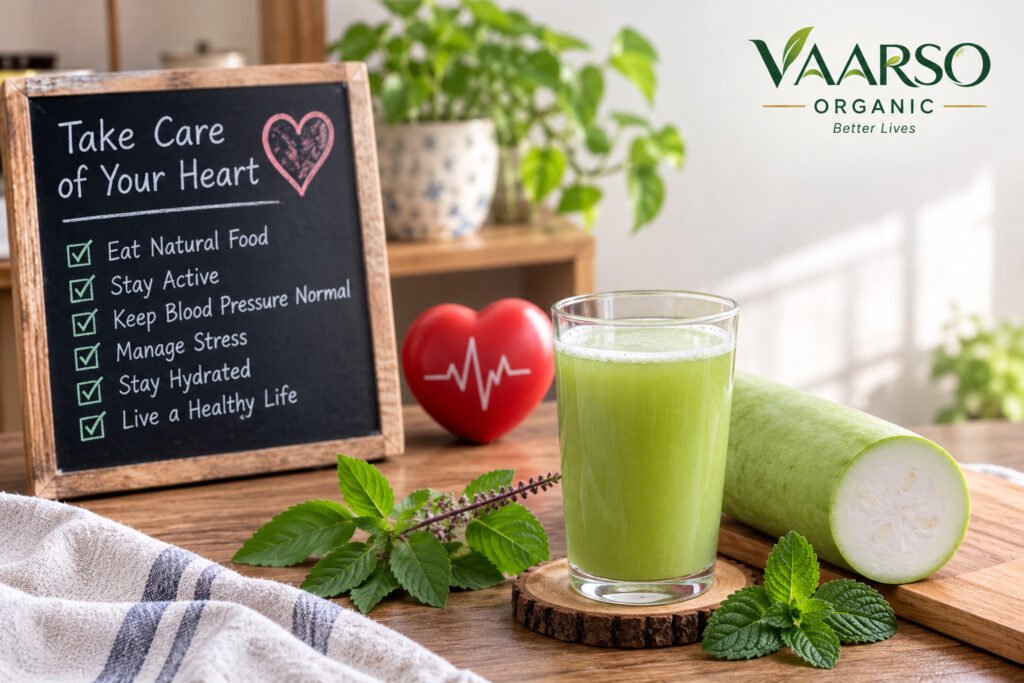
A heart attack is one of those health emergencies that can change a life in a matter of minutes. Yet there is still a lot of confusion about what actually causes a heart attack, what symptoms to watch for, and whether a particular food or drink can “clear” blocked arteries.
At Vaarso Organic, we believe natural wellness should begin with good information. Traditional foods can certainly have a place in a healthy lifestyle, but they should not be presented as a replacement for emergency medical care or treatment prescribed by a qualified healthcare professional.
One claim that has circulated widely is that heart attacks happen because of “acidic blood” and that drinking bottle gourd (lauki/dudhi) juice can dissolve heart blockages. There is no good medical evidence supporting this claim. A heart attack usually occurs when blood flow through a coronary artery becomes severely reduced or blocked, commonly because of atherosclerosis and the formation of a blood clot after a plaque ruptures.
So, rather than relying on a single home remedy, let’s understand the subject properly.
What Is a Heart Attack?
A heart attack, medically called a myocardial infarction, happens when part of the heart muscle does not receive enough oxygen-rich blood.
The heart itself needs a continuous supply of blood through the coronary arteries. Over time, substances such as cholesterol and other materials can accumulate inside these arteries and form plaque. This process is known as atherosclerosis.
If a plaque becomes unstable and ruptures, a blood clot can form around it. When the clot significantly blocks blood flow, the heart muscle supplied by that artery begins to suffer from lack of oxygen. The longer the blockage continues, the greater the potential damage to the heart muscle.
This is why a suspected heart attack should never be treated as a minor digestive problem or something to manage at home.
Is Every Chest Pain a Heart Attack?
No.
Chest discomfort can have many causes, including indigestion, acid reflux, muscle strain, anxiety and other conditions. However, because a heart attack can sometimes begin with mild or unusual symptoms, it is dangerous to assume that chest discomfort is “just acidity.”
The American Heart Association lists symptoms such as chest discomfort, shortness of breath, pain or discomfort in the arm or shoulder, jaw, neck or back, and symptoms such as nausea, vomiting or light-headedness. Some people may also experience sweating, weakness or unusual tiredness.
Women, older adults and people with diabetes may sometimes experience less typical symptoms.
Seek emergency medical help if you suspect a heart attack
Watch for symptoms such as:
- Pressure, squeezing, heaviness or discomfort in the chest
- Pain spreading to the arm, shoulder, back, neck or jaw
- Shortness of breath
- Sudden sweating
- Nausea or vomiting
- Unusual weakness or extreme tiredness
- Light-headedness or fainting
- A rapid or irregular heartbeat
Do not wait to see whether the symptoms disappear. If a heart attack is suspected, contact your local emergency medical service immediately.
Does “Acidity in the Blood” Cause Heart Attacks?
This is an important point because the idea is often shared online.
The human body carefully regulates blood pH through complex systems involving the lungs, kidneys and chemical buffers. Normal blood is maintained within a tightly controlled range. It is not accurate to describe ordinary stomach acidity or heart artery blockage as simply “acidic blood.”
Stomach acidity and blood acidity are not the same thing.
Acid reflux or excess stomach acid can cause burning sensations, sour taste and discomfort. But that does not mean stomach acid has entered the bloodstream and blocked the coronary arteries.
A heart attack is generally associated with impaired blood flow to the heart muscle, often involving coronary artery disease, plaque and clot formation—not ordinary digestive acidity.
This distinction matters because mistaking heart symptoms for indigestion can delay emergency treatment.
Can Bottle Gourd Juice Remove Heart Blockages?
Bottle gourd, also known as lauki, dudhi or calabash, is a familiar vegetable in many parts of the world, particularly South Asia.
It can absolutely be part of a varied, nutritious diet. However, the claim that drinking bottle gourd juice for a few weeks will remove coronary blockages, prevent heart attacks or eliminate the need for surgery should not be presented as an established medical fact.
There is no reliable evidence that bottle gourd juice can dissolve atherosclerotic plaque or reopen a significantly blocked coronary artery.
If someone has been diagnosed with coronary artery disease, they should follow the treatment plan provided by their cardiologist or other qualified healthcare professional.
An important safety point about bottle gourd juice
There is another reason not to promote large amounts of raw bottle gourd juice as a universal health remedy.
Bitter-tasting bottle gourd can contain toxic cucurbitacins. Medical reports have documented severe vomiting, abdominal symptoms, gastrointestinal bleeding and low blood pressure after consumption of bitter bottle gourd juice.
Therefore:
Never drink bottle gourd juice if it tastes unusually bitter.
Do not try to mask the bitterness with salt, herbs, lemon or other ingredients. If someone develops severe symptoms after consuming bitter bottle gourd, urgent medical attention is appropriate.
Is Bottle Gourd Still a Healthy Food?
Yes, bottle gourd can be a useful vegetable when prepared safely as part of a balanced diet.
Like other vegetables, it can contribute to dietary variety and help people build meals around minimally processed plant foods.
The important distinction is between:
“Bottle gourd is a nutritious vegetable.”
and
“Bottle gourd juice cures heart disease.”
The first statement can fit within a healthy eating pattern. The second is an unsupported medical claim.
At Vaarso Organic, we encourage people to appreciate traditional foods without turning individual ingredients into miracle cures.
Nutrition and Heart Health: What Actually Matters?
There is no single food that guarantees protection from heart attacks.
Heart health is influenced by a combination of factors, including:
- Blood pressure
- Blood cholesterol
- Blood glucose
- Smoking and tobacco exposure
- Physical activity
- Body weight
- Sleep
- Alcohol consumption
- Family history
- Overall dietary pattern
- Age and other health conditions
The World Health Organization identifies unhealthy diet, physical inactivity, tobacco use and harmful alcohol consumption among important behavioural risk factors for cardiovascular disease.
That means the bigger picture matters much more than one particular drink.
What Should You Eat for Better Heart Health?
A heart-conscious diet does not have to be complicated.
Instead of searching for one “best” food, build your meals around a variety of nutritious foods.
1. Eat More Vegetables
Include different colours and varieties of vegetables throughout the week.
Examples include:
- Spinach and other leafy greens
- Broccoli
- Carrots
- Tomatoes
- Bottle gourd
- Beans
- Peppers
- Cabbage
- Other locally available vegetables
Vegetables provide fibre, vitamins, minerals and plant compounds that contribute to an overall healthy diet.
2. Choose Whole Fruits
Fresh fruits can be a convenient way to add fibre and nutrients to your diet.
Choose fruits that are locally available and in season when possible.
Whole fruit is generally preferable to relying heavily on sweetened fruit drinks.
3. Include Whole Grains
Depending on your culture and dietary preferences, options can include:
- Oats
- Brown rice
- Whole-wheat foods
- Barley
- Millet
- Whole-grain breads
- Other minimally processed grains
The goal is variety rather than following a single traditional diet.
4. Add Beans and Legumes
Beans, lentils, peas and other legumes can provide plant protein and dietary fibre.
They can also make meals satisfying without relying heavily on highly processed foods.
5. Choose Healthy Sources of Fat
Nuts, seeds, avocados and plant-based oils can fit into a balanced eating pattern.
However, even healthy fats are calorie-dense, so portion size still matters.
6. Reduce Excess Salt, Sugar and Unhealthy Fats
A heart-friendly diet is not only about what you add.
It is also about what you reduce.
The WHO recommends a diet based on a variety of foods while limiting excessive salt, free sugars, saturated fats and industrially produced trans fats.
That means highly processed snacks, sugary drinks, heavily salted foods and foods high in unhealthy fats should not become everyday staples.
Benefits of a Heart-Healthy Lifestyle
A heart-conscious lifestyle can support much more than the heart alone.
Supports cardiovascular health
Eating well, staying active and managing cardiovascular risk factors can help reduce the risk of cardiovascular disease.
Supports healthy blood pressure
Reducing excess sodium and maintaining a balanced diet can contribute to healthier blood pressure.
Supports healthy body weight
Regular movement combined with balanced eating can help with weight management.
Supports metabolic health
A healthy lifestyle can also help manage factors such as blood glucose and blood lipids.
Supports overall wellbeing
Good nutrition and regular physical activity can benefit energy, mobility, mood and general quality of life.
How Much Physical Activity Do You Need?
You do not necessarily need an expensive gym membership to become more active.
Walking, cycling, swimming, recreational sports, dancing and many other activities count as physical activity.
For adults aged 18–64, WHO recommends at least 150 minutes of moderate-intensity physical activity per week, or an equivalent amount of vigorous activity.
If you currently do very little activity, start gradually.
For example, a daily walk can be a simple place to begin.
If you have known heart disease or other medical conditions, ask your healthcare professional what level of exercise is appropriate for you.
How to Use Traditional Foods Safely
Traditional foods can be included in a modern healthy lifestyle without making exaggerated health claims.
For example, bottle gourd can be:
- Cooked as a vegetable
- Added to soups
- Used in mixed vegetable dishes
- Combined with lentils or legumes
- Included in balanced meals
The key is variety.
You do not need to drink the same vegetable juice every morning to have a heart-conscious diet.
And if you choose to consume vegetable juices, remember that juicing can change the nutritional profile of a food and may make it easier to consume larger quantities than you would normally eat as a whole vegetable.
What About Salt in a Heart-Healthy Diet?
The original message recommends adding black salt or rock salt while suggesting that iodized salt should be avoided because it is “acidic.”
This is misleading.
Iodized salt is not a cause of blood acidity or coronary blockage. Iodization is a public-health measure used in many countries to help prevent iodine deficiency.
More importantly, the bigger issue for cardiovascular health is excessive sodium intake. WHO recommends limiting salt intake because high sodium consumption can contribute to raised blood pressure and cardiovascular risk.
So switching from table salt to another type of salt does not make a high-salt diet automatically heart healthy.
Can Natural Foods Replace Heart Medicines?
No.
If your doctor has prescribed medication for:
- High blood pressure
- High cholesterol
- Diabetes
- Coronary artery disease
- Previous heart attack
- Other cardiovascular conditions
do not stop or replace it with a food, juice, powder or herbal product without discussing it with your healthcare professional.
Natural does not automatically mean risk-free, and “traditional” does not automatically mean medically proven.
A healthy diet works best alongside appropriate medical care, not instead of it.
What to Do After a Heart Attack
Someone who has already experienced a heart attack needs individualized follow-up care.
Depending on the person’s condition, treatment may include medications, cardiac rehabilitation, lifestyle changes, procedures or surgery.
The goal is not simply to find a food that “cleans the arteries.”
Instead, long-term heart care may involve:
- Taking prescribed medicines correctly
- Attending follow-up appointments
- Managing blood pressure
- Managing cholesterol
- Managing blood glucose when necessary
- Avoiding tobacco
- Following an appropriate exercise plan
- Eating a balanced diet
- Maintaining a healthy weight
- Recognizing warning symptoms early
Cardiovascular disease is preventable or manageable for many people when risk factors are identified and addressed appropriately.
Simple Daily Habits for Heart Wellness
You don’t have to completely change your life overnight.
Start with practical habits.
Eat a little better
Add vegetables, fruits, legumes and whole grains more often.
Move every day
Walk, cycle, stretch, exercise or choose an activity you actually enjoy.
Don’t smoke
If you use tobacco, getting help to quit is one of the most important steps you can take for cardiovascular health.
Watch your blood pressure
Regular monitoring can help identify a problem early.
Know your numbers
Depending on your age and health history, your healthcare professional may recommend checking cholesterol and blood glucose.
Sleep properly
Consistently poor sleep can make healthy lifestyle habits harder to maintain.
Manage stress
Try walking, breathing exercises, meditation, hobbies, social connection or other healthy ways of dealing with stress.
Heart Attack Prevention: Think Bigger Than One Food
The most useful takeaway from all of this is simple:
Heart health is built through habits, not miracle ingredients.
A bowl of vegetables cannot undo years of smoking. A glass of juice cannot dissolve a coronary blockage. And one “alkaline” food cannot guarantee that someone will never have a heart attack.
At the same time, healthy foods absolutely have a place in prevention.
A diet rich in vegetables, fruits, whole grains, legumes and nuts, combined with regular physical activity and avoidance of tobacco, can support cardiovascular health.
That’s a much more sustainable approach than depending on a single home remedy.
Frequently Asked Questions About Heart Attacks
1. What is the main cause of a heart attack?
A heart attack occurs when blood flow to part of the heart muscle becomes severely reduced or blocked. A common cause is coronary artery disease, where plaque builds up inside the coronary arteries and can eventually contribute to clot formation and blockage.
2. Can acidity cause a heart attack?
Ordinary stomach acidity does not cause a coronary artery blockage. However, heart attack symptoms can sometimes feel similar to indigestion or heartburn, so new or concerning chest symptoms should not automatically be dismissed as acidity.
3. Can bottle gourd juice clear heart blockages?
There is no established evidence that bottle gourd juice can dissolve coronary plaque or clear blocked arteries. It should not be used as a substitute for medical treatment.
4. Is bottle gourd good for the heart?
Bottle gourd can be included as part of a varied, balanced diet. However, it should be viewed as a vegetable rather than a treatment for heart disease.
5. Is bottle gourd juice safe for everyone?
Not necessarily. Never consume bottle gourd juice if it tastes bitter. Bitter bottle gourd has been associated with cucurbitacin toxicity and serious gastrointestinal symptoms.
6. Can heart blockages disappear naturally?
Atherosclerotic plaque should not be assumed to disappear simply because someone changes their diet or drinks a particular juice. People with diagnosed coronary artery disease should follow medical advice and recommended treatment.
7. What foods support heart health?
A varied diet containing vegetables, fruits, whole grains, legumes, nuts and other minimally processed foods can support overall cardiovascular health. Limiting excess salt, free sugars and unhealthy fats is also important.
8. Can exercise prevent heart disease?
Regular physical activity can reduce the risk of coronary heart disease and several other chronic conditions.
9. What should I do if I think I am having a heart attack?
Do not wait for a home remedy to work. Contact your local emergency medical service immediately. Fast treatment can reduce the amount of heart muscle damage.
10. Can natural products replace heart medication?
No. Food and natural wellness products can be part of a healthy lifestyle, but they should not replace prescribed medication or emergency medical care.
Final Thoughts from Vaarso Organic
There is a beautiful place for traditional foods and natural wellness in everyday life. But responsible wellness also means knowing where traditional advice ends and evidence-based medical care begins.
Bottle gourd, leafy vegetables, fruits, whole grains, legumes and other wholesome foods can all be part of a balanced lifestyle. None should be presented as a guaranteed cure for heart attacks or blocked arteries.
If you have risk factors for heart disease, don’t wait for symptoms to become serious. Talk to a qualified healthcare professional, understand your blood pressure and cholesterol, stay physically active, avoid tobacco and build a balanced eating pattern that you can maintain for years.
And if you ever experience symptoms that could indicate a heart attack, seek emergency medical help immediately rather than trying to treat the problem at home.
At Vaarso Organic, our approach is simple: natural wellness should support better everyday choices—not replace the medical care you may need.
Ayurveda and traditional wellness can be viewed as part of a broader lifestyle, but good health begins with informed decisions.
Medical Disclaimer
This article is intended for general educational and wellness information only. It is not a diagnosis, treatment recommendation or substitute for professional medical advice. Claims that bottle gourd juice, alkaline foods or any single natural ingredient can prevent, reverse or cure a heart attack or coronary artery blockage should not be relied upon. If you have chest pain, breathing difficulty, fainting or other possible heart-attack symptoms, seek emergency medical care immediately. If you have heart disease or take medication, discuss dietary changes and supplements with your healthcare professional.