
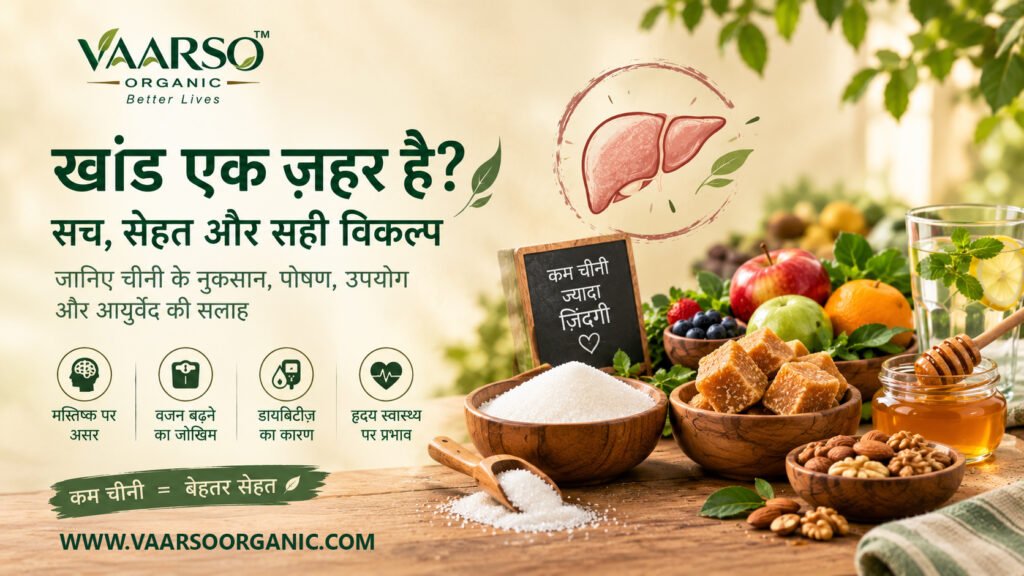
Sugar Is Not Poison, but Too Much Can Harm Your Health: Benefits, Nutrition, Uses & Ayurvedic Wisdom
- Effects of Excess Sugar
- What happens when you eat too much sugar?
- Is Sugar Really Poison?
- Is jaggery better than white sugar?
- Sugar and weight gain
- Is sugar bad for health?
A Vaarso Organic guide to understanding sugar and making healthier daily choices
Sugar makes food taste sweeter, tea feel comforting and celebrations more enjoyable. From birthday cakes and chocolates to traditional sweets shared with family, sweetness has a place in cultures around the world.
But there is another side to this familiar ingredient. Modern diets often contain added sugar in soft drinks, packaged snacks, breakfast cereals, sauces and desserts. When these foods become everyday habits, sugar intake can quietly rise beyond what is healthy.
Does this mean sugar is poison? Not exactly. Sugar is not a poison in the ordinary sense, and the body can digest common sugars. However, regularly consuming too much added or free sugar can contribute to weight gain, tooth decay, type 2 diabetes risk and cardiovascular problems. The important question is not whether every grain of sugar is harmful, but how much we consume and where it comes from.
What Is Sugar?
Sugar is a type of carbohydrate that provides energy. Different sugars occur naturally in foods or are added during cooking and food processing.
Common types include: 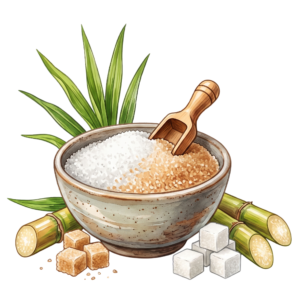
Sucrose: Ordinary table sugar, usually obtained from sugar cane or sugar beet. It consists of glucose and fructose joined together.
Glucose: A simple sugar used by the body’s cells for energy.
Fructose: A naturally occurring sugar found in fruits and honey.
Lactose: The natural sugar present in milk.
Maltose: A sugar formed when starch breaks down, also found in some grains and malt products.
Your body handles these sugars differently depending on their form and the food in which they are found. For example, whole fruit provides sugar alongside fibre, water and other nutrients, whereas a sugary drink can deliver a large amount of sugar with little fibre.
This distinction is important. The aim is not to eliminate all sugars naturally present in nutritious foods; it is to reduce excessive free sugars.
Why Do People Say “Sugar Is Poison”?
The phrase is a dramatic warning, not a scientifically accurate description of sugar in every amount.
The concern comes from the way high sugar intake can affect health over time. A person who frequently drinks sweetened beverages, eats large portions of sweets and consumes many highly processed foods may take in more calories than their body needs without getting enough fibre or essential nutrients.
Over time, this eating pattern can contribute to several health concerns.
1. Excess Sugar Can Contribute to Weight Gain
Sugary foods and drinks can add considerable energy to the diet. Drinks are particularly easy to consume quickly without feeling as full as you might after eating a balanced meal.
When energy intake regularly exceeds energy use, the body can store the excess, contributing to weight gain. This does not mean sugar alone explains every case of obesity; genetics, sleep, medicines, activity, stress, food access and other factors also matter.
Practical tip: Replace one regular sugary drink each day with water or an unsweetened drink. Small changes can be easier to maintain than a strict diet.
2. Excessive Sugar Intake Can Increase Type 2 Diabetes Risk
Eating sugar does not automatically give someone diabetes. Type 2 diabetes develops through a combination of factors, including insulin resistance, genetics, body composition, physical activity and other health influences.
However, frequent consumption of sugar-sweetened beverages and excess calories can contribute to weight gain and metabolic problems, increasing the risk of type 2 diabetes.
3. Sugar Can Harm Dental Health
Bacteria in dental plaque use sugars to produce acids. Repeated acid exposure can damage tooth enamel and lead to cavities.
How often you consume sugary foods and drinks matters, not just the total amount. Frequently sipping sweetened drinks throughout the day can repeatedly expose teeth to sugar.
What helps? Reduce sugary snacks between meals, drink water regularly and brush twice daily with fluoride toothpaste. Regular dental check-ups are also important.
4. High Sugar Intake Can Affect Heart Health
A diet consistently high in added sugar may contribute to excess weight, raised triglycerides and other metabolic risk factors associated with cardiovascular disease.
That does not mean one spoon of sugar directly causes a heart attack, stroke or paralysis. Such conditions have multiple causes, including high blood pressure, cholesterol abnormalities, smoking, diabetes and genetics.
The sensible approach is to reduce excess sugar as one part of an overall heart-healthy lifestyle.
5. Sugary Drinks Can Contribute to Fatty Liver Risk
Frequent consumption of sugar-sweetened drinks can contribute to excess energy intake and metabolic problems associated with fatty liver disease. This is particularly relevant when sweet drinks are consumed regularly in addition to meals.
Sugar is not the only cause of fatty liver, and not everyone who consumes sugar develops liver disease. Weight, insulin resistance, alcohol, genetics, medicines and other factors can play a role.
Choosing water more often and following a balanced diet can support metabolic health, but no single drink or food guarantees liver protection.
Is All Sugar Bad for You?
No. It is useful to distinguish between sugars naturally present in whole foods and sugars added to foods or drinks.
Food or drink | General guidance |
|---|---|
Whole fruits | Enjoy a variety of whole fruits as part of a balanced diet. |
Plain milk or unsweetened yogurt | Naturally contain lactose; added sugar is a separate consideration. |
Soft drinks and sweetened energy drinks | Limit; they can deliver large amounts of free sugar quickly. |
Cakes, biscuits and sweets | Enjoy less frequently and in moderate portions. |
Sweetened breakfast cereals and packaged snacks | Check the label for added sugars. |
Honey, jaggery and syrups | These still count as free sugars and should not be treated as sugar-free alternatives. |
Whole fruit should not be confused with fruit juice. Even when no sugar is added, juice contains free sugars under the World Health Organization’s definition, while intact fruit retains its natural fibre structure.
Ordinary white table sugar is mainly sucrose. It supplies energy but contains very little fibre, protein, vitamins or minerals.
Approximate nutrition for one level teaspoon of granulated sugar (about 4 grams):
Nutrient | Approximate amount |
|---|---|
Calories | 16 kcal |
Carbohydrates | 4 g |
Sugars | 4 g |
Protein | 0 g |
Fat | 0 g |
Fibre | 0 g |
Values can vary slightly according to the size of the teaspoon and the product.
Sugar can provide quick energy because it is digested into simple sugars. The body uses glucose as an important energy source, particularly for the brain and other tissues. However, this does not mean that adding table sugar to your diet is necessary for good health. The body can obtain glucose from the digestion of other carbohydrates, and a balanced diet can provide energy without relying on added sugar.
How Much Sugar Is Too Much?
The World Health Organization recommends keeping free sugars below 10% of total daily energy intake, with a further reduction to below 5% suggested for additional health benefits. For someone consuming around 2,000 calories a day, these levels correspond to less than 50 grams and around 25 grams, respectively. Individual energy needs differ.
Remember that this is a limit for total free sugars from all sources—not just the sugar you add to tea.
Benefits and Uses of Sugar: Understanding Its Place in Food
Sugar is not a health supplement, but it does have practical culinary and food-processing uses.
1. Provides Energy
Sugar supplies approximately four calories per gram. It can provide readily available energy, but it is not the only source of energy and does not offer the nutritional variety of whole foods.
2. Improves Taste
Sugar adds sweetness and can balance sour, bitter or spicy flavours. In home cooking, reducing sugar gradually can help you adjust to less-sweet foods without giving up favourite recipes entirely.
3. Helps With Baking
Sugar contributes to texture, browning, moisture retention and the structure of some baked goods. Reducing it may change a recipe’s final texture, so gradual adjustments are often more successful than removing it completely.
4. Supports Certain Preservation Methods
Sugar is used in jams, jellies and some preserves because high concentrations can reduce available water and help control microbial growth. Safe preservation still depends on correct acidity, preparation, processing and storage. Simply adding some sugar does not make every food safe to store at room temperature.
5. Has Cultural and Traditional Uses
Sweet foods are part of celebrations and hospitality across many cultures. Sweets may mark festivals, family gatherings, religious observances or milestones.
These traditions can remain meaningful while portions and frequency are adjusted. Health-conscious eating does not have to mean abandoning cultural foods or treating every dessert as a failure.
How to Reduce Sugar Without Losing Enjoyment
The goal is not to make food joyless. It is to make sweetness a choice rather than an automatic part of every meal.
1. Reduce Sugar in Tea and Coffee Gradually
If you usually add two teaspoons, try one and a half for a week, then reduce further if comfortable. Your taste preferences can adapt over time.
2. Replace Sugary Drinks With Unsweetened Options
Choose water, sparkling water without added sugar, or unsweetened tea. Add mint, lemon slices or cucumber for flavour if you enjoy them.
3. Use Whole Fruit for Natural Sweetness
Add sliced banana, berries, grated apple or other whole fruits to oats, plain yogurt or porridge. This adds flavour along with fibre and other nutrients.
4. Read Nutrition Labels
Look at serving size and the amount of added sugar where it is listed. Ingredients such as sucrose, glucose syrup, corn syrup, dextrose and honey can indicate sources of free sugars.
Compare similar products rather than assuming that a food labelled “natural,” “organic” or “healthy” must be low in sugar.
5. Make Snacks More Satisfying
Try plain yogurt with fruit, nuts in moderate portions, roasted chickpeas, or whole-grain snacks with a protein source. These choices may be more filling than sweets alone.
6. Keep Treats in Perspective
You can enjoy a dessert occasionally. What matters most is your overall eating pattern and how often high-sugar foods displace more nutritious choices.
Is Jaggery, Rock Sugar or Honey Better Than White Sugar?
This is one of the most common questions in traditional food culture. Jaggery, rock sugar (mishri) and honey are often seen as healthier because they may be less refined or traditionally valued.
Their flavour and processing differ, but none is a sugar-free or automatically safe substitute for people with diabetes.

Jaggery
Jaggery is made from concentrated sugar-cane juice or other sugar-rich sources. Depending on how it is made, it may retain small quantities of minerals. It is still predominantly sugar and should be used in moderation.

Rock sugar (mishri)
Rock sugar is a crystalline form of sugar. Its appearance and crystal size may differ from ordinary table sugar, but it is still a source of sugar and does not offer a proven health advantage simply because it is crystalline.

Honey
Honey contains sugars, mainly glucose and fructose, along with small amounts of other compounds. It can be used for flavour, but it still counts as free sugar. Do not give honey to infants younger than 12 months because of the risk of infant botulism.
If you enjoy these traditional sweeteners, use small amounts for flavour rather than treating them as medicinal foods. For people managing diabetes, blood glucose levels or weight, the total quantity of sugar matters more than whether it comes from honey, jaggery, mishri or white sugar.
An Ayurvedic and Vedic Perspective on Sweetness
Ayurveda has traditionally regarded food as an important part of daily life, with attention to taste, digestion, individual needs and routine. The sweet taste (madhura rasa) is one of the six tastes described in Ayurvedic tradition.
In this framework, sweet-tasting foods are not automatically considered harmful. The traditional emphasis is on appropriate amounts, the nature of the food, the individual’s circumstances and balance within the overall diet.
This provides a useful modern lesson: a food’s effect depends on the amount, context and frequency—not simply on whether it tastes sweet.
Traditional Indian diets include a wide range of naturally sweet foods, such as ripe fruits, milk and certain grains, as well as sweets made for celebrations. There is no need to reject every cultural practice. Instead, preserve the meaning of food traditions while reducing the habit of consuming added sugar throughout the day.
Ayurveda is a traditional medical system, and its concepts are not identical to modern nutrition science. Traditional use alone does not prove that a sweetener prevents diabetes, protects the heart or treats another disease. Modern evidence supports limiting excessive free sugar, regardless of the cultural or traditional name given to the sweetener.
A Simple Daily Plan for Eating Less Added Sugar
Here is an example that can work across different cuisines and lifestyles.
Breakfast: Oats, eggs, whole-grain toast or another balanced meal. Choose plain yogurt rather than a heavily sweetened version.
Morning drink: Water or unsweetened tea or coffee. Reduce added sugar gradually if needed.
Lunch: Include vegetables, a protein source, and whole grains or other fibre-rich carbohydrates.
Snack: Choose whole fruit, plain yogurt, or a modest portion of nuts rather than routinely reaching for sweets.
Dinner: Eat a balanced meal with vegetables and protein, with a suitable portion of carbohydrates.
Dessert: Enjoy a smaller portion when you choose to have one rather than making sugary foods an automatic daily requirement.
This is a flexible example, not a strict prescription. People with specific medical or nutritional needs may require individual advice.
Conclusion: Less Added Sugar, More Mindful Living
Calling sugar “poison” may attract attention, but understanding the facts leads to better choices. Sugar is a source of energy and has useful culinary functions, yet excessive free sugar can contribute to weight gain, dental decay and metabolic health problems.
You do not need to fear whole fruit or eliminate every sweet food from your life. Start by reducing sugary drinks, checking food labels, using smaller amounts of sweeteners and choosing balanced meals more often.
Jaggery, mishri and honey may have cultural significance, but they still contain sugar. Replacing white sugar with larger quantities of these alternatives does not solve the problem.
At Vaarso Organic, we encourage a thoughtful approach to wellness: respect traditional food wisdom, understand modern nutrition, and choose habits that you can maintain.
A healthier relationship with sweetness begins with moderation, awareness and consistency—not fear.
Health disclaimer: This article is for general educational purposes and does not replace personalised advice from a qualified healthcare professional or registered dietitian.