
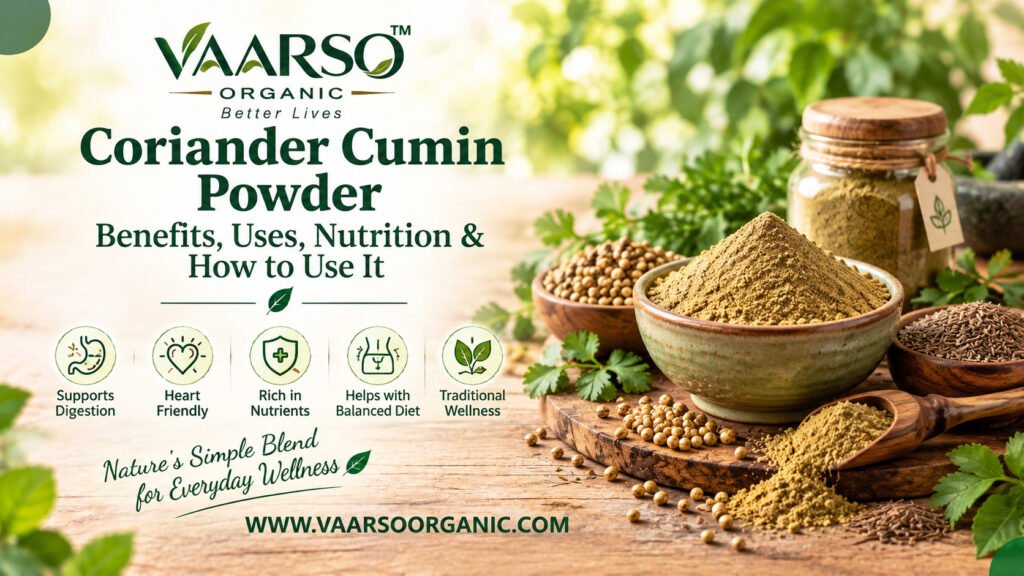
Coriander Cumin Powder: Benefits, Uses, Nutrition & How to Use This Traditional Spice Blend
There are some combinations in traditional kitchens that seem almost too simple to deserve much attention. Coriander and cumin are two of them. 
Known as Dhania-Jeera in India, coriander seeds and cumin seeds have been used for generations in everyday cooking, digestive preparations and traditional wellness practices. The combination is especially popular because it is aromatic, easy to prepare and fits naturally into a regular diet.
A traditional home recipe uses equal quantities of coriander seeds and cumin seeds, lightly warms them, grinds them into a powder and takes a small amount with meals. It is sometimes described in household wellness traditions as being useful for blood pressure, cholesterol, digestion, urinary health, weight management, diabetes and circulation.
But there is an important distinction between traditional use and medical evidence.
Coriander and cumin contain fibre, minerals, volatile oils and various plant compounds. Research has explored their possible effects on digestion, blood glucose and blood lipids, but the evidence is not strong enough to say that coriander cumin powder can prevent heart attacks, eliminate kidney stones, cure diabetes, reverse paralysis or replace prescribed treatment. For example, clinical research on cumin has shown some promising effects on lipid parameters, while findings on blood-glucose control have been mixed.
That makes this traditional spice blend most interesting when viewed as part of a healthy lifestyle rather than a cure-all remedy.
What Is Coriander Cumin Powder?
Coriander cumin powder is a simple blend made by grinding coriander seeds (Coriandrum sativum) and cumin seeds (Cuminum cyminum).
A commonly followed household preparation is: 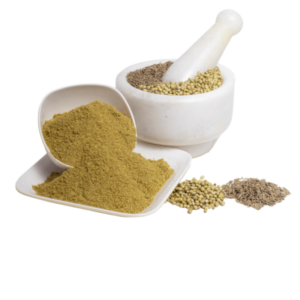
- 100 g coriander seeds
- 100 g cumin seeds
The seeds are gently warmed or dry-roasted on a pan and then cooled before grinding.
The resulting powder has a warm, earthy aroma with a slightly sweet, citrus-like character from coriander and the deeper, roasted flavour of cumin.
It can be used as a culinary spice or, traditionally, consumed in small quantities around meals.
One thing worth remembering is that coriander seeds are different from fresh coriander leaves. Similarly, cumin is the seed commonly called jeera, zeera or comino in different parts of the world.
Why Are Coriander and Cumin Traditionally Combined?
Ayurveda does not generally look at food as simply a collection of nutrients. It also considers qualities such as taste, digestibility, quantity, timing and the individual’s constitution and routine.
Coriander and cumin have long been appreciated in Indian culinary traditions because they make food more aromatic while also being associated traditionally with digestive comfort.
Coriander
Coriander seeds are aromatic and contain volatile compounds, including linalool, along with other phytochemicals. Reviews of coriander research have identified antioxidant, antimicrobial and metabolic activities, although much of the evidence comes from laboratory, animal or preliminary human research rather than large clinical trials.
Cumin
Cumin contains aromatic compounds such as cuminaldehyde and various other phytochemicals. It is also nutritionally notable for minerals including iron, calcium and magnesium when considered on a whole-spice basis.
Human studies have investigated cumin supplementation in relation to cholesterol, triglycerides and blood-glucose measures. A meta-analysis of six randomized controlled trials involving 376 participants reported improvements in some lipid parameters, including total and LDL cholesterol.
This does not mean that a spoonful of cumin powder will automatically lower someone’s cholesterol. The studies used specific preparations and doses, and results cannot simply be transferred to every household recipe.
Coriander Cumin Powder Benefits
1. May Support Everyday Digestion
This is perhaps the most traditional reason people reach for coriander and cumin.
Aromatic spices are often included in meals that contain grains, pulses, vegetables and other foods that can feel heavy for some people.
Coriander has traditionally been associated with digestive comfort, while cumin is commonly used in culinary preparations for its characteristic warming aroma.
Modern research is also exploring coriander-containing herbal combinations for digestive symptoms. A 2024 randomized controlled trial involving a different herbal preparation containing coriander and another spice found improvements in symptoms of functional dyspepsia. However, this should not be interpreted as proof that the simple coriander-cumin powder recipe treats dyspepsia.
For everyday wellness, the more practical benefit may simply be this: a flavourful spice blend can make balanced, home-cooked food more enjoyable.
2. Provides Useful Plant Compounds
Coriander and cumin contain naturally occurring phytochemicals.
Coriander seeds contain aromatic compounds, with linalool being one of the major constituents of coriander essential oil. Research has investigated its antioxidant and other biological activities.
Cumin also contains several aromatic and phenolic compounds.
These substances are one reason spices are interesting from a nutritional perspective. However, laboratory antioxidant activity should not automatically be translated into a claim that eating the spice prevents a particular disease.
3. Can Add Flavour Without Relying on Excess Salt
This is an underrated benefit.
A good spice blend can make vegetables, lentils, soups, beans, grains and roasted foods more satisfying without requiring large amounts of salt, sugar or heavy sauces.
For people trying to improve their overall eating pattern, this can be more useful than searching for a single “superfood.”
Instead of asking:
“Which herb will fix my health?”
a better question is:
“Which simple ingredients can help me build healthier meals consistently?”
Coriander cumin powder fits naturally into that approach.
4. May Complement a Heart-Friendly Eating Pattern
Research on cumin has produced interesting findings concerning blood lipids. A systematic review and meta-analysis found reductions in total and LDL cholesterol in several randomized trials.
Coriander has also been studied for lipid and metabolic effects, including human research involving coriander seed powder. One recent randomized trial in adults with type 2 diabetes reported improvements in several glucose and lipid measures after six weeks of coriander seed supplementation. However, it involved only 40 participants and used a specific supplementation protocol, so larger studies are needed.
Therefore, it is reasonable to view coriander and cumin as potentially useful food ingredients within a heart-conscious diet, but not as substitutes for cholesterol medicines, blood-pressure treatment, exercise or medical care.
5. May Fit Into Blood-Sugar-Conscious Meals
Cumin has been investigated for possible effects on glucose metabolism.
However, the evidence is not completely consistent. One systematic review of eight randomized trials involving 552 adults found that cumin supplementation did not significantly change fasting blood glucose, insulin or HOMA-IR in its primary analysis.
Another meta-analysis reported improvements in some glycemic measures, illustrating why it is important to avoid presenting cumin as a diabetes treatment.
For someone living with diabetes, coriander cumin powder can be used as a culinary spice, but it should never replace prescribed diabetes medication, blood-glucose monitoring or dietary guidance.
6. Supports a More Balanced Approach to Weight Management
Coriander cumin powder is sometimes promoted as a “fat-burning” remedy.
That description is misleading.
No spice can independently remove body fat while the rest of the lifestyle remains unchanged.
What spices can do is make nutritious foods more enjoyable. A meal of vegetables, beans, lentils, whole grains and adequate protein can become much more appealing with cumin and coriander.
Weight management still depends on the broader picture:
- Total food intake
- Food quality
- Protein and fibre intake
- Physical activity
- Sleep
- Stress
- Consistency over time
So rather than calling coriander cumin powder a weight-loss medicine, it is better to think of it as a useful ingredient in a balanced eating pattern.
What About Kidney Stones?
This is one area where traditional claims need particularly careful interpretation.
Some traditional wellness recipes describe coriander and cumin as being useful for “dissolving stones.” There is not enough clinical evidence to claim that this powder dissolves kidney stones.
Kidney stones can be made of different substances, including calcium oxalate, calcium phosphate, uric acid and cystine. Treatment depends on the size, location and type of stone. Adequate fluid intake is an important part of prevention for many people, while some stones require medication, procedures or specialist care.
Therefore, if someone has severe side or back pain, blood in the urine, fever, vomiting or difficulty passing urine, coriander cumin powder should not be used as a substitute for medical evaluation.
Nutrition of Coriander and Cumin
Spices are normally consumed in small quantities, so their nutritional contribution to an individual’s total diet is modest.
USDA-derived reference data show that cumin seeds contain fibre, protein, calcium, magnesium, iron, potassium and several B vitamins. Coriander seeds also provide fibre, protein, fats and minerals.
Approximate reference nutrition per 100 g
| Nutrient | Cumin Seeds | Coriander Seeds |
|---|---|---|
| Energy | ~375 kcal | ~298 kcal |
| Protein | ~17.8 g | ~12.4 g |
| Carbohydrates | ~44.2 g | ~55 g |
| Fibre | ~10.5 g | ~41.9 g |
| Fat | ~22.3 g | ~17.8 g |
| Calcium | ~931 mg | ~709 mg* |
| Iron | ~66 mg | ~16 mg* |
| Magnesium | ~366 mg | ~330 mg* |
*Values can vary according to database, variety and preparation.
These numbers are not a recommendation to eat 100 g of spices. A normal serving is much smaller.
The real nutritional value of spices is often their ability to bring flavour and variety to otherwise nutritious foods.
How to Make Coriander Cumin Powder at Home
Ingredients 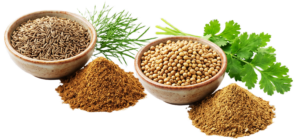
- 100 g coriander seeds
- 100 g cumin seeds
Method
1. Clean the seeds
Remove stones, dust or foreign material.
2. Warm them gently
Place the coriander and cumin on a dry pan and warm them separately over low heat.
The purpose is to gently release their aroma—not to burn them.
3. Cool completely
Allow the seeds to cool before grinding.
4. Grind
Grind them into a reasonably fine powder.
5. Mix
Combine the powders thoroughly in approximately equal proportions.
6. Store properly
Keep the powder in a clean, dry, airtight container away from moisture, direct sunlight and excessive heat.
For best flavour, make a quantity that you can reasonably use while the aroma remains fresh.
How to Use Coriander Cumin Powder
The traditional household method provided with this recipe is:
½ teaspoon in the morning with breakfast and ½ teaspoon with the evening meal.
This is best understood as a traditional food-use suggestion, not a medically established dosage.
You can also use the powder in ordinary food:
With dal
Add a small amount to lentils while cooking or just before serving.
With vegetables
Sprinkle over roasted or sautéed vegetables.
In soups
Add it to vegetable, lentil or bean soups.
With grains
Use it with rice, quinoa, millet or other whole grains.
In yogurt
A small pinch can be mixed into plain yogurt with other herbs and spices.
As a seasoning blend
Combine with turmeric, black pepper, ginger or other culinary spices according to taste.
This approach may actually be more sustainable than treating the powder as a medicine.
Coriander Cumin Powder Through an Ayurvedic Lens
Traditional Ayurveda places considerable importance on Ahara, meaning food, and Vihara, meaning lifestyle and daily conduct.
This perspective offers an interesting lesson for modern life.
Instead of separating food and wellness completely, Ayurveda traditionally considers the quality of food, preparation, quantity, timing and individual suitability.
Cumin and coriander have long appeared in Indian food traditions because they are practical kitchen spices—not because every spice needs to be turned into a concentrated medicine.
The concept of Agni, commonly discussed as digestive capacity in Ayurveda, is also important in this traditional framework. A balanced routine, appropriate meals and mindful eating are valued alongside herbs and spices.
From a modern perspective, there is a useful common ground here:
Eat a varied diet, choose minimally processed foods, pay attention to digestion, move regularly and use traditional ingredients sensibly.
That philosophy is much more realistic than expecting one powder to solve multiple chronic diseases.
Traditional Claims vs Modern Evidence
Some descriptions of coriander cumin powder claim that it:
- Opens all the body’s blood vessels
- Prevents heart attacks
- Eliminates the need for bypass surgery
- Dissolves kidney stones
- Removes all toxins
- Cures diabetes
- Treats paralysis
- Corrects eyesight
- Prevents cholesterol problems
- Removes numbness in hands and feet
These claims should not be presented as established medical facts.
There is promising research around individual compounds and certain health markers, but that is very different from proving that a homemade spice powder prevents or cures serious disease.
For example, cardiovascular disease is influenced by blood pressure, cholesterol, smoking, diabetes, physical activity, diet, genetics and many other factors. A spice blend cannot guarantee protection from a heart attack.
Likewise, “toxins” is often used loosely in wellness marketing. The body already has organs such as the liver and kidneys that process and eliminate many waste substances. A spice powder should not be marketed as a universal detoxification treatment.
This distinction is important for responsible natural wellness.
Who Should Be Careful?
Coriander and cumin are commonly used as culinary spices, but concentrated or supplemental use deserves more care.
People who:
- Take regular prescription medicines
- Have diabetes
- Have low blood pressure
- Have kidney or liver disease
- Are pregnant or breastfeeding
- Have known spice allergies
- Are preparing for surgery
- Are taking multiple herbal supplements
should discuss regular supplemental use with a healthcare professional.
Herbal products can interact with medicines, and supplement quality can vary. “Natural” does not automatically mean risk-free.
If you are taking medicines for blood pressure, diabetes, cholesterol or heart disease, do not reduce or stop them simply because you have started using coriander cumin powder.
A Simple Vaarso Organic Wellness Perspective
At Vaarso Organic, we believe traditional ingredients are most valuable when they become part of sensible everyday habits.
Coriander cumin powder does not need exaggerated promises to be interesting.
It already has a place in traditional food culture, a distinctive flavour, useful plant compounds and an expanding body of scientific research.
The better approach is simple:
Good ingredients + balanced meals + regular movement + adequate sleep + mindful habits = sustainable wellness.
Traditional wisdom can inspire the way we eat, while modern evidence helps us understand where the limits of those traditions lie.
That balance is especially important when writing about health.
Frequently Asked Questions
1. What is coriander cumin powder?
Coriander cumin powder is a blend made by grinding coriander seeds and cumin seeds, usually in equal proportions. It is commonly known as Dhania-Jeera powder in India.
2. What are the main benefits of coriander cumin powder?
It can add flavour and plant compounds to the diet and may support digestive comfort. Research on the individual spices has also explored lipid and glucose metabolism, but evidence is not strong enough to call the blend a treatment for disease.
3. Can coriander cumin powder lower cholesterol?
Cumin supplementation has shown promising effects on some lipid measures in clinical research, including total and LDL cholesterol. However, this does not establish that a homemade coriander-cumin mixture will lower cholesterol.
4. Can it cure diabetes?
No. Coriander and cumin should not be considered a cure for diabetes. They may be used as culinary spices within a balanced diet, but diabetes requires appropriate monitoring and treatment.
5. Can coriander cumin powder dissolve kidney stones?
There is not enough evidence to claim that it dissolves kidney stones. Kidney-stone treatment depends on stone size, location and type and may require medical treatment.
6. Does it help with weight loss?
It may be a useful low-volume flavouring ingredient in a healthy diet, but it does not independently burn body fat. Sustainable weight management requires an overall lifestyle approach.
7. How much coriander cumin powder should I take?
A traditional household recipe suggests ½ teaspoon with breakfast and ½ teaspoon with the evening meal. This should not be treated as a medically established dosage.
8. Can I take it every day?
For most healthy adults, coriander and cumin are commonly consumed as culinary spices. If you intend to take larger amounts daily as a supplement, particularly while using medication, speak with a healthcare professional.
9. Can I use coriander cumin powder in cooking instead?
Absolutely. Using it in dal, vegetables, soups, grains and yogurt is a simple way to include the blend in everyday meals.
10. Is roasted coriander cumin powder better than raw powder?
Light roasting can improve aroma and flavour. Avoid excessive heating because burning the seeds can negatively affect flavour and quality.
11. Can I take coriander cumin powder with medicines?
Do not assume that herbs and medicines are automatically compatible. If you take prescription medicines, especially for diabetes, blood pressure, cholesterol or heart conditions, check with your doctor or pharmacist before using concentrated amounts regularly.
12. Is coriander cumin powder an Ayurvedic medicine?
Coriander and cumin have traditional uses within Indian food and wellness traditions, but a homemade spice mixture should not automatically be described as an Ayurvedic medicine. Traditional use and modern medical treatment are different categories.
Final Thoughts
Coriander cumin powder is a beautiful example of how traditional food wisdom can remain relevant without making exaggerated promises.
Two familiar kitchen spices—coriander and cumin—bring aroma, flavour, plant compounds and nutritional value to everyday meals. Research is continuing to explore their potential effects on digestion, blood glucose and lipid metabolism, but the evidence does not justify calling this simple powder a cure for multiple diseases.
Perhaps its greatest value is also its simplest one.
Use it to make wholesome food more enjoyable. Combine traditional wisdom with modern nutrition. Pay attention to your body. And when a health problem requires medical care, use the appropriate treatment rather than expecting a single natural ingredient to do everything.
Traditional wisdom is most powerful when it works alongside good nutrition, healthy habits and responsible healthcare.
Vaarso Organic — Better Lives.