
Thyroid Treatment: Ayurveda + Modern Medicine, Nutrition & Lifestyle for Better Long-Term Thyroid Health
Ayurvedic wisdom and modern medicine (Ayurvedic Thyroid Treatment) do not have to compete. When used responsibly, they can support a more complete approach to living well with thyroid disease.
Feeling tired even after sleeping? Gaining weight without obvious changes in eating? Feeling unusually cold, dealing with dry skin, constipation, hair changes or difficulty concentrating?
For many people, these symptoms lead to a thyroid test—and sometimes to a diagnosis of hypothyroidism, Hashimoto’s thyroiditis, hyperthyroidism, thyroiditis or another thyroid condition.
It is understandable to look for a treatment that will “cure the thyroid from the root” and provide fast recovery. But thyroid disease is not one single condition, and there is no scientifically established Ayurvedic or natural treatment that can guarantee a permanent cure for every thyroid disorder.
That does not mean traditional wellness has no place.
A thoughtful approach can bring together modern diagnosis and treatment, Ayurvedic lifestyle principles, nutritious food, appropriate movement, sleep, stress management and carefully selected complementary practices.
The key is knowing what each approach can—and cannot—do.
At Vaarso Organic, we believe natural wellness should be practical, responsible and honest. Our philosophy combines natural ingredients, traditional wisdom and modern practices while recognizing that supplements are not substitutes for medical treatment.
So instead of promising a “root cure,” this article explores a more useful question:
How can Ayurveda, modern medicine, nutrition and lifestyle work together to support better thyroid health and long-term well-being?
What Is the Thyroid?
The thyroid is a small, butterfly-shaped gland at the front of the neck. 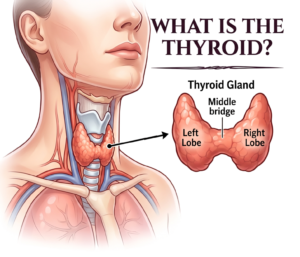
Although it is relatively small, thyroid hormones influence almost every part of the body. They help regulate energy use, body temperature, heart function, muscles and many other processes. Thyroid hormones are particularly important during childhood for normal growth and brain development.
The thyroid does not work alone.
It is part of a larger communication system involving the hypothalamus, pituitary gland and thyroid gland. The pituitary produces thyroid-stimulating hormone (TSH), which tells the thyroid how much hormone to produce.
When this system becomes disturbed, thyroid function can change.
Thyroid Problems Are Not All the Same
This is one of the most important things to understand before searching for a “natural thyroid cure.”
Hypothyroidism
The thyroid does not produce enough thyroid hormone.
Possible symptoms include:
- Fatigue
- Weight gain
- Feeling cold
- Constipation
- Dry skin
- Hair changes
- Low mood
- Difficulty concentrating
Hashimoto’s Thyroiditis
Hashimoto’s is an autoimmune condition in which the immune system produces antibodies that can damage thyroid tissue over time. It is a common cause of hypothyroidism.
Hyperthyroidism
The thyroid produces too much thyroid hormone.
Symptoms may include:
- Fast heartbeat
- Trembling
- Heat intolerance
- Anxiety or nervousness
- Unintentional weight loss
- Increased sweating
- Difficulty sleeping
Thyroiditis
Thyroid inflammation can temporarily cause thyroid hormone levels to rise and later fall. The treatment depends on the type and stage of thyroiditis.
Thyroid Nodules and Goitre
Structural changes in the thyroid may occur with or without abnormal thyroid hormone levels.
This is why simply saying “I have thyroid” is not enough.
A proper diagnosis matters.
Why “Cure Thyroid From the Root” Is Not a Simple Promise
The phrase sounds attractive.
Who wouldn’t want to solve a problem permanently instead of taking medicine for years?
But thyroid disease has different causes.
For example, if someone has Hashimoto’s and the thyroid has been significantly damaged, replacing the hormone the body can no longer produce may be necessary for a long time. The American Thyroid Association notes that most people with hypothyroidism caused by Hashimoto’s require lifelong thyroid hormone replacement.
NIDDK similarly explains that levothyroxine replaces the T4 hormone that the thyroid no longer produces adequately and that hypothyroidism can generally be well controlled when the medicine is taken correctly.
Therefore, stopping prescribed thyroid medicine in the hope of achieving a natural “root cure” can be dangerous.
A better goal is:
Identify the cause, restore or maintain healthy thyroid hormone levels, manage symptoms, support overall health and monitor the condition over time.
That is a much more realistic definition of recovery.
Where Modern Medicine Fits
Modern medicine provides something extremely valuable: measurement.
Blood tests such as: 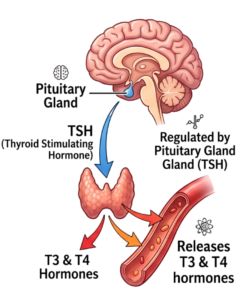
- TSH
- Free T4
- Sometimes Free T3
- Thyroid antibodies when appropriate
can help clinicians understand what is happening.
Additional investigations may be necessary depending on symptoms and examination findings.
For Hashimoto’s, for example, thyroid antibodies can help identify autoimmune thyroid disease, while ultrasound may be useful when structural thyroid problems or nodules need evaluation.
Thyroid Hormone Replacement
For established hypothyroidism, levothyroxine is the standard thyroid hormone replacement treatment. It is chemically identical to thyroxine (T4), the hormone produced naturally by the thyroid.
The correct dose is individual.
It is not something to adjust according to symptoms alone.
After starting or changing the dose, doctors commonly repeat thyroid blood tests after several weeks to determine whether the dose is appropriate.
This is where modern medicine is particularly strong:
It gives us a way to measure whether treatment is actually working.
Where Ayurveda Can Fit
Ayurveda approaches health from a different perspective.
Rather than reducing wellness to a single laboratory value, classical Ayurvedic thought places considerable emphasis on:
- Ahara — food and nourishment
- Vihara — lifestyle and daily activities
- Dinacharya — daily routine
- Agni — digestive capacity
- Sleep and rest
- Seasonal adaptation
- Individual constitution and suitability
- Mental and emotional balance
These ideas do not replace thyroid blood tests or hormone replacement.
But they can encourage something modern life often forgets:
Health is also built between medical appointments.
Your meals, sleep, movement, stress, routine and relationship with food all influence how you feel day after day.
Vaarso Organic similarly emphasizes natural ingredients, traditional wisdom and practical modern wellness rather than miracle claims.
What Does Ayurveda Say About Thyroid Disease?
This requires some honesty.
The modern medical concept of the thyroid gland, TSH and thyroid hormones does not appear as a direct equivalent in the Vedas.
It would therefore be misleading to claim that “the Vedas discovered thyroid disease” or that an ancient verse directly prescribes a modern thyroid treatment.
Instead, Ayurveda provides a broader framework for understanding disturbances involving metabolism, digestion, tissue nourishment, energy and systemic balance.
Classical Ayurvedic concepts such as Agni, Dosha, Ahara and Vihara can offer a traditional lifestyle perspective.
But connecting a particular modern thyroid diagnosis directly to one Ayurvedic category should be done by a properly trained Ayurvedic clinician rather than through internet self-diagnosis.
This distinction actually makes traditional knowledge stronger—not weaker.
We do not need to exaggerate ancient knowledge to appreciate it.
Can Ayurveda and Allopathy Be Used Together?
Yes—when the approaches are coordinated responsibly.
The American Thyroid Association describes integrative medicine as an approach that can combine standard medical treatment with complementary practices. It also emphasizes communication between the patient and healthcare professionals because herbs and supplements may interfere with conventional treatment.
This means:
Modern medicine can provide
- Diagnosis
- Laboratory testing
- Imaging when required
- Hormone replacement
- Antithyroid treatment when appropriate
- Surgery or radioactive iodine for selected thyroid conditions
- Monitoring and follow-up
Ayurveda and complementary wellness may contribute
- Dietary awareness
- Daily routine
- Yoga
- Meditation
- Stress management
- Gentle movement
- Traditional food practices
- Individualized Ayurvedic care under a qualified practitioner
The objective should be integration, not replacement.
The Potential Benefits of an Integrative Approach
A sensible integrative approach can help a person focus on several areas of health simultaneously.
1. Better Treatment Adherence
Instead of feeling that medication is a failure, people can understand it as one part of their health plan.
For someone whose thyroid cannot produce enough hormone, replacement therapy may simply provide the hormone the body needs.
2. Better Nutrition
A balanced diet provides the nutrients required for normal body functions.
There is no special “thyroid diet” that cures every thyroid condition.
But nutritious eating can support energy, digestion, healthy weight and general well-being.
3. Better Daily Routine
Ayurveda’s emphasis on routine can be translated into simple modern habits:
- Consistent sleep
- Regular meals
- Daily movement
- Time outdoors
- Mindful eating
- Appropriate rest
These are not magical thyroid treatments.
They are foundations of healthy living.
4. Better Stress Management
Living with a chronic condition can itself create stress.
Yoga, breathing exercises, meditation, walking, hobbies and social connection may help create a calmer daily rhythm.
Research on yoga and hypothyroidism is still developing. Systematic reviews have reported promising findings from small clinical studies, but yoga should be considered a complementary wellness practice rather than a replacement for thyroid hormone treatment.
Nutrition for Thyroid Wellness
Nutrition deserves special attention because thyroid hormones depend on certain nutrients.
Iodine
Iodine is essential for producing thyroid hormones T4 and T3. Insufficient iodine can contribute to hypothyroidism and goitre.
But there is an important second side to the story:
More iodine is not automatically better.
Excess iodine can also disturb thyroid function, particularly in susceptible people. NIDDK specifically warns that people with Hashimoto’s or other autoimmune thyroid disorders may be sensitive to excess iodine from sources such as kelp, seaweed or iodine supplements.
So avoid taking high-dose iodine supplements simply because you have a thyroid condition.
Selenium
Selenium contributes to normal thyroid biology and antioxidant systems.
Food sources include:
- Fish and seafood
- Eggs
- Meat
- Dairy foods
- Nuts, including Brazil nuts
- Legumes
- Whole grains
But supplementation should not automatically be assumed to improve every thyroid condition.
Zinc
Zinc is involved in many physiological processes, including normal immune and metabolic function.
Food sources include:
- Beans
- Lentils
- Seeds
- Nuts
- Whole grains
- Dairy
- Meat and seafood
A varied diet usually provides many of these nutrients naturally.
Iron
Iron deficiency can contribute to fatigue, which can sometimes overlap with symptoms associated with hypothyroidism.
Sources include:
- Lentils
- Beans
- Dark leafy greens
- Seeds
- Meat
- Seafood
- Fortified foods
If persistent fatigue is present despite controlled thyroid levels, discussing iron status and other possible causes with a healthcare professional may be worthwhile.
Foods to Include More Often
Rather than searching for one thyroid-superfood, build a varied plate.
Vegetables
Aim for a colourful variety of vegetables.
Fruits
Whole fruits provide fibre, vitamins, minerals and plant compounds.
Whole grains
Oats, brown rice, quinoa, whole-wheat foods and other whole grains can provide useful fibre and nutrients.
Legumes
Beans, peas and lentils provide protein, fibre and minerals.
Nuts and seeds
Use sensible portions of nuts and seeds for healthy fats and minerals.
Protein
Choose suitable protein sources according to your dietary pattern—plant or animal.
Fermented foods
Yogurt, kefir and other fermented foods can be included when suitable for the individual.
The goal is not perfection.
It is variety, balance and consistency.
What About Soy and Cruciferous Vegetables?
This is an area where thyroid advice on social media often becomes unnecessarily frightening.
Foods such as:
- Broccoli
- Cabbage
- Cauliflower
- Kale
- Brussels sprouts
- Soy foods
can be nutritious parts of a balanced diet.
Most people do not need to eliminate these foods simply because they have hypothyroidism.
However, individual circumstances matter, particularly iodine status, medication timing and the overall diet.
The better approach is to discuss significant dietary changes with a healthcare professional rather than eliminating entire food groups based on internet lists.
How to Use Nutrition as Part of Thyroid Care
There is no special recipe that “repairs” the thyroid.
Instead, think about how you use food every day.
Breakfast
Choose a balanced meal containing protein, fibre and minimally processed carbohydrates.
Lunch
Build your plate around vegetables, protein and an appropriate carbohydrate source.
Snacks
Choose fruit, nuts, seeds, yogurt or another suitable whole food rather than relying heavily on ultra-processed snacks.
Dinner
Keep it balanced and appropriate to your energy needs.
Hydration
Drink enough fluids according to your needs, climate and activity level.
This may sound ordinary.
That is precisely the point.
Long-term health is often built from ordinary habits repeated consistently.
An Important Point About Levothyroxine and Food
If you take levothyroxine, how you take it can affect absorption.
NIDDK notes that certain foods and supplements—including coffee, soy and multivitamins containing iron or calcium—can interfere with absorption. It commonly advises taking levothyroxine on an empty stomach, often 30–60 minutes before the first meal, according to the individual’s medical instructions.
Do not change your medication routine based solely on this article.
Follow the instructions provided by your doctor or pharmacist.
And always tell your healthcare professional about supplements you are taking.
What About Ayurvedic Herbs for Thyroid Health?
This is where responsible education becomes especially important.
Several herbs are promoted online for thyroid health, including Ashwagandha and other traditional botanicals.
Some clinical research has explored herbal interventions for hypothyroidism. A systematic review of randomized trials found preliminary evidence for some herbs, but the number and size of studies were limited, meaning stronger research is still needed before these products can be considered established thyroid treatments.
That distinction matters.
Promising research is not the same as proven treatment.
A qualified Ayurvedic practitioner may consider an individual’s constitution, symptoms, digestion, lifestyle and other factors before recommending a traditional formulation.
That is very different from buying an online “thyroid cure powder” and replacing prescribed medication.
Why “Natural” Does Not Always Mean “Safe”
Herbal products can have biological effects.
They can also interact with medicines.
NCCIH notes that herbal and dietary supplements may differ from products used in research studies and may interact with medications or pose risks for people with particular health conditions.
The American Thyroid Association similarly advises people with thyroid disease to tell their doctors about complementary medicines and supplements.
This is especially important if you:
- Take thyroid medication
- Take diabetes medication
- Take heart medicines
- Are pregnant
- Are breastfeeding
- Have autoimmune disease
- Have liver or kidney problems
- Are preparing for surgery
A Practical Integrative Thyroid Routine
Rather than promising a 7-day or 30-day cure, consider a routine that is sustainable.
Morning
- Take prescribed thyroid medicine exactly as directed.
- Allow appropriate time before food or supplements if instructed.
- Have a balanced breakfast.
- Get some natural movement or sunlight exposure where appropriate.
Daytime
- Eat balanced meals.
- Drink adequate water.
- Walk or exercise according to your ability.
- Avoid excessive reliance on ultra-processed foods.
Evening
- Eat a comfortable dinner.
- Reduce unnecessary screen stimulation before bed.
- Practise gentle breathing, meditation or relaxation.
- Maintain a reasonably consistent sleep schedule.
Medical follow-up
- Get thyroid blood tests when advised.
- Discuss symptoms that persist.
- Review medicines and supplements.
- Never change thyroid medication dosage independently.
This may not sound like a dramatic “root cure.”
But it is far more likely to support responsible long-term health.
Ayurveda’s Deeper Lesson: Routine Before Remedies
One of the most valuable ideas we can take from traditional Indian wellness culture is the importance of daily living.
Health is not only something to repair after illness appears.
It is also something to cultivate through:
Ahara + Vihara + Dinacharya + Rest + Awareness.
Food.
Lifestyle.
Routine.
Recovery.
Self-awareness.
This way of thinking is remarkably relevant to modern life.
We often look for a capsule because changing our sleep schedule feels harder.
We search for a herb because walking every day feels inconvenient.
We want a detox because changing our eating pattern requires patience.
Traditional wisdom can remind us that wellness is often less dramatic than the internet makes it sound.
Vaarso Organic’s Approach to Thyroid Wellness
At Vaarso Organic, our philosophy is to bring natural ingredients and traditional wellness perspectives into modern everyday life while respecting the importance of responsible healthcare.
That means we do not believe that a natural product should be marketed as a guaranteed cure for thyroid disease.
Instead, natural foods, herbs and wellness practices can have a place within a broader lifestyle.
For anyone considering a Vaarso Organic supplement, the product’s own packaging and product page should always be checked for ingredients and usage instructions. Vaarso also advises people who are pregnant, breastfeeding, taking prescription medicines or living with a medical condition to consult a qualified healthcare professional before using supplements.
That is the kind of natural wellness we want to encourage:
Traditional in inspiration. Modern in awareness. Responsible in practice.
Can Thyroid Health Improve Quickly?
Some people feel better relatively soon after the correct treatment begins.
For others, symptoms may take longer to improve.
The timeline depends on:
- The type of thyroid condition
- How abnormal hormone levels are
- The cause
- Age
- Other health conditions
- Medication dose
- How consistently treatment is taken
- Nutritional status
- Sleep and lifestyle
- Whether another condition is contributing to symptoms
Therefore, promises such as “thyroid cured in 15 days” or “permanent recovery without medicine” should be treated with considerable caution.
Good healthcare is rarely about a guaranteed deadline.
It is about getting the diagnosis right, choosing appropriate treatment and monitoring progress.
Final Thoughts
The desire to cure thyroid disease “from the root” is completely understandable.
Nobody wants to feel dependent on treatment forever.
But responsible wellness begins with accepting that different thyroid conditions have different causes and different treatments.
For hypothyroidism, modern medicine can replace the hormone the body is unable to produce adequately. For autoimmune thyroid disease such as Hashimoto’s, monitoring and appropriate hormone replacement may be essential.
Ayurveda can contribute a valuable lifestyle perspective through food, routine, digestion, movement, mindfulness and individualized traditional care.
Nutrition can provide the raw materials required for normal physiological function.
Yoga and meditation may support movement, stress management and overall well-being.
And modern medicine provides something no wellness philosophy should replace: objective diagnosis and monitoring.
Perhaps the best definition of integrative thyroid care is therefore not:
“Ayurveda versus allopathy.”
It is:
“Modern diagnosis + appropriate medical treatment + traditional wisdom + nourishing food + healthy routine + careful monitoring.”
That is a much more balanced path.
And when it comes to thyroid health, sustainable recovery is more valuable than a fast promise.
Frequently Asked Questions
1. Can Ayurveda permanently cure hypothyroidism?
There is currently no reliable evidence that Ayurveda can permanently cure every form of hypothyroidism. Some herbal and yoga studies are promising, but the evidence remains limited. Established hypothyroidism may require thyroid hormone replacement.
2. Can I take Ayurvedic medicine with levothyroxine?
Possibly, but it depends on the specific Ayurvedic product and your medical condition. Some supplements can interfere with medicines. Always tell your doctor and Ayurvedic practitioner about everything you take.
3. Should I stop levothyroxine if I start Ayurveda?
No. Do not stop or reduce prescribed thyroid medicine without discussing it with the doctor managing your thyroid condition.
4. What is the best diet for hypothyroidism?
There is no universal thyroid diet. A varied diet containing vegetables, fruits, whole grains, legumes, appropriate protein, nuts and seeds can support general nutrition. Specific dietary needs depend on the individual.
5. Should people with thyroid disease take iodine supplements?
Not automatically. Iodine is necessary for thyroid hormone production, but excessive iodine can also disturb thyroid function. People with Hashimoto’s may be particularly sensitive to excess iodine.
6. Can yoga cure thyroid problems?
Yoga should not be described as a cure. Some systematic reviews have found promising effects on certain measures and symptoms of hypothyroidism, but the available studies are limited. Yoga is better viewed as a complementary practice.
7. Can thyroid medicine be stopped after TSH becomes normal?
Not necessarily. A normal TSH may mean that the prescribed treatment is successfully controlling the condition. Whether medication can ever be reduced or stopped depends on the underlying cause and must be decided by a healthcare professional.
8. Is Hashimoto’s the same as hypothyroidism?
No. Hashimoto’s is an autoimmune disease that can damage the thyroid and eventually cause hypothyroidism. A person can have Hashimoto’s antibodies before developing clinically significant hypothyroidism.
9. Can diet reverse Hashimoto’s?
There is no proven universal diet that reverses Hashimoto’s. A nutritious diet can support overall health, but autoimmune thyroid disease should be monitored medically.
10. Can Ashwagandha help thyroid function?
Some small clinical studies have investigated Ashwagandha in hypothyroidism, but this does not establish it as a replacement for thyroid hormone treatment. Herbal products can also interact with medicines and may not be suitable for everyone.
11. How quickly can thyroid symptoms improve?
It varies considerably. After starting or changing thyroid hormone treatment, clinicians generally recheck thyroid blood tests after several weeks and adjust the dose if needed.
12. Can Vaarso Organic products cure thyroid disease?
Vaarso Organic products should not be considered cures for thyroid disease. Natural products and supplements should be used according to their individual product instructions and with professional advice when appropriate.