
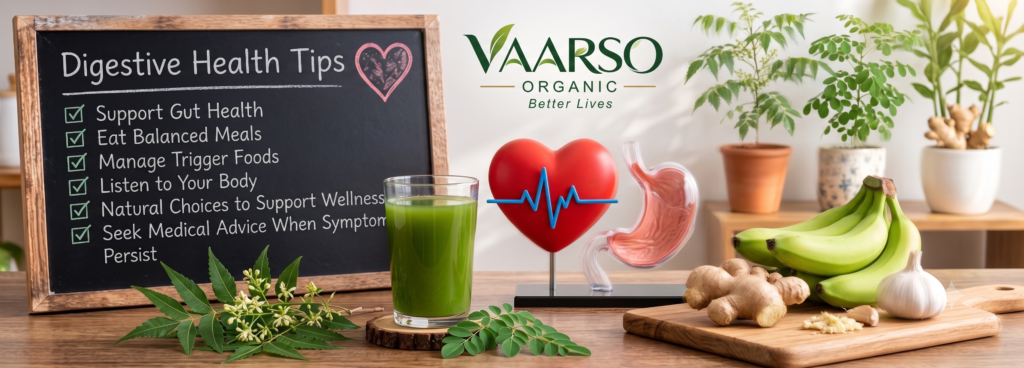
Home remedies for stomach ulcers are often searched for by people looking for gentle ways to support digestive comfort at home. Moringa, neem and garlic have long been used in traditional wellness practices, and each contains naturally occurring compounds that have attracted scientific interest.
But there is an important difference between supporting digestive health and treating an ulcer.
A stomach ulcer, also called a peptic ulcer when it occurs in the stomach or duodenum, is an actual sore in the digestive lining. Two of the most common causes are Helicobacter pylori (H. pylori) infection and regular use of non-steroidal anti-inflammatory drugs (NSAIDs), such as aspirin, ibuprofen and naproxen.
That is why natural approaches should be viewed as supportive lifestyle choices—not substitutes for diagnosis or treatment.
At Vaarso Organic, we believe that natural wellness begins with understanding your body, choosing wholesome foods and building sustainable daily habits. In this guide, we explore three traditional options that are commonly discussed for digestive wellness: moringa, neem and garlic.
What Is a Stomach Ulcer?
A stomach ulcer is an open sore that develops in the lining of the stomach. Peptic ulcers can also develop in the first part of the small intestine, known as the duodenum.
Some people experience:
- Burning or aching pain in the upper abdomen
- Feeling unusually full after eating
- Bloating
- Belching
- Nausea
- Indigestion
- Discomfort that may come and go
However, not everyone with an ulcer has obvious symptoms.
The cause matters because treating the underlying problem is usually more important than simply trying to reduce discomfort.
For example, H. pylori-related ulcers generally require medication to eliminate the infection, while NSAID-related ulcers may require changes to the medicines responsible and treatment to allow the stomach lining to heal.
1. Moringa for Digestive Wellness
Moringa comes from the Moringa oleifera tree and is widely used as a food and traditional botanical ingredient in different parts of the world.
Its leaves are particularly valued for their nutritional content. Moringa leaves contain protein, dietary fibre and several vitamins and minerals, although the exact nutritional value depends on whether fresh leaves, dried leaves or powder are being consumed.
Traditional systems of wellness have used moringa for digestive and general health purposes for generations.
Can Moringa Treat a Stomach Ulcer?
This is where it is important to separate traditional use from clinical evidence.
Laboratory and animal research has investigated moringa extracts for antioxidant, anti-inflammatory and gastrointestinal effects. However, that does not establish moringa powder as a proven treatment for human stomach ulcers.
So, rather than saying that moringa “cures ulcers,” a more responsible approach is to consider it as a nutrient-rich food that can form part of a balanced diet.
Potential Benefits of Moringa as a Food
Moringa may help contribute to:
- A varied, plant-rich diet
- Intake of antioxidants and plant compounds
- Overall nutritional quality
- Dietary fibre intake
- A balanced approach to everyday wellness
These benefits are different from healing an ulcer.
How to Use Moringa Powder
If you already tolerate moringa well, you can use a small amount as a food ingredient.
Try adding it to:
- Smoothies
- Soups
- Vegetable dishes
- Lentil dishes
- Savoury porridges
- Homemade drinks
Start with a small quantity rather than taking large amounts suddenly.
If you have an active ulcer and find that moringa causes burning, nausea, abdominal discomfort or loose stools, stop using it and speak with a healthcare professional.
Vaarso Organic tip: When choosing any herbal powder, look for a product with clearly stated ingredients and usage instructions. A natural product should complement—not replace—appropriate medical care.
2. Neem and Digestive Wellness
Neem, scientifically known as Azadirachta indica, has a long history in traditional Ayurvedic practices.
Different parts of the neem plant have traditionally been used for various purposes. Modern research has also examined neem’s antioxidant, antimicrobial and anti-inflammatory properties.
This has led to interest in neem and gastrointestinal health.
Can Neem Heal an Ulcer?
There is some laboratory and preclinical research suggesting that neem extracts may have gastroprotective effects. However, this evidence should not be interpreted as proof that drinking neem preparations or taking neem powder can heal a stomach ulcer in humans.
The concentration and preparation used in research may also be very different from ordinary neem products.
For this reason, neem should not be used as a substitute for ulcer medication or H. pylori treatment.
Traditional Uses of Neem
Neem has traditionally been used for:
- General wellness
- Skin care
- Oral hygiene
- Herbal preparations
- Traditional digestive support
However, traditional use does not automatically mean that a product is appropriate for everyone.
Why Caution Matters
Neem can interact with medicines and may not be appropriate for certain people, including pregnant or breastfeeding individuals and young children. Anyone taking regular medication should discuss medicinal neem use with a qualified healthcare professional.
For someone with a diagnosed stomach ulcer, it is especially important not to experiment with concentrated herbal preparations without professional advice.
3. Garlic for Digestive Health
Garlic is one of the most familiar ingredients in kitchens around the world.
It contains sulphur-containing compounds, including allicin, which is formed when fresh garlic is crushed or chopped.
Garlic has attracted scientific interest because of its antimicrobial and antioxidant properties.
Garlic and H. pylori
Because H. pylori is one of the major causes of peptic ulcers, researchers have investigated whether garlic compounds can affect this bacterium.
Laboratory research has shown antimicrobial activity, but this does not mean that eating garlic alone can eradicate an H. pylori infection.
If H. pylori is responsible for an ulcer, doctors typically use a combination of medicines, commonly involving antibiotics and acid-suppressing medication.
An Important Garlic Warning
Garlic is not automatically soothing for an irritated stomach.
Raw garlic, especially in large quantities, may cause:
- Heartburn
- Burning sensation
- Stomach discomfort
- Gas
- Nausea
So if you already have an active ulcer or significant acid-related symptoms, eating raw garlic on an empty stomach may make you feel worse.
Instead of treating garlic like medicine, use it as a normal food ingredient if your body tolerates it.
How to Use Garlic
You can include moderate amounts of cooked garlic in:
- Vegetable dishes
- Soups
- Stews
- Whole-grain meals
- Beans and lentils
- Homemade sauces
There is no need to swallow large quantities of raw garlic in the hope of treating an ulcer.
Benefits of a Digestive-Friendly Lifestyle
When people search for home remedies for stomach ulcers, they often focus on a single ingredient.
But your overall routine may be much more important.
A digestive-friendly lifestyle can include:
1. Eat Balanced Meals
Choose a variety of:
- Vegetables
- Fruits that you tolerate well
- Whole grains
- Legumes
- Nuts and seeds
- Protein sources
- Healthy fats
There is no universally proven “ulcer diet.” Research does not show that a particular special diet prevents or cures peptic ulcers.
Instead, pay attention to foods that personally trigger discomfort.
2. Avoid Your Personal Triggers
Some people notice worse symptoms after:
- Very spicy foods
- Large fatty meals
- Alcohol
- Excess caffeine
- Very late meals
These foods do not necessarily cause ulcers, but they may aggravate symptoms in some people.
3. Stop Smoking
Smoking can interfere with ulcer healing and increase the risk of ulcers returning.
If you smoke, getting support to quit can be more valuable than trying multiple herbal remedies.
4. Be Careful With Painkillers
Regular use of NSAIDs—including aspirin, ibuprofen and naproxen—is a major risk factor for peptic ulcers.
If you regularly use these medicines and develop stomach pain, talk with your healthcare professional rather than simply adding a home remedy.
Nutrition for a Healthy Digestive System
There is no specific food that can guarantee ulcer healing.
Still, a varied diet provides the nutrients your body needs for normal tissue maintenance and overall health.
Useful dietary components include:
Protein
Protein contributes amino acids needed for normal tissue maintenance and repair.
Sources include:
- Eggs
- Fish
- Poultry
- Beans
- Lentils
- Tofu
- Yogurt, if tolerated
Fibre
Fibre supports normal bowel function and overall digestive health.
Good sources include:
- Oats
- Whole grains
- Beans
- Lentils
- Vegetables
- Fruits
- Seeds
However, if a particular high-fibre food increases your symptoms, reduce the amount and choose alternatives that you tolerate better.
Vitamins and Minerals
A varied diet provides nutrients such as vitamin C, vitamin E, magnesium, zinc and other micronutrients.
Moringa can contribute nutrients to the diet, but it should be considered one food ingredient rather than a treatment for ulcer disease.
How to Use Natural Foods Safely
The simplest rule is:
Food first, concentrated remedies with caution.
Instead of taking large quantities of herbs or supplements, consider using whole foods as part of normal meals.
For example:
Moringa: Add a modest amount of powder to a meal or smoothie if tolerated.
Neem: Avoid self-prescribing concentrated neem preparations for an ulcer. Speak to a healthcare professional first.
Garlic: Use it in cooked meals if it does not trigger burning or discomfort.
Natural does not automatically mean risk-free. Herbal products can have active compounds and can interact with medicines.
What About Milk for a Stomach Ulcer?
Milk is sometimes recommended as an old-fashioned home remedy because it can temporarily feel soothing.
However, milk does not heal a peptic ulcer. In fact, drinking large amounts may stimulate stomach acid production in some circumstances.
If you enjoy dairy and tolerate it, there is no need to eliminate it automatically. Just don’t depend on milk as an ulcer treatment.
What About Honey, Coconut Water or Other Home Remedies?
You may find many suggestions online, including honey, coconut water, banana, aloe vera and various herbal teas.
Some may be perfectly reasonable foods for people who tolerate them, but evidence for actually healing a diagnosed peptic ulcer varies considerably.
The key point is simple:
Comfort is not the same as treatment.
If a food makes you feel comfortable, it can be part of your diet. But persistent ulcer symptoms still deserve proper medical evaluation.
When Should You See a Doctor?
Do not rely on home remedies if symptoms are persistent or severe.
Seek medical attention if you have:
- Persistent upper-abdominal pain
- Recurrent burning or indigestion
- Repeated vomiting
- Unexplained weight loss
- Difficulty swallowing
- Symptoms that keep returning
- Severe or worsening abdominal pain
Get urgent medical help if you vomit blood, notice black or tarry stools, have sudden severe abdominal pain, feel faint or dizzy, or develop other signs of possible internal bleeding. These can indicate an ulcer complication.
Can Home Remedies Replace Ulcer Medicine?
No.
This is perhaps the most important message in this entire article.
If an ulcer is caused by H. pylori, the infection needs appropriate medical treatment. If an ulcer is associated with NSAIDs, the medication needs to be reviewed with a healthcare professional. Doctors may also prescribe medicines such as proton pump inhibitors or H2 blockers to help ulcers heal.
Home practices can support a healthier lifestyle, but they should not delay diagnosis or treatment.
Final Thoughts from Vaarso Organic
The search for home remedies for stomach ulcers often comes from a desire to use simple, natural solutions.
Moringa, neem and garlic all have interesting traditional histories and nutritional or biological properties. But responsible natural wellness means understanding the limits of what these ingredients can do.
Think of them as part of a broader lifestyle—not as a replacement for medical treatment.
Eat a varied diet, listen to your digestive system, avoid smoking and excessive alcohol, be cautious with NSAIDs, and seek medical advice when symptoms persist.
At Vaarso Organic, our philosophy is simple: natural wellness works best when it is combined with informed choices, balanced nutrition and sensible daily habits.
Ayurveda is not simply about taking a remedy—it is also about learning to live in balance.
FAQs: Home Remedies for Stomach Ulcers
1. What are the best home remedies for stomach ulcers?
There is no scientifically proven home remedy that can cure a stomach ulcer. Moringa, neem and garlic are traditionally used for wellness, but they should not replace medical treatment.
2. Can moringa powder cure stomach ulcers?
There is not enough high-quality human evidence to say that moringa powder cures stomach ulcers. Moringa can be used as a nutritious food ingredient if tolerated, but diagnosed ulcers require appropriate medical care.
3. Is neem good for stomach ulcers?
Neem has been studied for various biological and gastrointestinal effects, but evidence is not sufficient to recommend neem as a treatment for human stomach ulcers. Concentrated neem products should be used cautiously.
4. Can garlic kill H. pylori?
Garlic compounds have demonstrated antimicrobial activity against H. pylori in laboratory research, but eating garlic is not a proven way to eradicate an infection. Confirmed H. pylori infection generally requires prescribed treatment.
5. Can I eat garlic if I have an ulcer?
Some people tolerate cooked garlic well, while raw garlic may worsen burning, reflux or stomach discomfort. If garlic makes your symptoms worse, avoid it and speak with a healthcare professional.
6. Should I avoid spicy food completely?
Not necessarily. Spicy food does not cause peptic ulcers, although it can make symptoms worse for some people.
7. Can milk heal a stomach ulcer?
No. Milk may temporarily feel soothing but does not heal a peptic ulcer.
8. What are the main causes of stomach ulcers?
The two major causes are H. pylori infection and NSAID medicines such as aspirin, ibuprofen and naproxen.
9. Can I treat an ulcer naturally without medicine?
You should not assume that a diagnosed ulcer can be safely treated without appropriate medical care. Treatment depends on the cause, and untreated ulcers can cause serious complications.
10. When is a stomach ulcer an emergency?
Vomiting blood, black/tarry stools, sudden severe abdominal pain, fainting or significant dizziness can indicate a serious complication and require urgent medical attention.