

Skipping Lunch Is Unfair to Your Body: Benefits of a Balanced Midday Meal
- Why is lunch important?
- Effects of skipping lunch
- Ayurvedic view of meal timing
- Healthy alternatives to fried snacks
Your morning is busy. Emails keep arriving, meetings run over time, household responsibilities pile up, and before you realise it, lunchtime has passed.
You tell yourself, “I will eat something later.”
Perhaps you grab a samosa, a pastry, a packet of chips, or a sweetened coffee. Perhaps you skip the meal altogether and wait until evening to eat properly.
It may seem harmless when it happens occasionally. But when skipping lunch becomes a daily habit, it is worth asking an important question: Are you giving your body the nourishment and energy it needs throughout the day?
At Vaarso Organic, we believe wellness begins with everyday choices. A balanced lunch is not about following a strict food rule or eating a large meal at a particular hour. It is about making time for nourishing food, listening to your hunger, and building a routine that supports your individual needs.
Ayurveda has traditionally emphasised mindful eating, suitable meal timing, and the relationship between food and daily life. Modern nutrition also highlights the importance of food quality, variety, and adequate nourishment.
Let us explore why lunch matters, what may happen when you regularly miss it, how to build a satisfying midday meal, and how traditional wisdom can complement a practical, modern lifestyle.
Why Is Lunch an Important Meal?
Your body uses energy throughout the day, whether you are working at a desk, caring for children, studying, travelling, exercising, or performing physical labour.
Lunch offers an opportunity to replenish that energy and obtain nutrients such as protein, carbohydrates, healthy fats, vitamins, minerals, and fibre.
A balanced midday meal may help you:
Maintain energy for afternoon activities.
Meet your daily nutritional needs.
Feel comfortably satisfied between meals.
Support concentration and everyday physical performance.
Avoid arriving at dinner extremely hungry.
Establish a more consistent eating routine.
However, there is no universal rule that everyone must eat lunch at exactly noon. Nutritional needs differ according to age, activity, health conditions, work schedules, culture, and personal preferences. Some people follow planned eating schedules that include fewer meals, and the number of meals alone does not determine whether a diet is healthy.
The important distinction is between a deliberate eating pattern that meets your needs and repeatedly missing meals because your schedule leaves no room for nourishment.
What Does Ayurveda Say About Midday Eating?
Ayurveda is a traditional Indian system of health that views food as an important part of daily wellbeing. Concepts such as Ahara (food and nourishment), Agni (digestive fire), and Dinacharya (daily routine) encourage people to consider not only what they eat, but also how and when they eat.
In traditional Ayurvedic teaching, Pitta dosha is associated with transformation, heat, and digestion. Midday is often described as a period when Pitta is prominent, and lunch is commonly treated as an important meal.
This traditional framework offers a useful reminder: eating should not always be an afterthought squeezed between responsibilities.
Modern science, however, does not establish that every person’s digestive capacity peaks precisely between 12 p.m. and 2 p.m. Ayurveda’s dosha concepts are part of a traditional explanatory system rather than scientifically validated measurements of digestive function.
A practical way to bring the two perspectives together is to eat at reasonably consistent times when possible, choose foods that suit your needs, avoid rushing through every meal, and pay attention to how different meals affect your comfort and energy.
The goal is not to obey the clock at all costs. It is to create a routine that works for your body and circumstances.
What Happens When You Regularly Skip Lunch?
Skipping lunch does not produce the same effects in every person. Some people may feel perfectly comfortable with a different meal schedule, while others experience hunger, tiredness, headaches, irritability, or difficulty concentrating.
The effects also depend on what you eat during the rest of the day, how active you are, your sleep, medications, and any underlying health conditions.
1. You May Feel Tired or Less Focused
If you have not eaten for several hours and your body needs more energy, you may notice hunger, low energy, or difficulty concentrating.
This can be particularly inconvenient when the afternoon involves demanding work, study, driving, caregiving, or physical activity.
A balanced lunch containing carbohydrates, protein, fibre, and some healthy fat can provide nourishment and help you feel satisfied. If you frequently feel weak, dizzy, or unusually tired, do not assume that skipping lunch is the only explanation; seek medical advice when symptoms persist.
2. You May Become Extremely Hungry in the Evening
Have you ever skipped lunch, reached home in the evening, and felt ready to eat almost anything in sight?
For some people, a long gap between meals increases hunger and makes it harder to make considered food choices. They may eat quickly, take larger portions, or snack repeatedly before dinner.
This is not inevitable, and it does not mean that everyone who skips lunch will overeat. Nevertheless, if missing lunch regularly leaves you ravenous at night, planning a proper meal or a nutritious alternative can help.
3. You May Rely Too Much on Convenience Snacks
When time is short, it is easy to replace lunch with whatever is available.
Depending on the region, this might be a samosa, kachori, fried pastry, crisps, biscuits, a sugary drink, a doughnut, or a fast-food snack.
These foods can be enjoyed occasionally. The issue is relying on them as a regular substitute for a varied meal. Many snack foods contain substantial amounts of refined starch, salt, added sugar, or fat while providing relatively little fibre or protein.
A snack can still be nutritious, but choosing one that includes protein, fibre, or fruit and vegetables is often more satisfying than relying on a small, highly processed option alone.
4. Your Digestive Comfort May Be Affected
Skipping lunch does not automatically cause acidity, gas, or indigestion. These symptoms have many possible causes, including particular foods, reflux, stress, eating patterns, and medical conditions.
However, some people find that going for long periods without food makes them uncomfortable, while others experience symptoms when they later eat a very large meal quickly.
If this happens to you, try observing your individual pattern. Eat at a comfortable pace, avoid portions that leave you painfully full, and notice whether specific foods or drinks trigger symptoms.
Persistent heartburn, severe abdominal pain, vomiting, difficulty swallowing, or unexplained weight loss deserves medical assessment rather than repeated home remedies.
5. Your Blood Glucose May Need Closer Attention
Blood glucose responds to many factors, including food, physical activity, hormones, sleep, illness, and medication.
Skipping lunch does not necessarily cause dangerous blood sugar changes in a healthy adult. However, people with diabetes who use insulin or certain glucose-lowering medicines may develop hypoglycaemia if they miss or delay meals without adjusting their treatment appropriately.
Other people may notice changes in hunger, energy, or glucose readings when their meal schedule changes.
If you have diabetes, follow your personalised care plan and ask your healthcare professional how to manage delayed or missed meals. Do not change medication doses on your own.
6. Your Overall Nutrient Intake May Fall Short
Lunch is one opportunity to obtain protein, fibre, vitamins, minerals, and other nutrients. Regularly missing it without making up for those needs elsewhere may make a balanced diet more difficult.
This can be particularly important for people with higher nutritional needs, including some older adults, people recovering from illness, physically active individuals, and those with limited access to food.
What matters most is your overall eating pattern across the day and week. If you do not eat a conventional lunch, make sure your other meals and planned snacks provide enough variety and nourishment.
7. Skipping Lunch Does Not Automatically Cause Weight Gain
Weight management is more complex than the number of meals you eat.
Some people compensate for a missed meal by eating more later. Others naturally eat less overall. Research on meal frequency and timing does not support a simple claim that everyone who skips lunch will gain weight.
A better approach is to focus on sustainable habits: satisfying meals, appropriate portions, regular physical activity, adequate sleep, and an eating pattern that you can maintain.
Avoid using meal skipping as punishment for eating more earlier, or as a shortcut to rapid weight loss.
Is Replacing Lunch With Fried Snacks a Good Idea?
Imagine that you have two options during a busy workday.
The first is a quick snack of fried pastry and a sweetened drink. The second is a simple meal containing grains, vegetables, and a source of protein.
Both can satisfy hunger temporarily, but the second option generally offers more opportunities to obtain a wider range of nutrients.
Fried snacks are not forbidden foods. Food has cultural, social, and emotional value, and there is room for enjoyment in a healthy diet. The concern is whether these foods routinely replace meals that would otherwise provide a better balance of nutrients.
A useful question is not, “Is this food bad?” but rather, “Does my overall eating pattern give me what I need?”
What Should a Healthy Lunch Include?
You do not need an expensive diet plan or a complicated recipe. A nourishing lunch can be built from familiar foods in almost any cuisine.
One practical guide is to fill roughly half your plate with vegetables and fruit, one-quarter with whole grains or other minimally refined carbohydrates, and one-quarter with protein-rich foods. This is a flexible visual guide, not a strict rule for every person or every meal.
1. Choose a Source of Carbohydrates
Carbohydrates provide energy and can be part of a balanced meal.
Options include:
Whole-wheat roti or chapati.
Brown rice or other rice varieties.
Oats, barley, quinoa, or whole-grain bread.
Potatoes or other starchy vegetables.
Millet-based dishes, where available.
Choose a variety of grains and carbohydrate sources that suit your culture, budget, appetite, and health needs.
2. Add Protein
Protein supports muscles and many other functions in the body. Including a protein source can also help make a meal more satisfying.
Options include:
Lentils, beans, chickpeas, or peas.
Tofu, tempeh, or other soy foods.
Eggs, fish, or poultry.
Yoghurt, cottage cheese, or other suitable dairy foods.
Nuts and seeds as part of a balanced meal.
Vegetarian, vegan, and omnivorous diets can all provide balanced lunches with suitable planning.
3. Include Vegetables and Fruit
Vegetables and fruit supply fibre, vitamins, minerals, and a wide variety of plant compounds.
Try leafy greens, carrots, tomatoes, broccoli, peppers, green beans, seasonal vegetables, or a side salad. Add a piece of fruit when it suits your appetite and meal.
Fresh, frozen, and appropriately prepared canned vegetables can all be useful choices. The most practical option is the one you can access and enjoy consistently.
4. Include Some Healthy Fat
Small amounts of foods containing unsaturated fats, such as nuts, seeds, avocado, or suitable plant oils, can add flavour and contribute to a balanced diet.
You do not need to eliminate fat from lunch. Instead, consider overall food quality and portion sizes.
5. Drink Water
Water is a practical everyday drink for most people. Your fluid needs vary with climate, activity, body size, and health.
Buttermilk, or chaas, can be included if you enjoy dairy and tolerate it. It is not compulsory, and it does not have a special ability to improve digestion in everyone. Choose unsweetened options when possible and consider the salt content of prepared versions.
Simple, Balanced Lunch Ideas for Different Cultures
Healthy lunch does not have to mean one particular cuisine.
| Eating style | Example lunch |
|---|---|
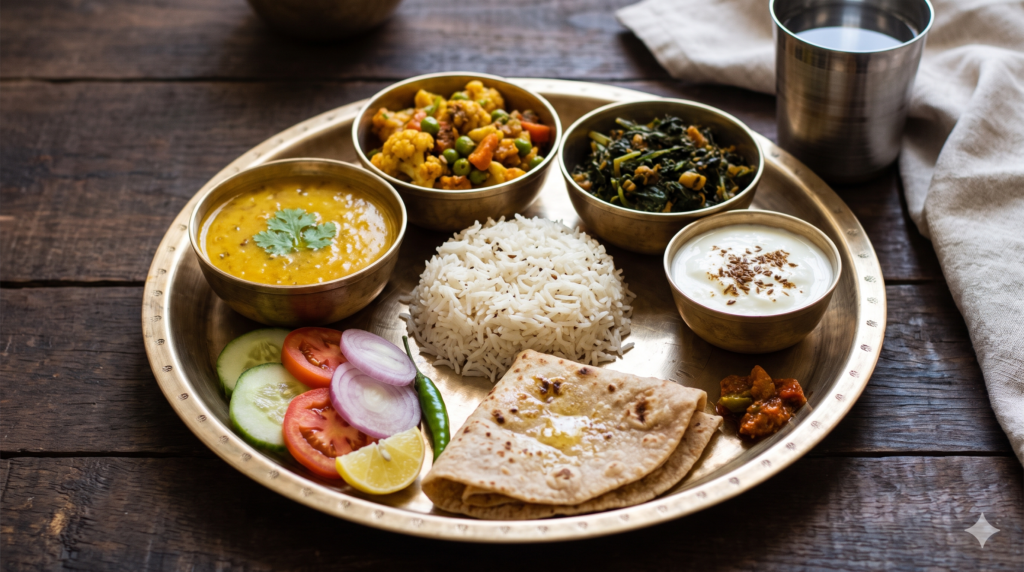
| Indian vegetarian | Dal, rice or roti, seasonal vegetables, and plain yoghurt or chaas |
| Simple home-cooked meal | Khichdi with vegetables and a suitable protein accompaniment |
| Mediterranean-inspired | Beans or fish, whole grains, salad, and olive oil |
| East Asian-inspired | Rice, tofu or fish, and mixed vegetables |
| Western-style | Whole-grain sandwich with eggs, beans, chicken, or tofu, plus vegetables |
| Plant-based | Lentil bowl with grains, roasted vegetables, seeds, and a dressing |
| Busy workday | Leftovers with vegetables and protein, or a balanced packed lunch |
These are examples, not prescriptions. Portions should reflect your hunger, energy requirements, health conditions, and activity level.
How to Make Lunch a Sustainable Daily Habit
Knowing what to eat is only half the challenge. The other half is finding time to eat it.
Plan ahead. Decide on a few simple lunches before the workweek begins. Cooking extra portions at dinner can make the next day’s lunch easier.
Keep practical foods available. Frozen vegetables, canned beans, whole-grain bread, eggs, yoghurt, fruit, and leftovers can help you prepare a meal quickly.
Protect a lunch break. If your schedule allows, set aside even a short period to sit down and eat without working continuously.
Pack food when necessary. A lunchbox can be useful for school, office work, travel, or long shifts. Use appropriate food-safety practices and refrigeration when required.
Notice your hunger and fullness. Eat enough to feel comfortably satisfied rather than forcing a large meal or ignoring persistent hunger.
Avoid perfectionism. Some days will be unpredictable. If lunch is delayed, choose a practical option when you can and return to your normal routine at the next opportunity.
If you have little appetite during the day, frequent digestive symptoms, difficulty accessing food, or a schedule that makes regular meals challenging, consider speaking with a qualified healthcare professional or dietitian about a suitable approach.
A Vedic and Ayurvedic Reflection: Food as Daily Care
In many Indian traditions, preparing and sharing food is more than a practical task. Meals can represent hospitality, family connection, gratitude, and care for the body.
The traditional concept of Ahara encourages attention to food and nourishment, while Vihara emphasises daily conduct and lifestyle. These ideas can inspire a thoughtful relationship with eating: choose food with care, make time to eat, and avoid treating the body as something that must simply endure a busy schedule.
Ayurveda also traditionally discusses digestive fire, or Agni, and the importance of eating in a way that suits an individual’s circumstances. These ideas may serve as a cultural framework for mindful eating, but they should not be interpreted as proof that a particular lunch time prevents disease or that skipping one meal damages every person’s health.
Modern nutrition adds a complementary lesson: the quality, variety, and adequacy of your diet matter, and no single meal schedule is ideal for everyone.
At Vaarso Organic, we see traditional wisdom and modern knowledge as opportunities to encourage informed daily habits—not as reasons to make rigid rules or fear food.
Conclusion: Give Your Midday Meal the Attention It Deserves
Skipping lunch occasionally is not automatically harmful, and everyone does not need to eat at the same time. But if you repeatedly miss a meal because work, travel, or daily responsibilities take priority, it may be time to reconsider your routine.
A balanced lunch can help you meet your nutritional needs, manage hunger, and make the afternoon more comfortable. It does not have to be elaborate. Dal and rice, a vegetable-and-bean bowl, a whole-grain sandwich, or leftovers prepared with care can all be useful options.
The message is simple: do not let a busy schedule become the reason you consistently neglect your nourishment. Choose a meal pattern that suits your body, circumstances, and health needs.
Ayurveda reminds us to treat food as part of daily living. Modern nutrition reminds us to make that food varied, balanced, and sufficient. Together, these perspectives encourage a kinder, more thoughtful approach to everyday wellness.
Medical disclaimer: This article is for general educational purposes and is not a substitute for individual medical or nutritional advice. People with diabetes, eating disorders, digestive conditions, pregnancy-related needs, or other health concerns may require personalised guidance. Harvard Health Publishing — Let’s Do Lunch the Healthy Way , Systematic review — Eating frequency and cardiometabolic health
Frequently Asked Questions (FAQs)
1. Is skipping lunch bad for your health?
Not necessarily for everyone. The effect depends on your overall diet, activity, health, medications, and eating pattern. Regularly missing lunch can make it harder for some people to meet nutritional needs or manage hunger.
2. What happens if I skip lunch every day?
Some people may experience hunger, tiredness, headaches, irritability, or overeating later. Others may feel fine. If skipping lunch means you regularly eat too little or rely on low-nutrient snacks, consider improving your routine.
3. Does skipping lunch cause weight gain?
Not automatically. Weight changes depend on total energy intake, food choices, activity, sleep, and other factors. Some people eat more later after skipping lunch, while others do not.
4. Can skipping lunch cause acidity or gas?
It does not directly cause these symptoms in everyone. Reflux, food choices, stress, and other digestive conditions may contribute. If symptoms repeatedly occur around missed or delayed meals, keep track of your pattern and seek advice if they persist.
5. What is the best time to eat lunch according to Ayurveda?
Traditional Ayurvedic teaching often treats midday as an important time for the main meal and associates it with Pitta. There is no scientifically established lunch time that is best for every person. Choose a schedule that fits your needs and routine.
6. What should I eat for a healthy lunch?
Include a mix of vegetables or fruit, whole grains or other carbohydrate sources, protein-rich foods, and some healthy fats. Dal, rice, vegetables, and yoghurt are one option; balanced meals from other cuisines can work equally well.
7. Is khichdi a good lunch option?
Khichdi can be a convenient meal, especially when made with grains, lentils, and vegetables. Its nutritional balance depends on the ingredients and portions. Add suitable accompaniments if needed to meet your energy and protein needs.
8. Is buttermilk necessary after lunch?
No. Unsweetened buttermilk can be part of a balanced diet if you enjoy it and tolerate dairy, but it is not essential and is not suitable for everyone.
9. Is eating samosas, kachori, or other fried snacks at lunch unhealthy?
These foods can be enjoyed occasionally. The concern is relying on them every day instead of a varied meal that provides enough protein, fibre, vegetables, and other nutrients.
10. Should people with diabetes skip lunch?
People with diabetes should follow an individual meal and medication plan. Those taking insulin or certain glucose-lowering medicines may be at risk of low blood glucose when meals are delayed or skipped. Seek personalised medical advice rather than changing medication independently.
11. Is a light lunch better than a heavy lunch?
A meal that leaves you comfortably satisfied may be more suitable than one that leaves you uncomfortably full. The right portion depends on your appetite, activity, energy needs, and health. A very small lunch may not be enough for everyone.
12. What if I cannot take a proper lunch break at work?
Plan portable options such as a whole-grain sandwich with protein, yoghurt and fruit, leftovers, or a bean-and-grain bowl. If your schedule is unpredictable, keep practical foods available and choose a routine that meets your needs as consistently as possible.