
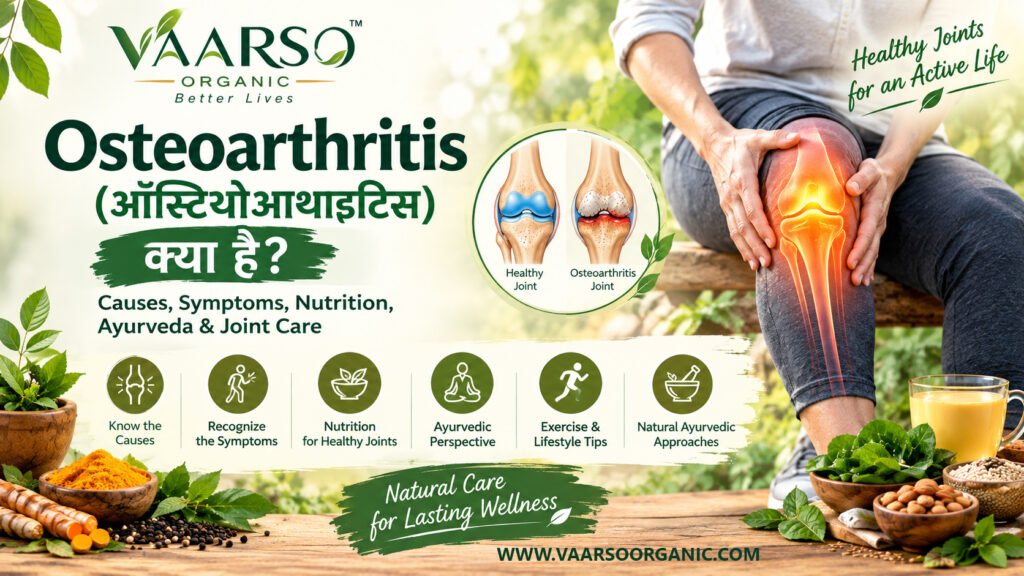
What Is Osteoarthritis?: Causes, Symptoms, Nutrition, Ayurvedic Approach & Joint Care
Osteoarthritis often begins quietly.
One morning, your knees may feel stiff when you get out of bed. After sitting for a long time, your first few steps may feel uncomfortable. Climbing stairs may become harder than it used to be. Perhaps your fingers feel stiff when opening a jar, or your hip becomes uncomfortable after a long walk.
It is easy to think, “This is just part of getting older.”
But osteoarthritis (OA) is more than ordinary ageing.
It is a long-term condition that affects the entire joint, including cartilage, bone and surrounding tissues. It most commonly affects the knees, hips, hands and spine. According to the World Health Organization, around 528 million people worldwide were living with osteoarthritis in 2019, making it one of the world’s most common musculoskeletal conditions. Importantly, osteoarthritis is not an inevitable consequence of ageing.
The encouraging part is that osteoarthritis does not automatically mean giving up movement or accepting constant pain.
Exercise, appropriate weight management, good nutrition, physical therapy, symptom management and, when necessary, medical treatment can all have a role.
Ayurveda also has a long tradition of discussing joint conditions under concepts such as Sandhigata Vata. This traditional perspective places emphasis on food, daily routine, movement, oil application and maintaining balance.
At Vaarso Organic, we believe traditional wellness is most useful when it is presented responsibly—respecting Ayurveda and cultural knowledge while also understanding what modern research actually supports.
What Is Osteoarthritis?
Osteoarthritis is a chronic joint condition involving changes in cartilage and other tissues within and around a joint.
Cartilage is the smooth tissue that covers the ends of bones where they meet. It helps the joint move smoothly and reduces friction.
However, osteoarthritis is not simply a matter of cartilage “wearing out.”
Modern medicine understands OA as a condition involving the whole joint. Changes can occur in cartilage, underlying bone, the joint lining, ligaments and surrounding tissues.
As these changes develop, a person may experience: 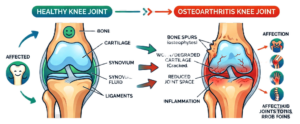
- Joint pain
- Stiffness
- Swelling
- Reduced range of motion
- Difficulty walking or climbing stairs
- Grinding, clicking or scraping sensations
- Weakness around the affected joint
- Difficulty with everyday activities
Symptoms can be mild for some people and considerably limiting for others.
Which Joints Are Commonly Affected?
Osteoarthritis can occur in many joints, but it is particularly common in the:
Knees
The knee carries much of the body’s weight, making knee osteoarthritis common. Pain may appear during walking, climbing stairs, standing or getting up from a chair.
Hips
Hip osteoarthritis can cause pain around the hip, groin, buttock or upper thigh. Stiffness may gradually reduce mobility.
Hands
OA in the hands can cause pain, stiffness and changes around the finger joints or thumb.
Spine
Osteoarthritis-related changes can affect the neck and lower back and contribute to stiffness and discomfort.
According to WHO, the knee is the most commonly affected joint, followed by the hip and hand.
What Are the Symptoms of Osteoarthritis?
Osteoarthritis symptoms often develop gradually, although symptoms may become noticeable after an injury or increased strain.
1. Joint Pain
Pain may occur when using the affected joint.
For example:
- Knee pain while walking
- Hip pain after prolonged activity
- Finger pain while gripping
- Back or neck discomfort with movement
In more advanced cases, pain may also occur at rest.
2. Stiffness
Stiffness is particularly common after sleeping or sitting still for a while.
Typical osteoarthritis stiffness after rest is often relatively brief. NIAMS describes morning or post-rest stiffness as commonly lasting less than 30 minutes.
3. Swelling
A joint may become swollen, particularly following increased activity.
4. Reduced Movement
You may notice that you cannot bend, straighten or rotate a joint as easily as before.
5. Grinding or Clicking
Some people experience a grinding, scraping or clicking sensation when moving a joint.
6. Weakness
Pain can make a person less active. Over time, reduced activity may weaken the muscles supporting the joint.
This can create a difficult cycle:
Pain → less movement → weaker muscles → reduced function → greater difficulty moving.
That is one reason maintaining appropriate physical activity is such an important part of osteoarthritis care.
What Causes Osteoarthritis?
There is rarely one single cause.
Several factors can increase the likelihood of developing osteoarthritis.
Age
The risk increases with age, although OA is not an unavoidable part of getting older.
Previous Joint Injury
A previous fracture, ligament injury, sports injury or joint surgery can increase the risk of later OA.
Excess Body Weight
Extra body weight can increase mechanical stress on weight-bearing joints such as the knees and hips. Metabolic factors associated with excess weight may also contribute.
Repetitive Joint Stress
Certain occupations and sports can place repeated stress on particular joints.
Genetics
Family history can influence susceptibility to osteoarthritis.
Joint Structure
Some people have structural characteristics that make particular joints more vulnerable.
So while age is a risk factor, osteoarthritis is not simply the result of getting older.
Osteoarthritis Is Not Just “Wear and Tear”
The phrase “wear and tear” is commonly used to explain osteoarthritis.
It is easy to understand, but it is incomplete.
Joints are living structures. Their tissues respond to mechanical forces, injury, inflammation, body weight, genetics and other biological factors.
Modern research therefore views osteoarthritis as a disease involving multiple tissues and processes rather than simply the gradual wearing away of cartilage.
This also explains why two people of the same age can have very different experiences.
One person may have relatively mild symptoms, while another may experience considerable pain and loss of mobility.
Osteoarthritis and Ayurveda
Ayurveda has discussed joint-related conditions for centuries.
A condition commonly discussed in relation to osteoarthritis is Sandhigata Vata.
In traditional Ayurvedic understanding, Sandhi refers to a joint and Vata is one of the three doshas associated with movement and various physiological functions.
Ayurvedic descriptions of Sandhigata Vata emphasize symptoms such as:
- Joint pain
- Stiffness
- Difficulty with movement
- Dryness
- Crackling or similar sensations
The Ayurvedic framework is a traditional system of understanding health. It should not be presented as a scientifically established explanation of cartilage degeneration.
Still, there is an interesting point of connection between traditional wisdom and modern lifestyle advice.
Ayurveda has traditionally emphasized:
Ahara — food
Vihara — lifestyle and activity
Dinacharya — daily routine
Abhyanga — oil application/massage
Rest and recovery
Individual suitability
Modern joint-care recommendations similarly recognize the importance of movement, physical conditioning, healthy weight and lifestyle.
That does not make the two systems identical. It simply shows that some traditional lifestyle principles can sit alongside modern approaches to wellbeing.
Ayurvedic Herbs Traditionally Associated With Joint Wellness
The original traditional recipe associated with this topic includes several Ayurvedic formulations and herbs.
These deserve to be discussed carefully.
Yogaraja Guggulu
Yogaraja Guggulu is a classical Ayurvedic formulation traditionally associated with Vata-related musculoskeletal conditions.
Some clinical research has examined Ayurvedic approaches involving Guggulu preparations in people with Sandhigata Vata. However, research remains limited, and evidence is not sufficient to present Yogaraja Guggulu as a proven cure for osteoarthritis.
Important: A fixed online dosage such as “1–2 tablets twice daily” should not be treated as universally appropriate. Different products may have different formulations and concentrations.
Anyone considering it for therapeutic use should consult a qualified Ayurvedic practitioner, especially if taking prescription medicines.
Mahayogaraja Guggulu
Mahayogaraja Guggulu is another classical formulation traditionally used in Vata-related disorders.
It is a medicinal formulation, not simply a kitchen spice.
Its use should therefore be individualised rather than based on a generic dosage copied from social media or a blog.
Ashwagandha
Ashwagandha (Withania somnifera) is one of the best-known herbs in Ayurveda.
Traditionally, it is associated with strength, vitality and resilience.
Some research has explored Ashwagandha in musculoskeletal and joint-related contexts, but it should not be described as an herb that rebuilds damaged cartilage or cures osteoarthritis.
If taking concentrated Ashwagandha supplements, particularly alongside prescription medicines, professional advice is appropriate.
Nirgundi Oil
Nirgundi (Vitex negundo) has a long history of traditional external use.
Ayurvedic practitioners may use Nirgundi oil as part of external approaches for joint discomfort.
A gentle massage can also feel comforting because warmth and touch may temporarily reduce the perception of stiffness or discomfort.
However, massage does not reverse structural osteoarthritis.
Avoid aggressive massage over a joint that is acutely swollen, very hot or injured.
Mahanarayan Oil
Mahanarayan oil is another traditional Ayurvedic oil used for external massage.
A gentle application may be incorporated into a relaxation or self-care routine.
Again, the purpose should be understood as supportive comfort, not cartilage regeneration or disease reversal.
Nutrition for Osteoarthritis
There is no single “miracle food” for osteoarthritis.
Instead, think about building an overall dietary pattern that supports:
- Healthy body weight
- Muscle strength
- Bone health
- Cardiovascular health
- Adequate protein
- General nutritional wellbeing
A colourful, varied diet is generally more useful than focusing on one particular food.
Protein-Rich Foods
Adequate protein is important for maintaining muscle.
Useful options include: 
- Eggs
- Fish
- Yogurt
- Milk
- Beans
- Lentils
- Chickpeas
- Tofu
- Nuts
- Seeds
Muscles provide important support around joints, so preserving muscle becomes increasingly important with age.
Vegetables and Fruits
Aim for a variety of colourful vegetables and fruits.
Different foods provide different vitamins, minerals, fibre and plant compounds.
Examples include: 
- Leafy greens
- Broccoli
- Carrots
- Bell peppers
- Tomatoes
- Berries
- Citrus fruits
- Apples
- Pomegranates
No single fruit or vegetable needs to be considered an “arthritis cure.”
Variety matters more.
Nuts and Seeds
Nuts and seeds can contribute healthy fats, protein, minerals and fibre.
Examples include:
- Walnuts
- Almonds
- Flaxseeds
- Chia seeds
- Pumpkin seeds
- Sesame seeds
They are energy-dense, however, so portion size still matters.
Omega-3 Sources
Fatty fish such as salmon, sardines and mackerel provide EPA and DHA omega-3 fatty acids.
Plant foods such as flaxseed, chia and walnuts provide ALA.
These can be included as part of an overall nutritious eating pattern.
What About Turmeric?
Turmeric has a special place in Indian cooking, Ayurveda and cultural traditions.
Its major yellow pigment, curcumin, has been studied for various health applications, including osteoarthritis.
NCCIH reports that several meta-analyses have found encouraging early evidence for turmeric or curcumin in measures such as knee pain and stiffness, but higher-quality evidence is still needed before firm conclusions can be made.
This distinction is important.
Adding turmeric to food is very different from taking a highly concentrated curcumin supplement.
Some highly bioavailable curcumin products have been associated with liver injury. Turmeric supplements can also cause digestive side effects in some people.
So traditional use and concentrated supplementation should not automatically be treated as the same thing.
Should You Avoid Certain Foods?
There is no universal list of foods that every person with osteoarthritis must completely avoid.
However, a generally healthy diet means limiting excessive amounts of:
- Sugary drinks
- Highly processed foods
- Deep-fried foods
- Excess added sugar
- Excess alcohol
- Highly refined snack foods
The goal is not to create a frightening list of forbidden foods.
Instead, build better habits around what you eat more often.
More vegetables.
More whole foods.
Enough protein.
Appropriate portions.
Less highly processed food.
That is a much more sustainable approach.
Exercise and Osteoarthritis
If there is one lifestyle habit that deserves special attention in an osteoarthritis article, it is movement.
When a joint hurts, people naturally want to rest it completely.
But long-term inactivity can lead to muscle weakness and reduced physical function.
Exercise is considered a core component of osteoarthritis management. It can help improve pain, stiffness, muscle strength and physical function.
Depending on the person, useful activities may include:
Walking
Start with a comfortable duration and gradually increase as tolerated.
Cycling
Cycling can provide cardiovascular activity with relatively low impact.
Swimming and Water Exercise
Water reduces some of the load on joints and can make movement easier.
Strength Training
Building the muscles around affected joints can improve support and function.
Stretching and Mobility
Gentle range-of-motion exercises can help maintain flexibility.
Yoga or Tai Chi
Some people find these practices useful for mobility, balance and overall wellbeing.
The best exercise is one that is appropriate for your condition and sustainable enough to continue.
If you have significant pain, instability or a history of joint surgery, seek guidance from a physiotherapist or healthcare professional.
Can Weight Loss Help Osteoarthritis?
For people with osteoarthritis who are overweight or living with obesity, weight management can be an important part of care.
Reducing body weight can decrease mechanical stress on weight-bearing joints, particularly the knees and hips.
NICE recommends weight management as part of core osteoarthritis care when appropriate and notes that any amount of weight loss can be beneficial, with greater weight loss generally associated with greater improvements in pain and quality of life.
This does not mean extreme dieting.
A gradual approach is usually more practical:
Better food choices + appropriate portions + regular movement + consistency.
Simple Daily Routine for Joint Wellness
A healthy routine does not need to be complicated.
Morning
After waking, avoid remaining in one position for too long.
Try a few gentle mobility movements appropriate for your joints.
Breakfast
Choose a meal containing protein, fibre and minimally processed foods.
During Work
If your work involves sitting, take regular movement breaks.
Stand up, walk around and change position.
Exercise
Set aside time for walking, strength work, swimming, cycling or another suitable activity.
Meals
Build meals around vegetables, whole grains, protein and healthy fats.
Evening
A gentle walk or mobility routine may help you stay active without making exercise feel like a chore.
Sleep
Pain can disturb sleep, while poor sleep can make coping with pain more difficult.
Maintain a consistent sleep schedule whenever possible.
Heat, Massage and Other Comfort Measures
Simple supportive measures may help some people manage symptoms.
NIAMS notes that heat can increase blood flow, flexibility and tolerance for pain, while cold therapy may numb the area and help reduce pain.
Massage may also provide temporary comfort for some people.
Traditional Ayurvedic oil massage, or Abhyanga, can be incorporated into a personal wellness routine if it feels comfortable.
However, these measures should complement—not replace—appropriate exercise, medical evaluation and treatment.
When Should You See a Doctor?
Not every joint pain is osteoarthritis.
Medical assessment is especially important when symptoms are unusual or severe.
Seek professional evaluation if: 
- Pain persists or repeatedly returns
- The joint becomes significantly swollen
- Pain interferes with normal activities
- Movement becomes progressively difficult
- The joint feels unstable
- Symptoms begin after a major injury
- A joint becomes very hot and painful
- You develop fever alongside joint symptoms
- Pain becomes severe or rapidly worsens
There is no single test that confirms every case of osteoarthritis. Doctors may use medical history, physical examination and, when appropriate, imaging or other tests to rule out alternative causes.
Can Osteoarthritis Be Cured?
There is currently no simple herb, food, powder or home remedy that can honestly be described as a universal cure for osteoarthritis.
The goals of treatment are generally to:
- Reduce pain
- Improve movement
- Maintain muscle strength
- Support independence
- Improve quality of life
- Manage contributing factors
In severe cases, when other treatments have not provided sufficient relief, joint replacement or other surgery may be considered.
This is why early attention to symptoms and long-term management are important.
Ayurveda: More Than Just Herbal Medicines
One of the most interesting things about Ayurveda is that it is often misunderstood as simply a collection of herbs and medicines.
Traditional Ayurvedic thinking is broader.
Ahara—food.
Vihara—daily activity and lifestyle.
Dinacharya—daily routine.
Abhyanga—oil massage.
Rest and sleep.
Individual suitability.
These ideas encourage a person to think about health as a daily practice.
There is a valuable lesson here for modern life.
Taking a supplement cannot compensate for sitting all day, poor sleep, an unbalanced diet and complete inactivity.
At the same time, a healthy lifestyle cannot always replace medical treatment.
The sensible middle ground is:
Use traditional wisdom to support healthy habits, and use modern healthcare when diagnosis and treatment are needed.
A Responsible Note About Ayurvedic Medicines
Ayurvedic formulations should not automatically be assumed to be harmless simply because they are traditional or natural.
NCCIH notes that some Ayurvedic preparations may contain metals such as lead, mercury or arsenic, particularly when products are improperly manufactured or sourced. Research on Ayurveda for osteoarthritis also remains limited, with some promising but small or methodologically limited studies.
Therefore, anyone considering therapeutic Ayurvedic formulations should:
- Choose reputable products
- Follow appropriate professional guidance
- Tell their doctor about supplements they use
- Avoid changing prescribed medicines without medical advice
- Be particularly careful when taking several medicines or supplements
This is not about rejecting traditional medicine.
It is about using it responsibly.
Benefits of a Holistic Approach to Osteoarthritis
A comprehensive approach can support several aspects of everyday life.
Better mobility
Regular movement helps preserve physical function.
Stronger muscles
Strength exercises can help support affected joints.
Better weight management
Nutrition and activity can help maintain a healthy body weight.
Greater independence
Maintaining movement can make everyday activities easier.
Better overall wellbeing
Exercise and nutritious food support cardiovascular, metabolic and mental health in addition to joint health.
Improved quality of life
Ultimately, the goal is not simply to change an X-ray.
The goal is to help a person walk, work, travel, exercise, sleep and participate in everyday life as comfortably and independently as possible.
Frequently Asked Questions About Osteoarthritis
1. What is osteoarthritis?
Osteoarthritis is a chronic joint condition involving changes in cartilage and other tissues of the joint. It commonly affects the knees, hips, hands and spine.
2. Is osteoarthritis only an age-related problem?
No. Age increases the risk, but osteoarthritis is not inevitable with ageing. Previous injuries, genetics, joint structure, repetitive stress and excess body weight can also contribute.
3. What are the first signs of osteoarthritis?
Common early symptoms include activity-related joint pain, stiffness after rest, mild swelling and gradually reduced movement.
4. Which joints are most commonly affected?
The knees, hips, hands and spine are among the most commonly affected areas. The knee is the most frequently affected joint worldwide.
5. Can exercise help osteoarthritis?
Yes. Appropriate exercise can reduce pain and stiffness and improve muscle strength, flexibility and physical function. Exercise should be introduced gradually and adapted to the individual.
6. Should someone with osteoarthritis avoid walking?
Not necessarily. Walking can be an appropriate low-impact activity for many people. The amount and intensity should be adjusted according to symptoms and individual ability.
7. Can weight loss help knee osteoarthritis?
For people who are overweight, weight loss can reduce joint stress and improve pain and physical function. NICE recommends weight management as part of core OA care when appropriate.
8. Is turmeric beneficial for osteoarthritis?
Early evidence on turmeric or curcumin for knee osteoarthritis is encouraging for some symptoms, but more high-quality research is needed. Concentrated curcumin products also have potential safety concerns.
9. What is Sandhigata Vata?
Sandhigata Vata is an Ayurvedic concept describing a Vata-related joint disorder. It is often discussed alongside osteoarthritis, but it is a traditional Ayurvedic framework rather than an identical biomedical diagnosis.
10. Can Ashwagandha cure osteoarthritis?
No. Ashwagandha has traditional uses and has been studied in some joint-related contexts, but it should not be presented as a proven cure or as something that regrows damaged cartilage.
11. Can Yogaraja Guggulu be used for joint problems?
Yogaraja Guggulu is traditionally used for Vata-related conditions and has been studied in Ayurvedic approaches to joint disorders. Because it is a medicinal formulation, appropriate use should be determined by a qualified practitioner.
12. Is oil massage useful for osteoarthritis?
Massage may provide temporary comfort and warmth for some people. Traditional Ayurvedic oil massage can be considered as a complementary practice, but it does not reverse structural joint damage.
13. What foods are good for osteoarthritis?
There is no single food that treats osteoarthritis. A balanced diet containing vegetables, fruits, whole grains, protein-rich foods, nuts, seeds and healthy fats is a practical approach.
14. Should people with osteoarthritis avoid all cold foods or drinks?
There is no general medical rule requiring everyone with osteoarthritis to avoid cold foods or drinks. Individual comfort and dietary tolerance can guide choices.
15. Can osteoarthritis be reversed naturally?
There is no established natural treatment that reverses osteoarthritis. However, appropriate exercise, weight management, nutrition and other treatments can significantly help with symptoms and function.
16. Does osteoarthritis always require surgery?
No. Many people manage osteoarthritis with exercise, weight management, medicines and other non-surgical approaches. Surgery may be considered for severe symptoms when other treatments have not provided enough benefit.
17. Can I stop my prescribed medicine if I start Ayurveda?
No. Do not stop or reduce prescribed medication without discussing it with the healthcare professional who prescribed it.
18. When should joint pain be checked by a doctor?
Persistent, severe or worsening pain, significant swelling, joint instability, fever, major injury or rapidly changing symptoms should be professionally evaluated.
Final Thoughts
Osteoarthritis is not simply “old age,” and joint pain should not automatically be accepted as something you have to live with.
The condition can affect movement, independence and quality of life, but there are many ways to support joint health.
Move regularly.
Build strength gradually.
Eat a varied, nutritious diet.
Maintain a healthy weight where appropriate.
Take care of sleep and recovery.
Listen to persistent symptoms.
And seek professional care when necessary.
Ayurveda offers a traditional perspective through concepts such as Sandhigata Vata, Ahara, Vihara, Dinacharya and Abhyanga. These ideas can contribute to a broader wellness conversation, provided traditional claims are not presented as replacements for evidence-based medical treatment.
At Vaarso Organic, we believe natural wellness is strongest when traditional knowledge and modern understanding work together.
Good health is not about finding one magical herb. It is about building better habits, one day at a time.
Vaarso Organic — Better Lives.