
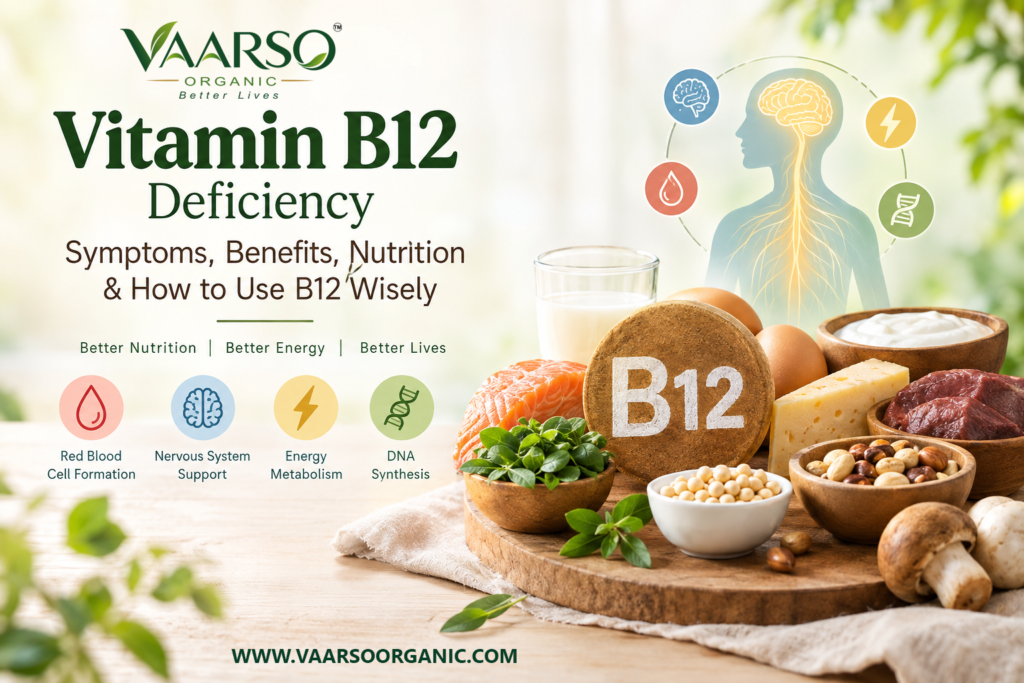
Vitamin B12 Deficiency: Symptoms, Benefits, Nutrition, Causes & How to Use B12 Wisely
Vitamin B12 is one of those nutrients we may not think about every day, yet it quietly supports several essential functions inside the body. It is involved in red blood cell formation, DNA synthesis, normal nervous-system function and energy metabolism. Because the body can store B12 for a long time, a deficiency may develop gradually and sometimes remain unnoticed until symptoms become more obvious.
The Gujarati newspaper article you shared highlights an important message: Vitamin B12 deficiency can affect the body in several ways, including fatigue, weakness, neurological symptoms and anaemia. It also draws attention to B12 nutrition during pregnancy and childhood.
But there is another important side to the story. B12 deficiency is not simply a matter of “not eating enough B12.” Some people consume B12-containing foods but still cannot absorb enough of it because of digestive conditions, certain medicines, age-related changes or problems involving intrinsic factor.
For a worldwide audience, the best approach is therefore not fear—but awareness, balanced nutrition and appropriate testing when needed.
What Is Vitamin B12?
Vitamin B12, also called cobalamin, is a water-soluble vitamin required in relatively small amounts but with important biological roles.
Your body needs B12 for: 
- Normal red blood cell formation
- DNA synthesis
- Normal neurological function
- Myelin and nerve-cell health
- Normal energy metabolism
- Homocysteine metabolism
- Normal cell metabolism
Vitamin B12 is naturally present mainly in foods of animal origin, including fish, meat, poultry, eggs and dairy products. Plant foods generally do not naturally provide reliable amounts of B12, although fortified foods such as some breakfast cereals, nutritional yeast and plant-based milk alternatives can provide it.
This makes B12 particularly important for people following vegetarian or vegan eating patterns, although dietary pattern is only one part of the picture.
Why Is Vitamin B12 So Important?
Think of B12 as a small nutritional component involved in several large processes.
Your body uses B12 while making healthy red blood cells and DNA. It is also involved in maintaining the normal function of the brain and nervous system. When B12 status becomes too low, the consequences can extend beyond simple tiredness.
A person with deficiency may experience fatigue, weakness, pale skin, palpitations, numbness, tingling, balance problems, memory difficulties or other neurological changes. Importantly, neurological symptoms can sometimes occur even without obvious anaemia.
That is why B12 should not be viewed simply as an “energy vitamin.”
B12 does not work like caffeine. Taking B12 does not provide an instant stimulant effect. Its role is to support normal physiological processes, and correcting a deficiency can improve symptoms caused by that deficiency.
Vitamin B12 Deficiency: What Can Happen?
B12 deficiency can develop slowly. The body stores a considerable amount of B12, so symptoms may take years to appear in some people.
Common symptoms may include:
- Persistent tiredness or weakness
- Pale skin
- Shortness of breath
- Headaches
- Loss of appetite
- Palpitations
- A sore or red tongue
- Mouth ulcers
- Digestive discomfort
- Numbness or tingling
- Muscle weakness
- Balance or coordination problems
- Memory or concentration difficulties
- Confusion or other cognitive changes
Not every person with B12 deficiency experiences the same symptoms. These symptoms can also occur because of other nutritional deficiencies or medical conditions, so symptoms alone cannot confirm a B12 deficiency.
This is one reason testing and professional evaluation can be more useful than simply guessing.
What Causes Vitamin B12 Deficiency?
There is no single cause.
1. Low dietary intake
People who completely avoid animal foods may have difficulty obtaining enough B12 unless they regularly consume reliable fortified foods or use an appropriate B12 supplement.
This is especially relevant to vegan diets, although vegetarians who consume little dairy or eggs may also need to pay attention to B12 intake.
2. Problems with absorption
B12 from food is attached to protein. The digestive system must release it before it can eventually be absorbed in the small intestine.
The process involves stomach acid, digestive enzymes and a protein called intrinsic factor. Intrinsic factor binds B12 and helps it reach the part of the small intestine where absorption occurs.
Therefore, a person can eat B12-containing foods and still develop deficiency if absorption is impaired.
3. Pernicious anaemia
Pernicious anaemia is an autoimmune condition that can interfere with intrinsic factor and therefore B12 absorption.
In such cases, simply eating more B12-rich foods may not solve the underlying problem. Medical treatment may be required.
4. Certain digestive conditions or surgeries
Conditions affecting the stomach or small intestine can reduce B12 absorption.
Certain gastrointestinal surgeries can also increase the risk of deficiency.
5. Some medications
Long-term use of certain medicines can affect B12 status.
Examples include metformin and medicines that reduce stomach acid, such as proton-pump inhibitors. This does not mean that people should stop prescribed medicines. Instead, people using these medicines for long periods can discuss appropriate B12 monitoring with their healthcare professional.
6. Age-related changes
Older adults may be more likely to experience difficulty absorbing B12 from food, particularly when stomach acid production is reduced.
Vitamin B12 Benefits
1. Supports Red Blood Cell Formation
One of the best-known roles of B12 is its involvement in normal red blood cell formation.
A serious B12 deficiency can result in megaloblastic anaemia, in which red blood cells become unusually large and do not function normally. This can contribute to tiredness, weakness, shortness of breath and palpitations.
2. Supports the Nervous System
B12 is important for normal neurological function.
A prolonged deficiency may cause symptoms such as pins and needles, numbness, muscle weakness, balance problems and cognitive changes. Some neurological complications may become permanent if deficiency remains untreated for too long.
3. Helps Normal Energy Metabolism
B12 participates in metabolic pathways that help the body use nutrients.
This is why adequate B12 is important for normal energy metabolism. However, it is more accurate to say that B12 supports normal energy metabolism rather than calling it an instant energy booster.
4. Supports DNA Production
Every day, your body produces and renews cells. Vitamin B12 participates in the processes involved in DNA synthesis and normal cell metabolism.
5. Supports Homocysteine Metabolism
Vitamin B12 participates in the normal metabolism of homocysteine.
However, it is important not to turn this into an exaggerated heart-health claim. Although B12 supplementation can lower homocysteine in people with inadequate B12, lowering homocysteine has not consistently been shown to reduce cardiovascular events in otherwise healthy people.
Vitamin B12 Nutrition: How Much Do We Need?
For most adults aged 19 years and older, the U.S. National Academies’ recommended intake is 2.4 micrograms (mcg) of vitamin B12 per day. The requirement is higher during pregnancy and breastfeeding—2.6 mcg and 2.8 mcg respectively. Requirements vary by age during childhood.
These numbers may look surprisingly small.
That is because B12 is required in micrograms, not grams.
Foods containing Vitamin B12
Reliable sources include:
- Fish and seafood
- Meat
- Poultry
- Eggs
- Milk
- Yogurt
- Cheese
- B12-fortified breakfast cereals
- B12-fortified nutritional yeast
- Some fortified plant-based beverages
The exact B12 content varies considerably between foods and brands, so checking the nutrition label is useful.
What about plant foods?
This is an important point for a global audience.
Most ordinary fruits, vegetables, grains, nuts, seeds and herbs are not reliable natural sources of vitamin B12. Some foods marketed as “plant-based B12 sources” may contain added or variable forms of B12, but not every plant food or algae product is dependable.
For example, some seaweeds may contain B12-like compounds or variable amounts, but they are not considered a reliable B12 source.
For people eating completely plant-based diets, fortified foods and/or an appropriate B12 supplement are generally the more dependable strategies.
Vitamin B12 and Pregnancy
Vitamin B12 deserves particular attention during pregnancy because the developing baby needs adequate B12 for normal neurological and overall development.
The article you shared also highlights the importance of B12 during pregnancy and childhood.
Research and clinical guidance indicate that maternal B12 deficiency can be associated with pregnancy complications and adverse effects on the developing baby.
However, pregnancy is not the right time to self-prescribe high-dose supplements based solely on an article or social-media post.
Pregnant or breastfeeding women should discuss their nutritional requirements with a qualified healthcare professional, particularly when following vegetarian or vegan diets.
Vitamin B12 and Children
Children need B12 for normal growth and development.
The recommended intake changes according to age. Infants, children and teenagers require different amounts from adults, with needs gradually increasing as they grow.
A child’s persistent tiredness, developmental concerns, poor appetite, weakness or neurological symptoms should not automatically be blamed on B12 deficiency.
A pediatrician can determine whether testing is appropriate and identify the actual cause.
Vitamin B12 From an Ayurvedic and Traditional Wellness Perspective
There is an important distinction to make here.
Vitamin B12 is a modern nutritional concept and was not described as “vitamin B12” in classical Ayurveda. Therefore, it would be misleading to claim that ancient Ayurvedic texts specifically prescribed B12.
What Ayurveda does offer is a broader philosophy of nourishment.
Traditional Ayurvedic thinking places considerable emphasis on Ahara—food—and Vihara—daily habits and lifestyle. The quality, quantity, timing and digestibility of food are treated as important parts of maintaining balance.
The concept of Agni, often discussed in Ayurveda in relation to digestion and metabolism, can provide a useful traditional lens through which to think about nutrition. Modern nutritional science, however, explains B12 absorption through specific physiological mechanisms involving stomach acid, intrinsic factor and the intestine. These are different systems of explanation and should not be presented as identical.
For today’s lifestyle, the practical lesson from both perspectives can be simple:
Eat thoughtfully. Digest well. Maintain variety. Pay attention to what your body needs.
This philosophy also fits with an old Indian cultural appreciation for food as nourishment rather than merely something that fills the stomach.
At Vaarso Organic, we believe traditional wisdom and modern nutritional understanding can sit alongside each other when each is represented honestly—without making traditional practices promise what modern science has not established.
How to Use Vitamin B12 Wisely
There is no single B12 routine that is right for everyone.
Your approach should depend on your diet, age, health status, absorption capacity and whether a deficiency has actually been diagnosed.
1. Start with your diet
If you eat animal products, include appropriate sources such as eggs, dairy, fish, meat or poultry as part of a balanced diet.
If you follow a vegan diet, look for reliable B12-fortified foods and consider a suitable B12 supplement after discussing your needs with a healthcare professional.
2. Check food labels
Fortified plant milks, cereals and nutritional yeast can contain B12, but amounts vary significantly.
Do not assume that every “plant-based,” “natural” or “superfood” product contains meaningful B12.
3. Use supplements according to their label
Vitamin B12 supplements are available in several forms, including cyanocobalamin, methylcobalamin and others. Current evidence does not show that one commonly available supplement form is universally superior in absorption or effectiveness.
Follow the serving instructions on the product.
4. Don’t automatically take extremely high doses
B12 has a strong safety profile and no established upper intake limit because toxicity has not been demonstrated even at high intakes. However, more is not automatically better, and high-dose supplementation should not be used to self-treat unexplained neurological symptoms.
5. Get tested when appropriate
If you have persistent symptoms or belong to a group at higher risk of deficiency, speak with a healthcare professional.
Depending on the situation, testing may include serum B12 and, when appropriate, additional markers such as methylmalonic acid.
Vaarso Organic and Plant-Based B12 Nutrition
Modern lifestyles often make consistent nutrition difficult.
At Vaarso Organic, our approach is to combine natural, plant-focused nutrition with the convenience people need in everyday life. Our existing B12-focused product content describes Vaarso Organic B12 Powder as a convenient addition to a plant-focused lifestyle, particularly for people looking for an easy way to incorporate B12 into their daily nutritional routine.
If you choose a Vaarso Organic B12 product, use it according to the current product label and serving instructions.
It should be viewed as a nutritional addition—not as a replacement for a varied diet, medical testing or treatment prescribed for diagnosed B12 deficiency.
This distinction is important to us because genuine wellness is not about promising a miracle. It is about making sensible choices consistently.
A Simple Daily B12-Friendly Lifestyle
A practical routine might look something like this:
Morning:
Start the day with a balanced breakfast. If you use a fortified food or B12 supplement, follow its label directions.
Afternoon:
Choose a varied meal containing vegetables, whole grains, protein and other nutrient-rich foods.
Evening:
Keep dinner balanced rather than relying heavily on ultra-processed foods.
Every day:
Stay physically active, drink adequate fluids, sleep well and pay attention to persistent changes in energy, sensation, digestion or concentration.
Nutrition is rarely about one nutrient alone.
Vitamin B12 is important—but so are protein, iron, folate, vitamin D, iodine, calcium, healthy fats, fibre and the wider pattern of food you eat.
Final Thoughts
Vitamin B12 may be needed in tiny quantities, but its importance is anything but small.
It contributes to normal red blood cell formation, DNA synthesis, energy metabolism and nervous-system function. A deficiency can develop because of inadequate dietary intake, but also because the body cannot absorb B12 properly.
That is why the answer is not simply “eat more B12.”
The better question is:
Am I getting enough, and can my body absorb it properly?
For some people, a balanced diet may provide adequate B12. Others—particularly those following vegan diets, people with certain digestive conditions, older adults, or those taking certain long-term medicines—may need fortified foods, supplements or medical monitoring.
From the perspective of traditional wellness, this also brings us back to a simple principle: food, routine and awareness matter.
Modern nutrition tells us what B12 does. Traditional approaches remind us to pay attention to how we live and nourish ourselves.
At Vaarso Organic, our goal is to bring these ideas together in a practical way—respecting traditional wisdom while keeping nutritional information grounded in modern understanding.
Small nutrients. Everyday habits. Better awareness.
Frequently Asked Questions About Vitamin B12
1. What is Vitamin B12?
Vitamin B12, or cobalamin, is an essential nutrient involved in red blood cell formation, DNA synthesis, normal nervous-system function and energy metabolism.
2. What are the common symptoms of B12 deficiency?
Symptoms can include tiredness, weakness, pale skin, palpitations, numbness, tingling, muscle weakness, balance problems and cognitive changes. Symptoms vary from person to person.
3. How much B12 does an adult need daily?
The recommended intake for adults aged 19 and older is approximately 2.4 mcg per day. Pregnancy and breastfeeding require slightly higher amounts.
4. Can vegetarians and vegans become B12 deficient?
Yes. Vitamin B12 is naturally concentrated in animal-derived foods. People following vegan or highly restrictive diets should obtain B12 through reliable fortified foods and/or suitable supplementation.
5. Can I get B12 from vegetables?
Ordinary vegetables are not reliable natural sources of vitamin B12. Some foods may be fortified with B12, so nutritional labels are important.
6. Does B12 give instant energy?
No. B12 is involved in normal energy metabolism, but it is not a stimulant like caffeine. People with a deficiency may feel better after the deficiency is corrected, but extra B12 does not necessarily increase energy in people who already have adequate levels.
7. Can B12 deficiency occur even if I eat B12-rich foods?
Yes. Problems involving stomach acid, intrinsic factor, the intestine, certain medicines or gastrointestinal surgery can interfere with absorption.
8. Is vitamin B12 safe?
Vitamin B12 generally has a strong safety profile, and no upper intake limit has been established because it has not been shown to cause harm at high doses. However, supplements should still be used appropriately.
9. Is B12 important during pregnancy?
Yes. Adequate B12 is important during pregnancy and for fetal development. Pregnant women should discuss their nutritional needs with a healthcare professional, especially when following vegetarian or vegan diets.
10. Can Ayurveda treat Vitamin B12 deficiency?
Ayurveda does not describe modern vitamin B12 deficiency in the same nutritional terms used today. Traditional Ayurvedic principles can support a broader approach to diet, digestion and lifestyle, but diagnosed B12 deficiency should be evaluated and treated using appropriate modern medical guidance.